On Geek Culture
What is Superman in the twenty-first century but a corporate mascot, albeit one with a lavish backstory?
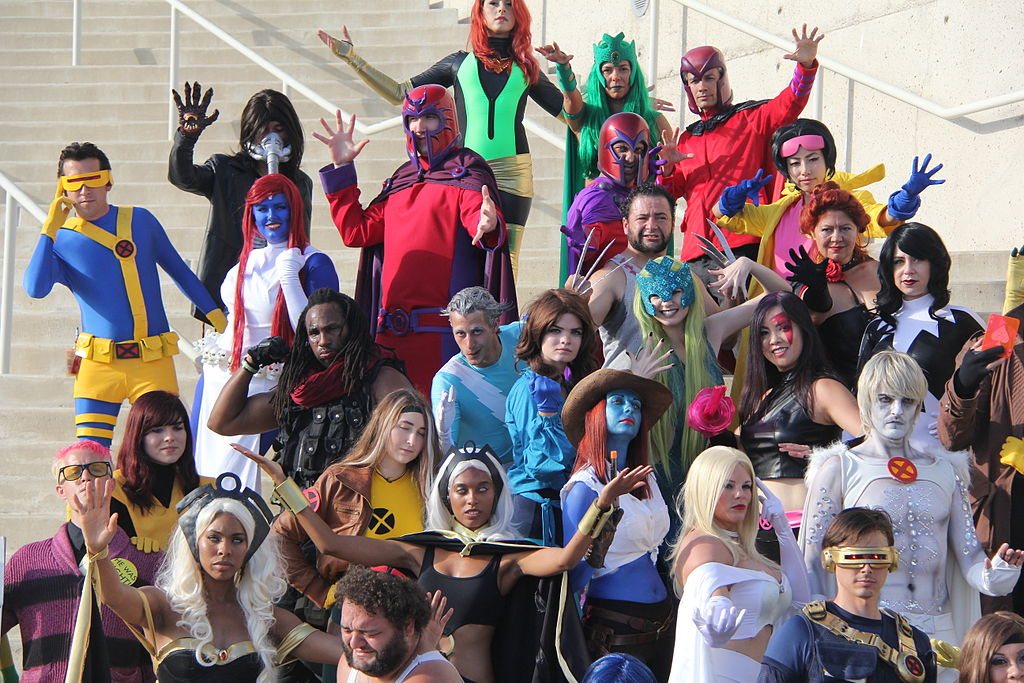
Costumes attendees at San Diego Comic-Con in 2014. (William Tung / Wikimedia Commons)
In 2009, a small budget but critically successful film called Big Fan hit theaters. The film’s action centers on Paul Aufiero — a man obsessed with the New York Giants to the exclusion of all other pursuits — and the rapid collapse of his life after a chance encounter with his favorite player.
Paul is a geek. A stereotypical (as defined by big media) geek. He lives with his mother, is a portly white man in his mid-thirties, has no sexual relationships to speak of, and finds personal validation in his interactions with the subject of his fixation. The role works in no small part because Paul is played by Patton Oswalt, a comedian with impeccable geek culture credentials. The only difference between Paul and a stock geek culture character is what Paul geeks out about: sports. And sports, as we all know, are not geeky.
It was little remarked upon at the time, but the convergence of Oswalt’s casting, Paul’s obsessiveness over the Giants, and sports culture signified a new, more relevant understanding of the geek. In the world of Big Fan, the type of media Paul interacts with isn’t what designates him as a geek; it’s how he interacts with it.