Israel Might Change After Its Election, but Not Much
Israel’s election campaign reflected the wide support for ethnic cleansing of Palestinians across mainstream politics. The electoral stalemate between government and opposition is unlikely to slow the radicalization of Israeli society.
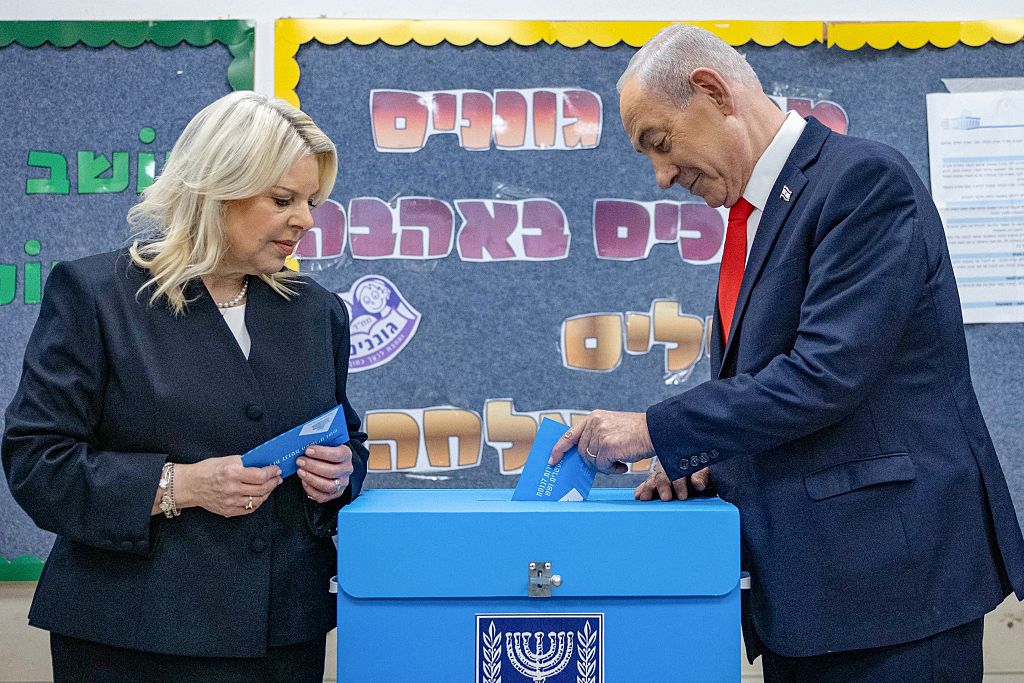
After Israel’s election, the opposition bloc led by Gadi Eisenkot may have to lean on Arab parties to form a coalition. But even the opposition is unlikely to back away from Israel’s war with Iran and efforts to annex Gaza. (Yonatan Sindel / Pool / AFP via Getty Images)
Jewish and Arab voters with Israeli citizenship massively flocked to voting stations on Tuesday, October 27, for the elections to the Israeli parliament, the Knesset. These were the first elections since the formation, in 2022, of the most reactionary government in the Zionist state’s history. For the last four years, this far-right coalition joined Benjamin Netanyahu’s Likud party and the neo-Nazi groups headed by Itamar Ben-Gvir and Bezalel Smotrich together with ultra-Orthodox religious parties.
As polls had forecast, the ruling bloc led by incumbent Prime Minister Netanyahu and the opposition alliance led by the former Chief of the General Staff of Israel’s armed forces, Gadi Eisenkot, ended the race in what current estimates see as a tie. It may take a few days before definitive results are announced and several weeks of wheeling and dealing among Knesset factions before the shape of the next cabinet is known.
As has been amply emphasized, the most crucial particularity of the recent elections is that they were the first held since the Hamas-led operation of October 7, 2023 triggered the genocidal war launched by the Israeli army on Gaza, displacing its inhabitants and destroying its buildings wholesale. This has been accompanied with a dangerous and unprecedented escalation of Zionist settlers’ violence against the Palestinian population in the West Bank, clearly constituting a creeping campaign of ethnic cleansing akin to that witnessed in most of Palestine during the Nakba of 1948 and more recently in the Gaza Strip.