A Palestinian Prisoner on the Nightmare Behind Israeli Bars
Israel imprisoned Khalida Jarrar, a historic leader of the Palestinian left, five times, almost always without charge or trial. She tells Jacobin about how women prisoners copied a library by hand and how Israeli censors never let in Antonio Gramsci.
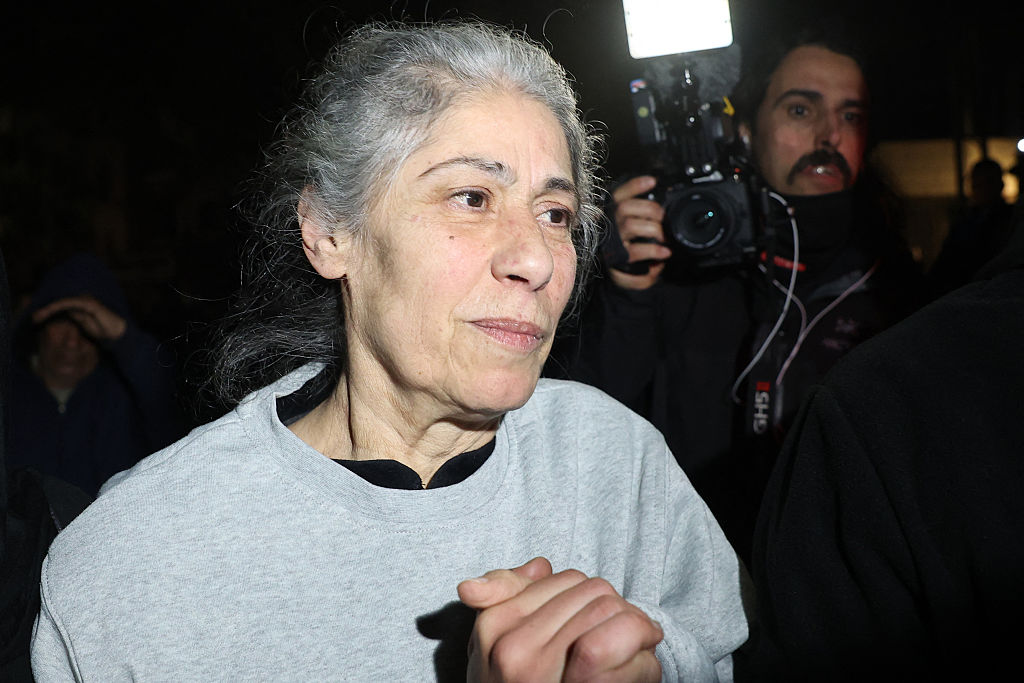
Khalida Jarrar has been imprisoned by Israel five times. She spoke to Jacobin about the political situation in Palestine, the conditions inside Israeli prisons, and the importance of international solidarity. (Zain Jaafar / AFP via Getty Images)
Born in Nablus in 1963, Khalida Jarrar is one of the foremost voices of the Palestinian left — feminist, secular, socialist — and one of the towering figures of the political prisoners’ movement. For more than a decade she led Addameer, the main Palestinian prisoner support organization. In 2006, voters elected her to the Palestinian Legislative Council, where she chaired the prisoners’ commission, and she later served on the national committee that prepared Palestine’s accession to the International Criminal Court. Today she is a researcher at the Muwatin Institute at Birzeit University, where she is conducting a pioneering study of the class and gender dimensions of the women prisoners’ movement since 1967.
She has paid for each of these roles with her own freedom. Israel has imprisoned her five times, for a total of more than six years behind bars. Almost every time, Israel held her under “administrative detention,” a system it inherited from British colonial emergency law. It allows indefinite imprisonment on the basis of a “secret file,” without charge, without trial, and without a lawyer able to contest what cannot be read.
In 2014, when the Israeli army ordered Jarrar’s expulsion from Ramallah to Jericho, she refused and lived for a month in a protest tent until the order fell. In 2015, twelve charges against her amounted to political acts: speeches, attending a book fair, and visiting a released prisoner. In 2021, during yet another detention, her daughter Suha, a thirty-one-year-old researcher, died suddenly — and Israel denied her mother a farewell.