Working-Class Voters Are Winnable for the Left. Here’s How.

There’s a big gap between how progressive messaging is received by liberal, college-educated voters and working-class voters with no college degree. But there doesn’t have to be, if the Left appeals to those working-class voters the right way.
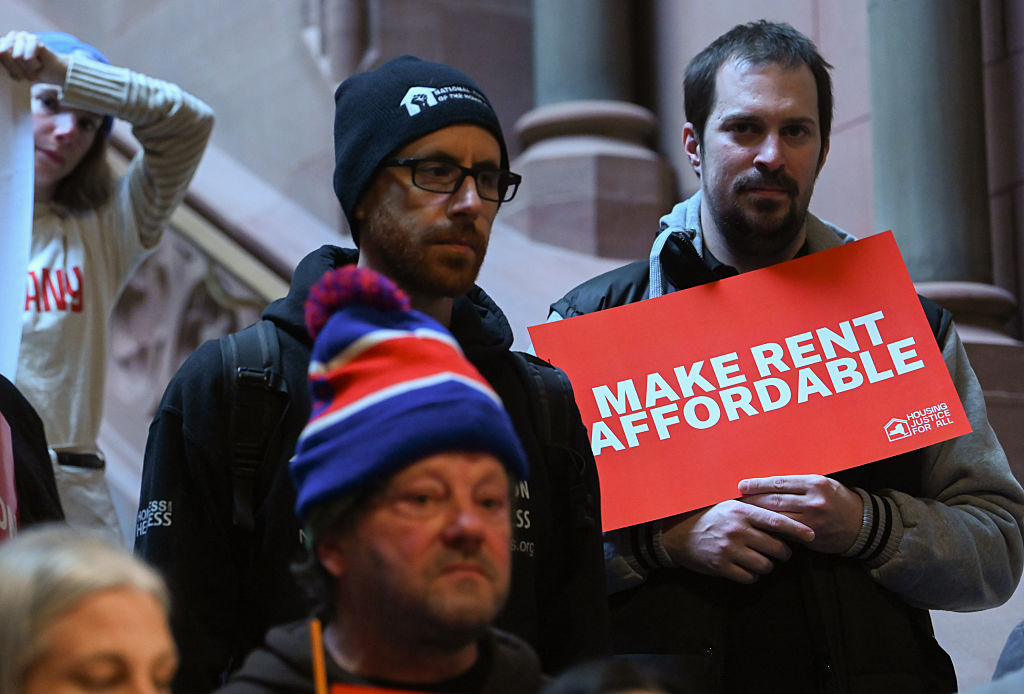
People hold signs as tenant advocates and lawmakers hold a rally at the New York State Capitol to unveil a Make Rent Affordable platform in Albany, New York, on January 27, 2026.

Working-class voters with no college degree are, for the most part, not anti-LGBT, anti-immigrant, anti-abortion, anti-democracy, or anti-environment. But they do prioritize issues they see as directly connected to their economic precarity. (Lori Van Buren / Albany Times Union via Getty Images)


In a new report from the Equality Action Center, Joan C. Williams and Jared Abbott lay out a sensible, pragmatic approach to what has always seemed a Sisyphean task: explaining to progressives how they can turn more people on to their politics than they turn off. In so doing, Williams and Abbott offer a means to block one of the misanthropic right’s signature moves: playing populist and turning the working class against a college-educated left that wants to address our system’s fundamental injustices.

The report is essentially a “For Dummies” coalition guide for progressive smarties (especially social justice advocates, political candidates, and funders) that shows how to recognize and redirect the antisocial, prejudicial habits of their class and channel them toward the common goal of taking populism back from the Right.

Much of the guide’s wisdom comes down to the broad working class’s perception that college-educated voters are too focused on problems that don’t affect workers’ lives. Citizens scrabbling just to get by are turned off when they see elites focusing on issues that may be real and significant but that they perceive are at a distance from the pressures they face to put food on the table, collect a paycheck, and pay the rent.

Wage-earners certainly are not mostly anti-LGBT, anti-international, anti-immigration, anti-art, anti–gun control, anti-abortion, anti-democracy, or anti-environment. But they do prioritize issues directly connected to their economic and social precarity. This is not hard to understand, and progressive and the Left — if they hope to win the trust of working-class voters — need to remember it.

This is exemplified by the biggest priority gap in the survey: the 40-point delta (90 percent versus 50 percent) between liberal college-educated voters and no-four-year-degree working-class voters on “defending democracy.” The issue was the second-highest priority for the college set, but just the nineteenth (of the twenty-five priorities Williams and Abbott tested) for the working class. Food, jobs, health, wages, and safety outpoll any four-syllable word used by a group that’s uphill from you.

And what about that darling term of the current election cycle, “affordability”? The buzzword is broken out into its components (jobs, wages, work conditions, consumer costs, etc.). It’s found that the college set is preoccupied with the consumer-costs side of the affordability crisis versus the working class, which prioritizes the predistributive costs associated with jobs, wages, housing, and health care. The working class is accustomed to living without a credit line (or an investment portfolio) buffer, the college set less so. The takeaway: when speaking to affordability, progressive and left candidates need to speak not just to store and restaurant prices but to the mortal impacts of low wages and high rent.

Of the issues tested, the three largest gaps where college grads trailed working-class respondents — and in every racial group — concerned personal security. This should not surprise anyone.

Do more educated, affluent people inhabit safer, or more dangerous communities? Are there more precariously situated noncitizens in Ypsilanti or Grosse Pointe, Michigan? Are there more in Chappaqua or Mount Vernon, New York? What about Oakland versus Menlo Park, California? Working-class respondents favored securing the border by 28.3 points, lowering the crime rate by 21.8 points, and adding more police by 19.3 points.

On the other side, issues that college grads prioritize more than the working class, there are four issues with a wide spread. The college set prefers: LGBTQ+ rights by 32 points, immigration by 32 points, climate by 29 points, and abortion rights by 26 points.

These are called “wedge issues,” given their tactical utility to strategists on the Right. It’s not that these issues don’t matter — not even a slim majority of working-class voters wishes to persecute minorities, force women to have unwanted children, or further disrupt the climate. But they are simply not seen as immediate as the threats that come from not paying your rent, car payments, daycare, and medical bills — existential issues that those on the college track don’t experience so often or acutely.

Here, Williams and Abbott identify how to find enough common ground on issues to fend off the wedge-driving political operatives on the right.

The study doesn’t pretend to test every framing under the sun, but it does get after many, and successfully so. The researchers provide a well-stocked workshop filled with ready-to-use tools to build coalitions on these and other wedge issues. For instance, they supply messages that boost working-class support for universal childcare by nearly 28 points, climate change action by nearly 24 points, supporting trans girls on sports teams by 23 points, citizenship paths for immigrants by 22 points.

Their findings indicate that the working-class is not rabidly pro–Immigration and Customs Enforcement or militantly against civil liberties, and a coalition that favors immigrant safety is not only possible but easy to communicate, even in the face of a right-leaning opposition actively seeking to prevent coalition.

The report shows how the Right pierces a progressive cause’s flank when the Left assumes consensus. Progressives and leftists need to see past our bubble and realize that not everybody is at our elevation on subjects like climate and culture wars, and that when we assume in this fashion, we make asses of ourselves to the people to whom we preach solidarity.