Workers Can Govern, but They Need Power First
A new book makes the most rigorous case yet for why so few working-class people hold office. But by treating the lack of workers in office as a law of electoral democracy, its authors underrate how much organized workers could change it.
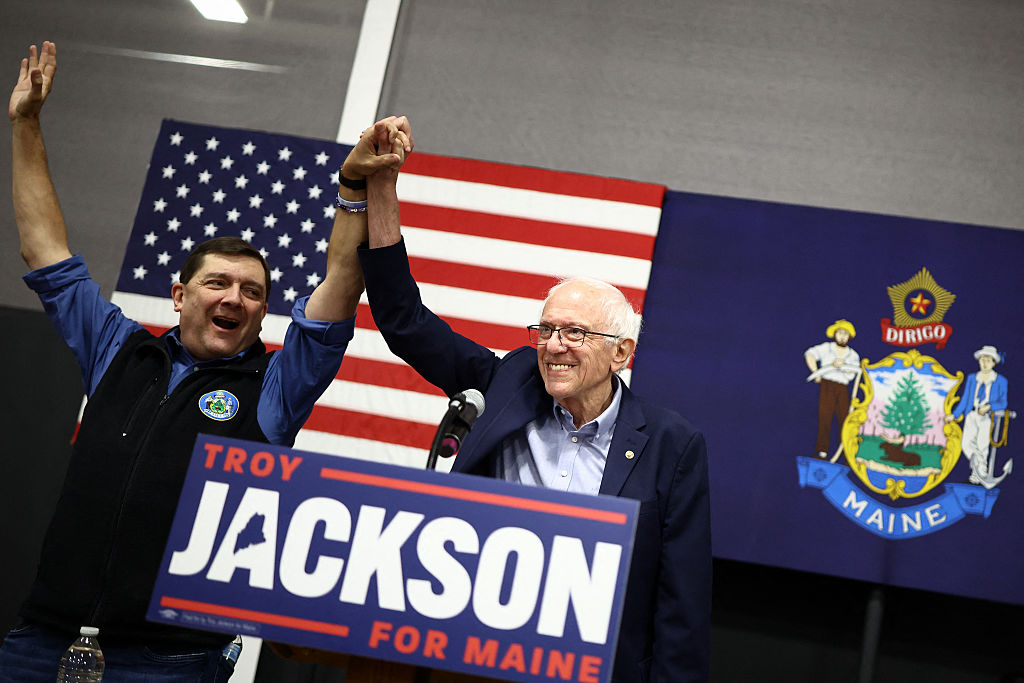
Liberal democracies systematically exclude working-class candidates from politics. To counteract this, socialists will need to change the constitution of left parties to stack the deck in the favor of workers. (Charley Triballeau / AFP via Getty Images)
According to data from a sweeping new study of working-class legislators by political scientists Nicholas Carnes and Noam Lupu, only about 2 percent of legislators across the world’s democracies held a working-class job — which the authors define as manual, service, or clerical work — before getting into politics. Yet as the authors document in their new book, Keeping Workers Off the Ballot: How Democracy Undermines Working-Class Representation, about seven in ten jobs in a typical democracy are working-class jobs, from construction workers and truck drivers to servers, cashiers, receptionists, data-entry clerks, day laborers, and street vendors. In the United States, working-class people make up more than half of the labor force but just 5 percent of candidates for state, county, and local office. In Brazil, workers represent more than 70 percent of the labor force but just 8 percent of candidates for the national legislature.
Drawing on a wide range of previous scholarship and original analysis, Carnes and Lupu show why having more workers in office matters. Politicians who have had working-class jobs back more pro-worker economic legislation, cabinets with more working-class ministers build more generous welfare states, and citizens trust legislatures less when they include fewer workers.
In short, “when workers don’t hold office, economic policies and outcomes are better for the haves and worse for the have-nots.” Keeping Workers Off the Ballot focuses on the obvious follow-up question: If working-class officeholders are so good for working people, why are there so few of them?
Their answer is pretty demoralizing. The problem, they argue, contrary to the dominant view of many on the Left, isn’t money, the weakness of unions, particular electoral rules, or an aversion to working-class candidates among voters. Instead, the reason lies deeper, embedded in the logic of electoral democracy itself: running for office is personally grueling, demanding time, money, and a willingness to put one’s job and income at risk that people in working-class jobs can rarely afford, and party gatekeepers rationally pass over those least likely to weather the storm of an electoral campaign. Together these two processes ensure that working-class candidates will always face major headwinds that limit their success.
The book’s major contribution is showing how hard it is to elect legislatures that represent working people. But its central claim is more fatalistic than its own evidence supports, and its remedies leave out a key path that has historically given working people real political leverage: working-class organization.
Where Is the Leak in the Candidate Pipeline?
Carnes and Lupu begin by dispensing with a range of other explanations for low working-class representation, starting with the idea that workers simply don’t have what it takes to govern. The authors reject this and other “deficit explanations” by showing that workers are nearly as likely as others to have the traits of successful candidates, that they are just as interested in running, and that they are no less popular with voters.
They are equally skeptical of country-level explanations. Using an original database of legislators in ninety-seven democracies in 2016–18, the scholars conclude that variation in types of electoral systems and the strength of left parties make no significant difference in the prevalence of working-class legislators. By contrast, they find that public financing of elections and union density do matter, but the authors judge their effects too small to make a meaningful difference.
The real problem, according to Carnes and Lupu, comes before the ballot box: “The vast majority of the screening out [of working-class candidates] seems to happen at the point when people get on the ballot.” They offer two primary reasons.
The first is what the authors call the hidden costs of campaigns. Running for office means giving up time, privacy, income, and certainty about the future, not to mention risking embarrassment and reputational damage. These costs weigh most on workers: in the authors’ surveys in Mexico and Canada, 29 percent of high-potential working-class respondents said they would worry about giving up their job or income to run, compared with 14 percent of equally qualified professionals.
The second factor holding back workers from running for office is the strategic logic of party gatekeeping. With limited resources, parties go after “low-hanging fruit”: people they already know and trust, who seem likely to make good politicians and to have a comparatively easy time running a campaign. Under pressure to win now, even sympathetic party leaders pass over candidates who can be less easily presented as sure bets, and those are disproportionately working class. In surveys across ten democracies in the Americas, Carnes and Lupu found that the most promising working-class respondents were far less likely than comparable professionals to have been encouraged to run by political elites: 12 percent versus 34 percent.
These forces are so powerful, Carnes and Lupu argue, that “even if workers run and win and hold office successfully,” elections “will always exert a gravitational pull” against them. Stronger unions, public financing of elections, and lower inequality, they argue, “will only matter on the margin.” Electing many workers requires “extraordinary and unusual alignments of political forces.”
Unions to the Rescue?
What are those alignments? Above all, they consist of durable partnerships in which parties build formal channels for recruiting candidates straight out of strong, centralized labor unions. These unions give working-class candidates the money and backing to shoulder the burdens of running, and equally important, they seek out worker-candidates and sell them to other party insiders, in effect bypassing the usual logic of gatekeeping.
Britain’s Labour Party is a case in point. By 1929, more than a quarter of the House of Commons had previously held working-class jobs. British unions sponsored worker candidates, turned out voters for them, paid for their campaigns, hired local party staff to work for them, and sometimes topped up their salaries, while local Labour parties chose from a union-drawn list of candidates who came with union money.
Germany’s Social Democratic Party (SPD) worked much the same way, reserving safe list positions for union officials. In 1969, about 16 percent of the Bundestag came from working-class jobs.
If these parties could effectively get workers elected in partnership with the labor movement, why can’t parties do the same today? Carnes and Lupu’s answer is that such arrangements are historically rare and effectively irreproducible. In both Britain and Germany, white-collar unions eventually displaced industrial ones, professionals replaced manual workers on party benches, and leaders like Tony Blair and Gerhard Schröder cut unions’ role in choosing parliamentary candidates. As a result, today even the strongest unions only manage to get modest numbers of their members into office.
Law of Democracy or Product of Neoliberalism?
Carnes and Lupu make a strong case that the ceiling for working-class representation in contemporary democratic politics is low, but are their sobering conclusions about the meager possibilities of building real working-class power through national legislatures justified?
Let’s start with the mechanisms Carnes and Lupu identify as the key barriers to greater working-class representation. By their own estimates, moving from no public financing to the most generous system observed would raise workers’ share of a national legislature from near zero to about 5 percent, and high unionization would raise it to about 9 percent. Similarly, their estimate for the impact of inequality, which imagines a country where the bottom half of earners takes home half of all income (much higher than a typical democracy today), yields about 7 percent. Parties matter, too: 10 percent of legislators from parties whose supporters are mostly working class have held manual, hospitality, or other working-class jobs. And parties that champion workers and unions the most in their party platforms have legislative delegations that are about 15 percent working class, according to Carnes and Lupu. Against a global average of 2 percent, these are not small differences.
In addition, the authors test each of these factors individually and set them aside because none has a big enough impact in isolation. They do raise the possibility that “some combination of country-level traits could together explain” worker underrepresentation but don’t pursue this possibility. Yet their own history of the British Labour Party shows how country-level factors can work together to produce strong worker representation in office: a mass union movement funded and sponsored worker candidates, local parties chose candidates from union-generated lists, and the party depended on working-class votes for success. None of these alone would have led to workers occupying a quarter of parliamentary seats. Nor is it clear why a union-party partnership is the only combination of factors that could lead to a higher share of workers in office, given that Carnes and Lupu’s data show public financing, lower inequality, and parties’ dependence on working-class voters also matter.
Many of the strategies the authors recommend have also never been tried at scale. By their own account, there are few if any political scholarships or seed-money programs aimed at working-class candidates in the United States, and only a handful of union-run candidate schools exist across the country. Even short of anything approaching class parity, gains of the magnitude that are likely achievable through these mechanisms would substantially improve the quality of working-class representation. Working-class candidates who got on the ballot wouldn’t just be those able to run the gauntlet that liberal democracies put before them.
Timing matters, too. The book’s cross-national data is a 2016–18 snapshot in time, taken when unions were weak, inequality was high, and left parties had long since weakened their ties to labor. Britain and Germany elected more workers when unions were both large and powerful inside parties. By contrast, union membership today is far lower, and where it remains comparatively high, unions have largely lost their influence over the nominating process. The modest union effect the authors find may thus say more about the particular period they study than about what strong, politically embedded unions can do to boost working-class representation.
The authors’ case study of Britain also suggests these gains are stickier than their “boom-and-bust” account implies. The number of working-class MPs did collapse when Labour lost four-fifths of its seats in the early 1930s, but the authors’ own figure shows their share climbed back to above a quarter of the Commons by 1945, was around 15 to 20 percent through the 1970s, and remained above 10 percent until the 1990s. Half a century of meaningful working-class representation is hardly a blip.
The effect of gatekeeping is similarly contingent. The authors offer powerful evidence that recruiters favor professionals, but that is not, in itself, evidence that the “fundamental logic” of elections works against workers. In an era of extreme class segregation and professionalized politics, party officials mostly know professionals. When unions are central to a party’s coalition, gatekeepers’ networks fill with working-class people, and when candidate schools train union members, the pool of “low-hanging fruit” begins to include more workers: the New Jersey AFL-CIO program counts nearly 1,400 election victories since 1997. And with trust in government near record lows, candidates with a working-class background can be an asset that even the most cynical operatives may find appealing, which is one of the reasons we’re seeing more high-profile working-class candidates in the 2026 electoral cycle.
Class Quotas and Citizens’ Assemblies to the Rescue?
The book’s final chapter turns to solutions. The authors examine steps unions and parties could take: pipeline programs like New Jersey’s, “political scholarships” to replace lost wages, seed money for working-class candidates, a right to return to one’s job after campaigning, and worker committees inside parties. But they see these as “temporary solutions,” since elections will keep working against workers once reformers’ efforts begin to stall.
Ultimately, Carnes and Lupu turn to two structural fixes that, they argue, would remove the obstacles keeping workers out of legislatures: worker quotas and citizens’ assemblies. With a quota, the authors note, if a party must nominate a worker for a seat, “it doesn’t really matter whether workers have a harder time running.” Likewise, citizens’ assemblies chosen by lot skip campaigns altogether and can ensure roughly equal participation across class.
The trouble is that quotas are unlikely to be easier to win than the alternatives the authors consider inherently limited. They acknowledge that quotas require “the hard work of constructing political coalitions to pass laws and amend constitutions.” But a coalition strong enough to make legislators, most of them professionals, hand seats to workers would also be strong enough to strengthen workers’ right to organize and so substantially grow the labor movement, or to pass a wave of pro-worker legislation. Mandatory quotas are thus not a shortcut around building working-class power, but rather contingent upon it. And without that power, quotas may guarantee workers seats but not influence, since party leaders could simply fill seats with working-class candidates prepared to advance their agenda rather than pro-worker politics.
Citizens’ assemblies raise a different problem. They are very good at producing bodies that look like the public: Austria’s 2022 Citizens’ Climate Assembly was about as likely to include college graduates as the public at large. But the authors never say how much power assemblies would hold. They describe sortition as a way to “select leaders without holding elections,” yet the assemblies they point to make recommendations that elected officials can take or leave. Ireland’s assembly paved the way for the 2018 referendum that repealed the country’s abortion ban, but only because politicians chose to put the question to voters. An assembly with real authority would have to be won from those same politicians, which brings us back to building working-class power. Assemblies can be useful on the margins, but no amount of deliberation by randomly chosen citizens will change the balance of political power unless workers have real leverage behind them. At worst, these reforms could help legitimize parties that ignore workers’ interests by letting them appear to give workers a stronger voice.
Strikingly, for a book whose central historical finding is that workers are more likely to reach office when strong unions put them there, Keeping Workers Off the Ballot never recommends building stronger unions. There is nothing on labor law, organizing, or how working-class movements might regain the political leverage they once had.
Nevertheless, Carnes and Lupu have written an indispensable book on a question the Left cannot afford to ignore. They are right that working-class representation does not happen by accident, that it is not mainly about workers’ talents or voters’ prejudices, and that it depends on institutions that put workers’ interests at the center of candidate recruitment. But the absence of workers from office is not a gravitational constant. It is a measure of the weakness of the labor movement and of parties’ choice to abandon it. Workers will hold power in national legislatures again when they first regain power outside of them. Ultimately, the point of electing more workers is not to help parties win the next election, but rather to give working people a direct role in how their lives, communities, and country are governed. And that depends on building power in workplaces and communities, not just winning elections.