Critique Is Easy. What’s Your Plan for Power?
The way to help Zohran Mamdani overcome establishment and billionaire opposition to his agenda has to involve organizing bigger and deeper, rather than simply criticizing him harder.
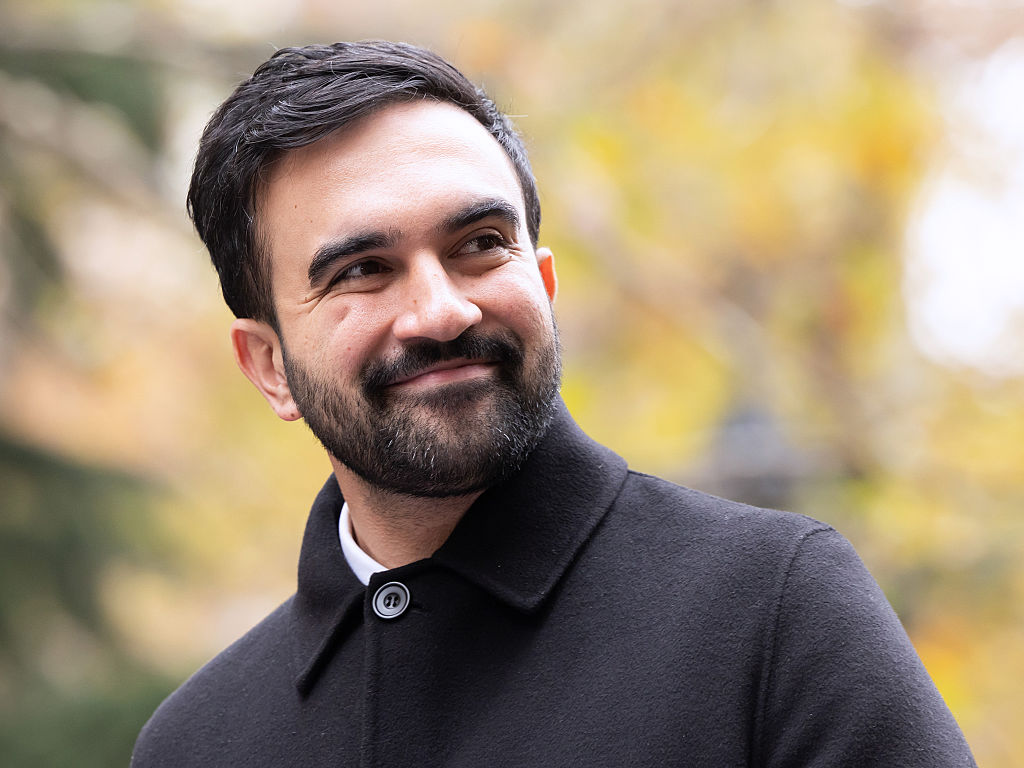
There’s far more to effective socialist strategy than boldly championing our ideas and loudly voicing criticisms of elected officials who fall short. (BG048 / Bauer-Griffin / GC Images)
In late November, I argued that “way too much leftist discourse is polarized into denunciations vs. defenses of Zohran [Mamdani]. A more useful & important debate is how to organize enough New Yorkers to win Zohran’s agenda — and to counteract the inevitable pressures on him from capital and the political establishment.”
Others disagreed. A few days later, the pro-Palestine group Within Our Lifetime (WOL) posted a public sign-on statement announcing that Mamdani’s decision to reappoint Jessica Tisch as New York Police Department commissioner “betrays his campaign promises and aligns him with the NYPD’s legacy of policing, surveillance, and repression” and “effectively endorses the NYPD’s ongoing collaboration with the Israeli occupation.”
Tisch deserves our critique. She’s a pro-Israel billionaire heiress who, as Ross Barkan notes, “sounds no different than a Long Island Republican when it comes to the topic of criminal justice.” But before digging into the debate over her reappointment, it’s useful to address an underlying strategic question: When and how should the Left criticize elected officials like Zohran?
Criticism Is Good. But What Kind?
On the general question of whether it’s necessary for socialists to criticize left elected officials, history is full of examples of movements demobilizing and subordinating themselves to their friends in power. It would be a tragedy if that happened in New York City. Given the constraints and pressure he is under and the overall weakness of working-class organization after fifty years of neoliberalism, Mayor Mamdani is bound to make many decisions the Left will disagree with; refusing on principle to ever voice criticisms or to take an independent stand would be a road to ruin for organizations like the New York City Democratic Socialists of America (DSA) and the Left as a whole, demoralizing activists and undermining credibility with supporters.
But there’s no shortage of leftists who are generally willing to disagree with or diverge from our new mayor and other left politicians. Many NYC-DSA leaders argued in favor of the chapter endorsing New York City Council member Chi Osse’s bid to primary Hakeem Jeffries despite Mamdani’s vocal opposition. Most currents of DSA supported a public statement criticizing Rep. Alexandria Ocasio-Cortez’s vote against an amendment blocking funding for Israel’s Iron Dome. For my part, this week I wrote on Twitter: “Instead of asking for more donations, would love to see Zohran start asking supporters to join mass organizing fightbacks. Even the savviest governance and comms strategy can’t get far without more people power on the ground.”
We can visualize the Left’s approach on criticizing allied politicians as a spectrum with “openness to criticizing Left electeds” on one side and “never criticize Left electeds” on the other. Apart from those who end up muting their voices because they join an administration (or become staff of an elected official), most US radicals today are quite far on the “open to criticizing” edge of the spectrum. But contrary to what some very online leftists seem to believe, there’s far more to effective socialist strategy than a willingness to boldly champion our ideas and to loudly voice criticisms of electeds who fall short. If that’s all it took, we’d have reached socialism long ago.
One frustrating thing about the debate over Tisch is that we were mostly talking past each other. While supporters of the WOL statement foregrounded the importance of criticizing politicians, critics like myself tried adding an additional dimension to the discussion: How much power do we currently have to confront the NYPD?
Pushing back against leftist elected officials is important. But effective Left strategy always should combine an openness to criticism of electeds with a rigorous power analysis. More specifically, the intensity of our criticism of left elected leaders on a given issue should correlate with our degree of power.
Let me give two examples. Hopefully we can all agree that it would be unjustified to denounce Zohran for not taking steps to abolish capitalism in New York City (whatever that would mean), given that neither he nor we have either the institutional mechanisms, popular mandate, or organized force to do so. That doesn’t mean left organizations should stop advocating this goal. But it’s not a reasonable thing to fight Zohran on — unlike, say, if he were to renege on freezing the rent or pushing to tax the rich. Conversely, when I voiced a (low-intensity) criticism that Zohran could be doing more to plug his supporters into organizing fightbacks, that reflected an assessment not just that this was desirable but that it was immediately feasible.
Instead of looking at the question of power narrowly as whether a politician has the technical ability to support a policy, we should employ a more multi-faceted power analysis to answer the following questions:
- How much does the public support that policy?
- Do we currently have enough power to overcome concerted ruling-class opposition to instituting that policy?
- How strong are the mass organizations and movements supporting that policy? How strongly do they support it?
- How much institutional power does the left politician have to implement the policy?
- Will passing the policy make it much harder to pass other urgent agenda points? Is the trade-off worth it?
- Was that policy part of the left politician’s campaign platform?
- How strong would the popular backlash likely be if the left politician supports that policy? Will it doom their reelection? How damaging would that be for left organizations and movements?
My main issue with WOL’s statement, and its underlying strategy of constant and relentless denunciations that is widely shared across the far left, is not that it takes a critical approach to Zohran’s bargains with ruling-class elites and institutions like the NYPD. It’s good for there to be pushback. But the real debate is over what kind of pushback. Unfortunately, the tactics used by these critics do not correspond with the amount of power we and our electeds currently have in relation to the NYPD.
This doesn’t mean giving up the fight. There are many ways to explicitly or implicitly criticize a mayor when our power on a given issue is still low. In such circumstances, our tactics should focus on winning over the public — our main source of power. And the intensity of our criticism of elected officials should be tailored accordingly. When our power is low, it can be fine to start a public conversation by posting online or positively calling on a leftist elected to do something. But in that type of situation, we should avoid denunciations, and we shouldn’t delude ourselves into thinking that social media agitation on its own does much to move the power needle.
Not Enough Power Against the NYPD
Critics of my argument will respond, “Wait a minute. It’s not true Zohran doesn’t have the power to fire Tisch.” But how real is this power if it would prompt a police (and potential capital) strike to force Zohran to rehire her or to ignore the directives of a more progressive appointee? In Jonathan Ben-Menachem’s excellent article for the Nation, “If We Want Mamdani to Beat the NYPD, the Left Must Build Power,” he points to the strong historic precedent for this worry:
Bill de Blasio, whose campaign emphasized police reform more than Mamdani’s, also fought the police unions (and lost). Cops turned their backs on de Blasio and walked off the job — a classic police tactic, given that work slowdowns generate headlines reinforcing the myth that police pullbacks endanger residents.
Whether we like it or not, firing Tisch at this moment risks sinking Zohran’s new administration in a losing battle before he’s even taken office — and before he’s cemented popular goodwill by delivering tangible improvements in their daily lives. And with everyone in the city and country looking at New York as a test case for socialist governance, the fate of all our bottom-up movements and organizations is tied to this administration.
A left politician’s power to make a lasting change is quite limited if taking an unpopular step will create so much popular backlash that it all but guarantees that centrists or reactionaries will win the next election and reverse the progress made. Consider Mayor David Dinkins’s fight for police reform. He won the short-term policy fight to establish an independent Civilian Complaint Review Board, despite ten thousand cops who drunkenly rioted against this in 1992. But backlash against Dinkins’s push on policing fueled Rudy Giuliani’s narrow mayoral victory the following year, resulting in eight years of untrammeled police persecution of black and brown working-class communities.
The rise of Eric Adams and Giuliani raises another point mostly overlooked by defenders of an intransigent approach: public opinion can play a major role in constraining the power of electeds and marginalizing movements. The main push to keep Tisch came from billionaires and establishment politicians. But public support for police and concerns about crime facilitated these elite efforts and constrained Zohran’s room for maneuver.
Online leftist echo chambers provide a very skewed impression of where most people are at. If claims about police reform being a “winning issue” were true, we’d see a clear reflection in election results, in polling, or in millions of people in the streets. Rather, mass protests dried up after 2020. Eric Adams was elected mayor in 2021 on an anti-defund, pro-public safety message that particularly resonated with black and Latino working-class voters. And recent polls show that only 18 percent or 22 percent of New Yorkers have an unfavorable opinion of Tisch — and that this opposition is significantly higher among college-educated voters. Even Latinos, the racial group most opposed to Tisch, overall favor her more than they oppose her.
Polls, of course, can be wrong (though normally at the margins), and people’s views can change. If Tisch continues collaborating with Trump’s Immigration and Customs Enforcement (ICE), and activists start doing concerted outreach to our neighbors about her role, her popularity could plummet, and her ouster could become more feasible. But in the meantime, leftists should dial back the intensity of our criticisms of Zohran’s reappointment decision and avoid misleading “betrayal” claims.
It’s good to push back against Tisch. But given how few people currently agree with us on this, the most appropriate and effective mechanism would be a tactic like a canvassing campaign to get hundreds of thousands of New Yorkers to sign a petition calling for Tisch’s ouster. That would allow — and oblige — anti-Tisch activists to go out and persuade those who either currently support her, or who don’t yet have thoughts about her one way or the other. If we can’t commit to putting in the low-risk but high-effort legwork of winning over community members door by door, conversation by conversation, why should we expect Zohran to risk his administration and his affordability agenda — and, with it, the momentum of a resurgent nationwide left — over a premature fight that we don’t yet have the power to win?
Beyond the Echo Chamber
Though there will be instances where Zohran is being unjustifiably compromising or risk averse, it generally makes sense to look at both his strengths and limitations as reflections of the balance of class forces on a given issue. And the sobering reality is that our electoral reach has rocketed far past our on-the-ground organized power. All the openings and challenges of this moment are concentrated in that power gap.
The way to help Zohran overcome establishment and billionaire opposition will mostly be “organize bigger and deeper” rather than “criticize harder.” Posting denunciations online or passing unenforceable resolutions on accountability too often function as substitutes for the much harder, and much more impactful, work of changing the relationship of forces.
Our late comrade Jane McAlevey once told me that organizers “wake up every morning asking how to engage the people who don’t agree with us — or who think they don’t agree with us. These folks are definitely not part of our social media feeds and they’re not coming to our activist meetings, they’re not there.” In the fight for affordability and justice, we should always keep in mind Jane’s challenge: “Do you spend most of your day talking to people who don’t agree with you? If you’re serious about building class politics, the answer is yes.”