A Revolution in Everyday Life
In the decades after 1945, European leftists disillusioned with workers’ parties created new protest movements and countercultures. Their efforts were boundlessly creative — but also reflected an erosion of the mass politics that had sustained the old left.
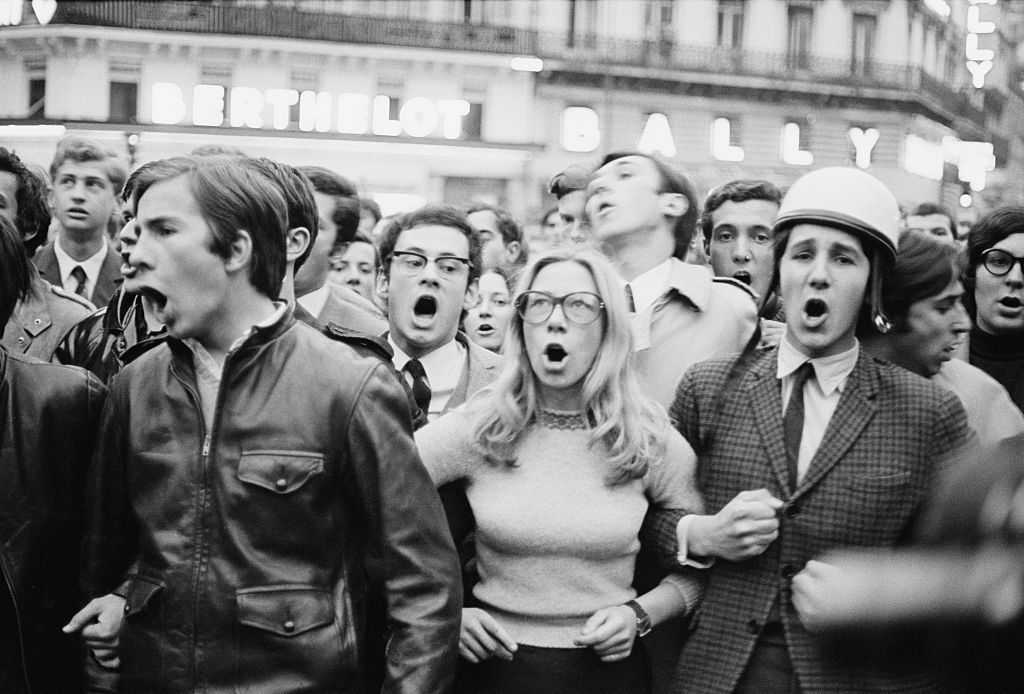
Students link arms during civil unrest in Paris, France, on May 31, 1968. (Reg Lancaster / Daily Express / Hulton Archive / Getty Images)
One February morning in 1976, residents of Bologna woke up to strange sounds on the airwaves. The Italian leftist collective A/traverso had set up a guerrilla radio station in the city center. With Indian classical music playing in the background, a woman’s voice greeted listeners: “This is an invitation not to get up this morning, to stay in bed with someone, to build musical instruments and war machines.” Radio Alice was born.
Its name came from Lewis Carroll’s Alice in Wonderland, and those war machines shot rhetorical bullets at the bourgeois establishment. In an attempt to democratize broadcasting, the station relied on volunteer staff, ditched professional standards, and broke down the barrier between sender and listener. A small army of reporters supplied information on drug prices, concerts, and sexual complaints. There was no regular programming. People could simply call in and say whatever they wanted. This lack of structure, explains the historian Joachim C. Häberlen, “brought a confusing plethora of topics on air, ranging from topical news to discussions about ‘other potential worlds,’ from shows about Sardinian music to interviews with workers on strike. Someone read passages from Roland Barthes’ Pleasure of the Text, then another called in to say: ‘Someone stole my bike, can you please say on air that he’s a son of a bitch.’”
The station defined the ideology of this subversive mix as Mao, plus Dada. In March 1977, it reported live on a police raid of Bologna University, “calling militants to the scene, denouncing police violence and even coordinating the actions of the protesters.” Then there was dead air. The police had seized the station’s equipment and arrested its staff after just one year of guerrilla broadcasting.