The US Invasion Was a Catastrophe for the People of Iraq
The US promised to bring freedom to Iraqis, but its eight-year occupation resulted in death and destruction on a horrifying scale. It left behind a corrupt, sectarian political order that has responded to popular protests with brutal repression.
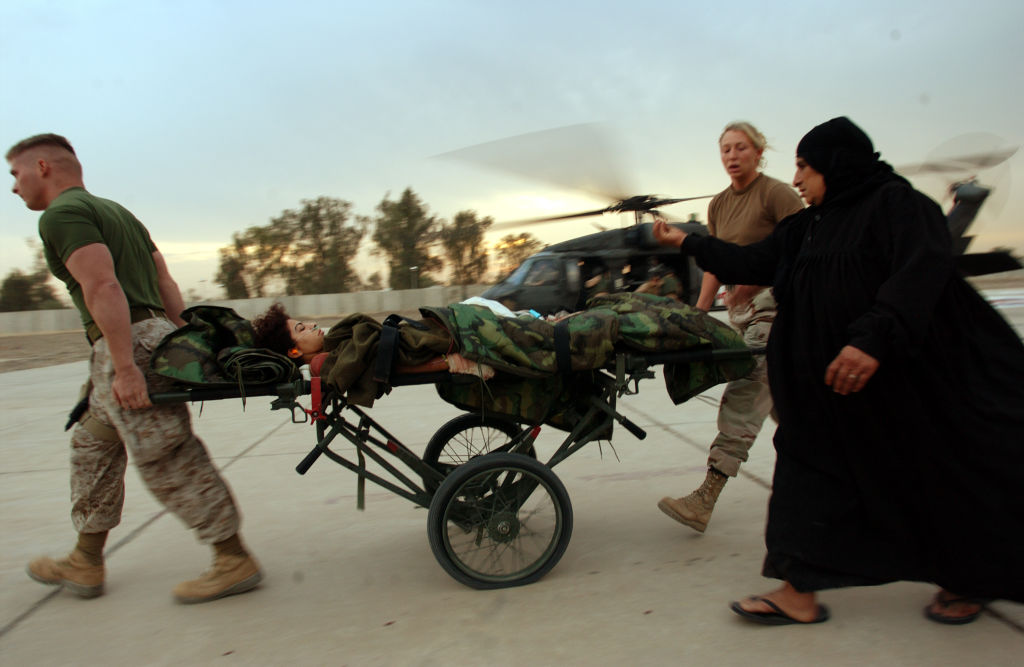
An Iraqi woman runs after her daughter as they arrive on the helipad at the Balad Hospital after their house was hit by mortars, injuring both of her daughters. Balad, Iraq, 2004. (Lynsey Addario / Getty Images Reportage)
In March 2003, the US military launched a full-scale invasion of Iraq. The Bush administration promised to bring freedom to millions of Iraqis. In reality, the occupation inflamed sectarian divisions and reopened Saddam Hussein’s torture chambers at Abu Ghraib, while US officials tried to privatize Iraq’s vast oil resources.
Eight years later, US forces officially withdrew from Iraq after hundreds of thousands of people had been killed. They left behind a corrupt and authoritarian political system that was soon unable to cope with the rise of ISIS. A protest movement has developed in the past few years to challenge the ruling class in Baghdad. But the legacy of the occupation will be haunting Iraq for decades.
Dina Rizk Khoury is professor emerita of history at George Washington University and the author of Iraq During Wartime: Soldiering, Martyrdom, and Remembrance. This is an edited transcript from Jacobin Radio’s Long Reads podcast. You can listen to the two-part interview here and here.