The Iraq War Remade the World in Its Grisly Image
The 2003 invasion of Iraq has been swept to the margins of collective memory. We must refuse to forget it — and seek to understand what led to it, who benefited, who suffered, and how it transformed the world.
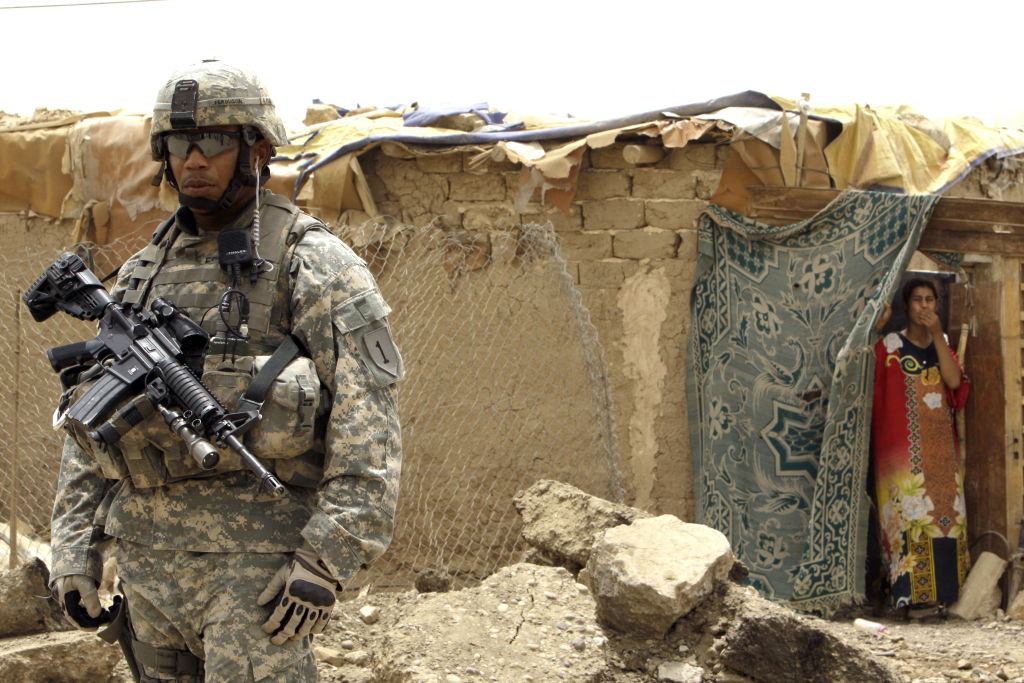
An Iraqi woman looks on at a US soldier in the Kadhimiya district of northwest Baghdad, on July 21, 2009. (Ali Al-Saadi / AFP via Getty Images)
The failure to reckon with the people and the politics that made the Iraq War happen is one of the most tragic and significant oversights in recent history. To understand where we are today, in terms of both domestic politics and global affairs, we must understand the US invasion of Iraq — what led to it, which actors were strengthened by it, who suffered and for what purpose, and how it remade the world in its grisly image.
The first season of Brendan James and Noah Kulwin’s podcast Blowback, which aired in 2020, sought to rectify that failure, diving into not just the specifics of the Iraq invasion and occupation, but also about the deeper colonial and imperialist history that brought it about. Their podcast was, in many senses, a knowledge recovery mission. Not only is the prehistory of the Iraq invasion buried under heaps of obfuscatory myths and ideology, but its consequences are too — even though they are still being felt powerfully in Iraq, the broader Middle East, and the entire world.
The people who led the Iraq invasion were never held accountable. Mistakes were made, the consensus goes, but it’s all water under the bridge. The fate of the entire bipartisan establishment was bound together: George W. Bush had to be redeemed, in part because Joe Biden had to be redeemed. Today Bush enjoys a largely rehabilitated reputation and Biden is the President of the United States, confirming total impunity for the murderous affair that was the Iraq War.