In the Days of Tito and Allende, Yugoslavia Helped Define Chilean Socialism
Chile’s new president, Gabriel Boric, has stressed the importance of his Yugoslav roots. But well before Boric's rise to prominence, across much of the last century, Yugoslav socialism was a major influence on the Chilean left.
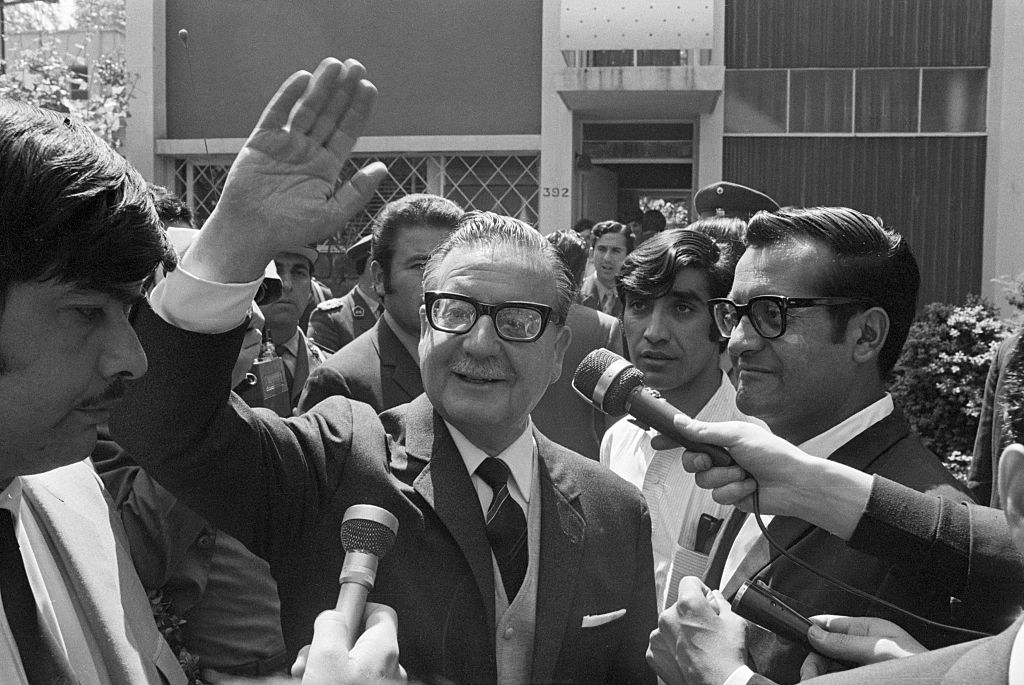
Salvador Allende waves to well-wishers in front of his home after being ratified to become president of Chile in 1970. (Getty Images)
Last month, left-winger Gabriel Boric was elected Chile’s new president in a runoff against far-right candidate José Antonio Kast. In an uncertain climate following the massive popular protests in 2019, a referendum to change the constitution inherited from Augusto Pinochet’s regime, and the decline of the traditional parties, Boric won the popular vote, backed by a broad center-left coalition.
In the days following his election, Boric’s life story came under the scrutiny of the global media, and his victory was especially publicized by the press in Southeastern Europe. Boric is the descendent of Yugoslav immigrants who settled in southern Chile at the end of the nineteenth century, and, after his leading role in the 2011 student protests, he became a congressman for Magallanes — a district with a significant population with family ties to Croatia’s Dalmatia region.
Boric has time and again recognized this Yugoslav background as part of his own identity. But, much like the icy water in the southern town of Punta Arenas from which he hails, Boric is just the tip of the iceberg in a long story of connections between Yugoslavia and the Chilean left. Many years before Boric’s rise to prominence, socialist Yugoslavia helped define the ideas and the activity of Chilean socialism — leaving a rich legacy to which the new president may add further chapters.