The Life and Death of Yugoslav Socialism
Yugoslavia’s “self-managed” socialism appeared to be a real alternative to the Soviet model. Why did it collapse so suddenly?
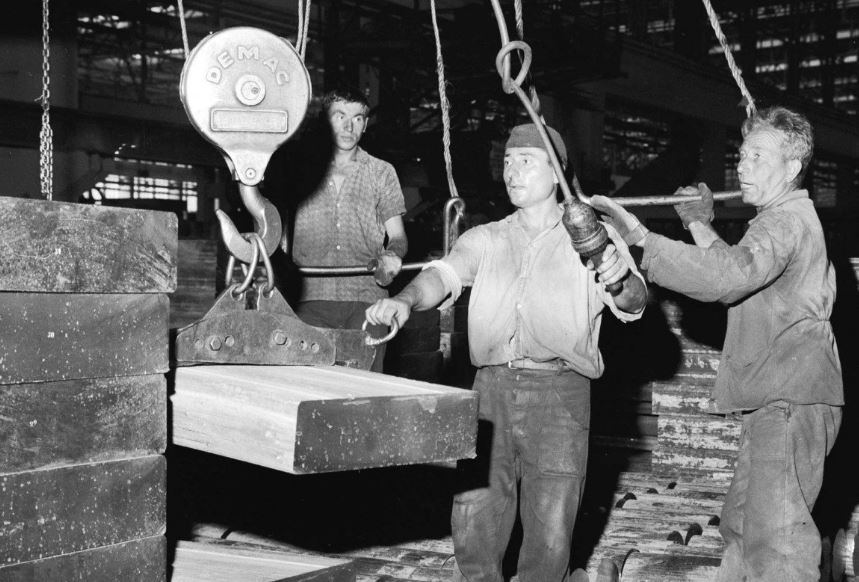
Placing brass ingots into position at a mill near Titovo Uzice, Yugoslavia. Chris Ware
During the Cold War, the Socialist Federative Republic of Yugoslavia represented to many a viable alternative to the Soviet model. Grounded by workplace self-management, the Yugoslav system seemingly gave workers the right to exercise democratic control on the shop floor.
The distinct Yugoslav path to socialism found admirers around the world. In Eastern Europe, the combination of market socialism and self-management offered a model for anti-Stalinist reformers. In the capitalist West, democratic socialists hopefully viewed the experiment as a more “human” socialism. And across much of the Third World, Yugoslavia — a leading member of the Non-Aligned Movement — demonstrated the viability of a “third way” between the capitalist United States and the communist Soviet Union.
In the final decade of the Cold War, however, the country descended into crisis. The self-management system collapsed, leaving a crippling $20 billion foreign debt in its wake. Amid economic crisis, republican politicians in Serbia and Croatia broke party ranks and launched nationalist campaigns in hopes of salvaging what they could from their crumbling fiefdoms. A series of brutal 1990s civil wars tore through Croatia, Bosnia and Herzegovina, and Kosovo.