We Will Make a New Chile
Chile’s protest movement doesn’t want small concessions. It wants to overturn the entire legacy of neoliberalism and the Pinochet dictatorship.
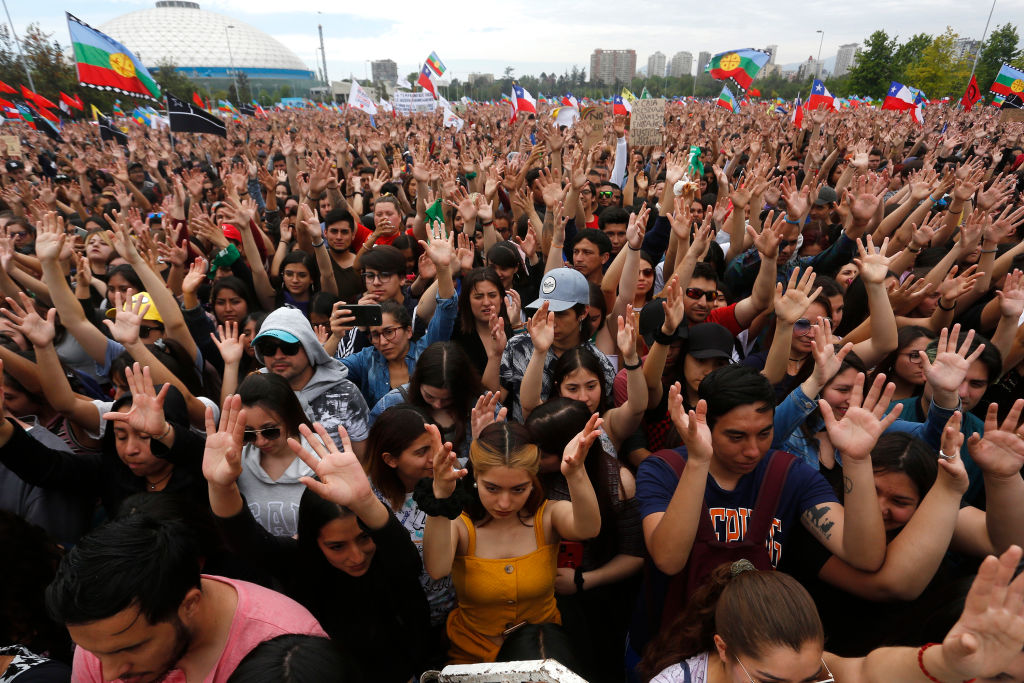
Demonstrators raise their hands for a minute of silence for the deceased in the protests during the day of cultural activities called by Movimiento Unidad Social at Plaza O’Higgins on October 27, 2019 in Santiago, Chile.Marcelo Hernandez / Getty
This weekend saw the largest demonstrations in Chile since the return of democracy. In Santiago, more than a million people took to the streets to protest the right-wing Sebastián Piñera government.
Beginning earlier this month as anger over an increase in public transport fares, the protest movement soon broadened to a series of long-standing social and economic concerns over pensions, health care, and wages. But, as it reaches all corners of the country, its demands have deepened: protestors have begun to demand a new constitution and far more fundamental reform of the country’s politics than was achieved in the aftermath of the Pinochet regime.
As cities ring with the sounds of Víctor Jara, the socialist songwriter and supporter of Allende’s government who was executed during the 1973 coup, we discuss Chile’s protest movement with Isidora Cepeda Beccar, a participant and political activist based in Santiago.