How Yugoslavia’s Partisans Built a New Socialist Society
Yugoslavia’s partisan movement singlehandedly defeated Nazi occupation and paved the way for a radical transformation of society. Yet socialist Yugoslavia was ultimately broken by its own internal contradictions — and its unwillingness to push that transformation further.
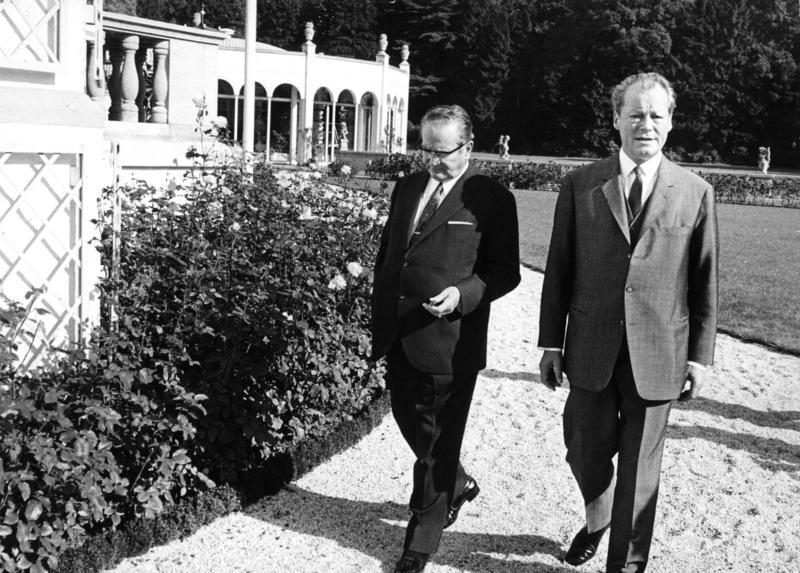
Josip Tito and German Chancellor Willy Brandt in Bonn in 1970. Bundesarchiv / Wikimedia Commons
The rise and ultimate defeat of the Yugoslav Communist movement is one of the twentieth century’s most compelling and heartbreaking political sagas.
Founded in Belgrade in 1919, the fledgling Communist Party of Yugoslavia (CPY) remained a small, isolated force hampered by harsh state repression well into the 1930s. Yet when Nazi Germany, together with its Italian, Hungarian and Bulgarian allies, invaded the Balkan country in April 1941, it was the CPY who rose to the occasion. Under the leadership of Marshal Josip Broz Tito, it built an armed force of hundreds of thousands — liberating Yugoslavia almost without outside intervention.
The mass enthusiasm following this victory would mark the country’s first free elections after 1945, which also saw the introduction of women’s suffrage. Ninety percent voted for the anti-fascist liberation front and the creation of a federal Yugoslavia without its former king. The CPY, as the leading force, then established the Socialist Federal Republic of Yugoslavia (SFRY), a multinational entity encompassing six republics and two autonomous regions that occupied a unique position between both sides in the Cold War.