Chile’s Establishment Is Still Blocking a Real Break With the Past
This October's historic referendum in Chile saw a massive 78 percent vote to abandon the Pinochet-era constitution. Today, social movements are pushing for a new document that offers broad welfare and environmental guarantees — but first, they must confront an oligarchy hell-bent on thwarting any fundamental change.
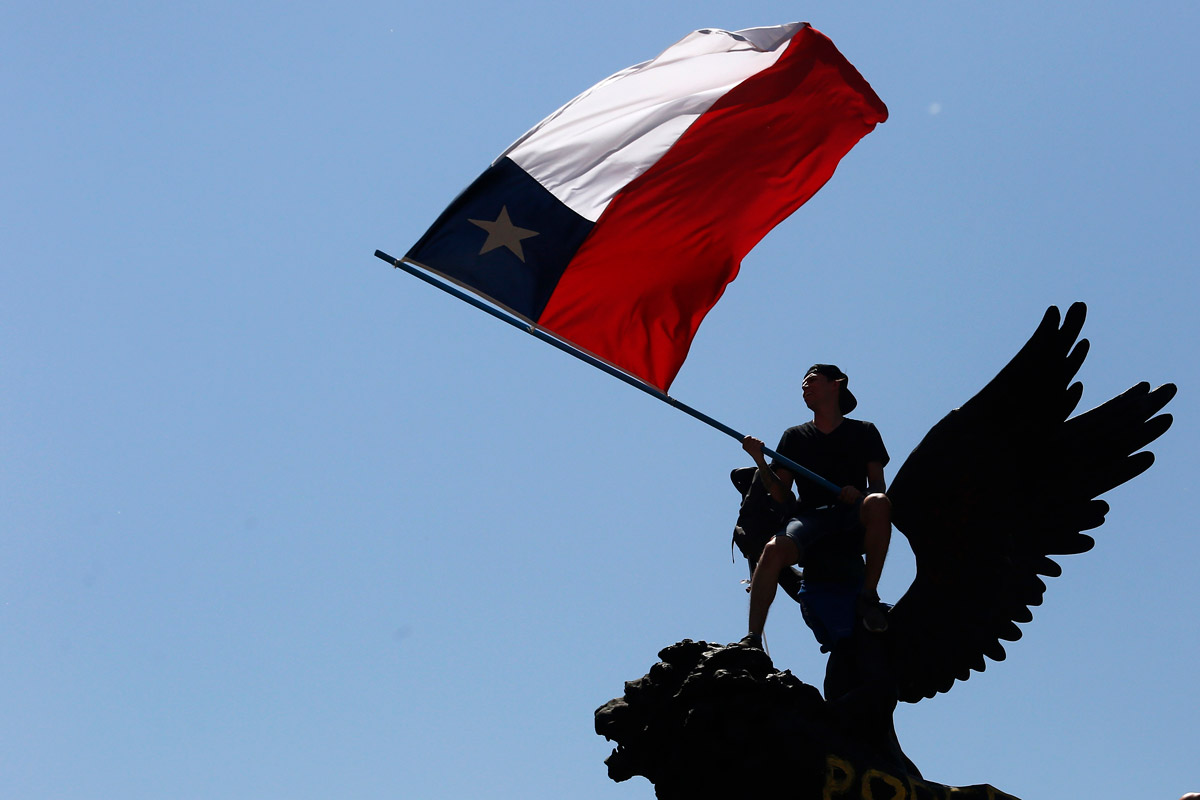
A demonstrator waves a Chilean flag on top of a monument during the seventh day of protests against President Sebastián Piñera on October 24, 2019 in Santiago, Chile. (Marcelo Hernandez / Getty Images)
Augusto Pinochet’s constitution is finally on its way out, after the October 25 referendum brought a 78 percent vote to replace his regime’s neoliberal charter. But in that vote, Chileans were also asked a second question: “What type of organ should write the new constitution?” Seventy-nine percent preferred it to be written by a constitutional convention, rather than a “mixed” body including sitting MPs.
We already know some things about what will happen next. April 11, 2021 will see an election to appoint 155 members of the constitutional convention; they will draft a document, which Chileans can then approve or reject in an “exit referendum” slated for mid-2022.
Today, the Chilean senate and congress are still defining the rules for these contests. Indeed, this is not a constituent assembly, created from scratch; and it is already clear that the convention will have limitations such as high quorum requirements, a preference for party-political delegates, and even restrictions imposed by the current constitution.