No, the Democrats’ Reconciliation Bill Is Not “Twice as Big” as the New Deal
Grasping for any available talking points to stave off progressive anger, Democrats are trying to depict Joe Biden’s Build Back Better bill as some sort of New Deal 2.0. The comparison is absurd.
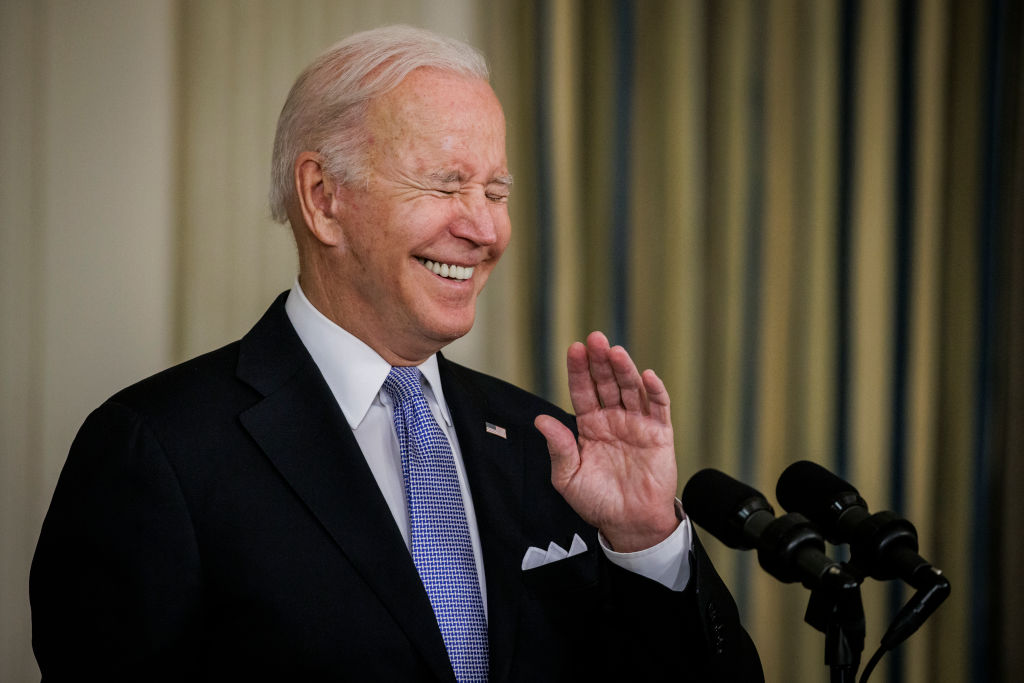
President Joe Biden delivers a press conference today, November 6, following the passage of his infrastructure bill in the House of Representatives late last night. (Samuel Corum / Getty Images)
While it’s still unclear exactly what the Democratic Party’s reconciliation package will look like in its final form, the bill originally pitched as a monster $6 trillion banquet of public investment now looks set to come in at less than a third of that number. Amid what is obviously a climbdown from the more far-reaching agenda the White House pitched earlier this earlier, however, some Democratic partisans have adopted a kind of glass-half-full rhetorical strategy: essentially arguing that the bill, whatever its faults and limitations, still represents the best of activist government on a large scale, akin in many ways to Franklin D. Roosevelt’s New Deal or Lyndon B. Johnson’s Great Society.
The most clearly articulated version of the argument, and quite probably the original source of what’s become a common talking point, came from White House chief of staff Ron Klain, who recently offered the following reply to a reporter tweeting about the lacerating cuts that continue to be made to the bill:
It’s twice as big, in real dollars, as the New Deal was. This can be the Congress that goes from 12 years of universal education to 14 years; that makes the largest investment in fighting climate change ever; that cuts what families pay for child care in half.