We Need Solidarity, Not White Guilt, to Fight Racism
To win substantive change, we don’t have to disavow personal education or introspection. But we do have to set our sights much higher — on dismantling the institutions that entrench racial inequality and violence.
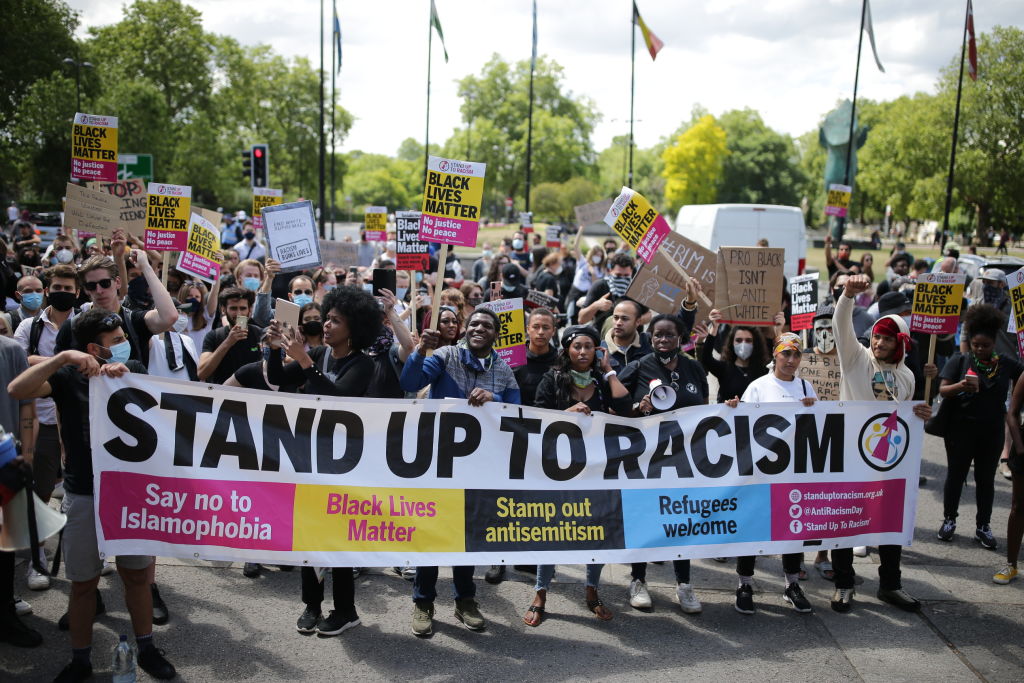
Anti-racism protesters attend a Black Lives Matter demonstration on June 13, 2020 in London, England. Luke Dray / Getty
In towns and cities across every state in the nation, protests have erupted in bitterness and rage. In the year 2020 — decades after the civil rights movement and black urban uprisings of the 1960s, and six years after the explosion of the Black Lives Matter movement — the sober reality is that black lives in America still do not matter in the face of daily injustice and police terror.
Racist attitudes, from the most embarrassing to the most pernicious, help reinforce white supremacy on a day-to-day basis. If state institutions — from violent police forces to segregated, unequal education to fatally disparate health care — form the bars that hold black America in second-class citizenship, the ideology of racism is the diet of the prison guards. For every Amy Cooper who calls the cops on a black man, knowing full well the potential consequences of such a call, to every white doctor who disbelieves a person of color when they arrive at the hospital, the repercussions of racist ideas are undeniably real.
It is therefore useful for people, especially white people, to examine their ingrained assumptions and implicit biases. Living in a racist society means absorbing bigoted ideas — they are the air we breathe. Humility and a sense of how much we have to learn is therefore warranted.