Unions Are Essential for Eliminating Racism
A new study finds that unions don't just increase wages and benefits for workers on the job — union membership is also linked to diminished racist attitudes among white workers. If we want to defeat racism, building strong, democratic unions is essential.
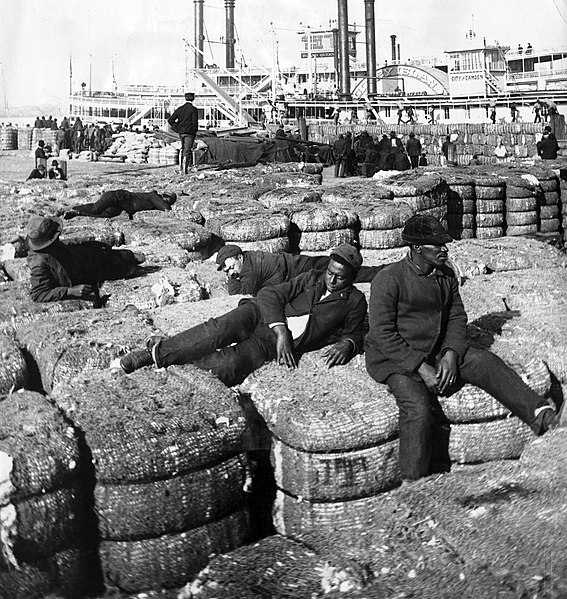
White and black dockworkers resting on cotton bales in the port of New Orleans. (B. L. Singlay)
In New Orleans in the years leading up to the Civil War, European immigrant waterfront workers lent their support to the cause of abolition. The egalitarian idealism of their antislavery commitment was entwined with a pragmatic understanding that the exploitation of unpaid labor undercut their bargaining power and drove down their own wages. Thus they opposed the “peculiar institution,” which seemed to benefit only a wealthy planter class with which they had little in common.
But once slavery was abolished, the celebration proved short-lived, as a new set of problems arose. European immigrant dockworkers in New Orleans were now competing for jobs with an influx of formerly-enslaved people whose labor was rendered cheap by destitution and pervasive anti-black repression. This development triggered a racist reaction from white dockworkers, who in some cases began calling for the deportation of ex-slaves to Africa.
When black waterfront workers formed a union in 1872 and sought integration or at least alliance with the existing white unions, “We were scoffed at,” a black worker recalled, “and rebuked by white men who work along shore, telling us constantly that the negroes broke the wages down, and it caused all to suffer.”