Oliver Cromwell Cox and the Capitalist Sources of Racism
Radical sociologist Oliver Cromwell Cox argued that racial antagonism was an essential tool for maintaining capitalist power. Cox’s understanding of race and class can help us forge a broad, multiracial movement against oppression today.
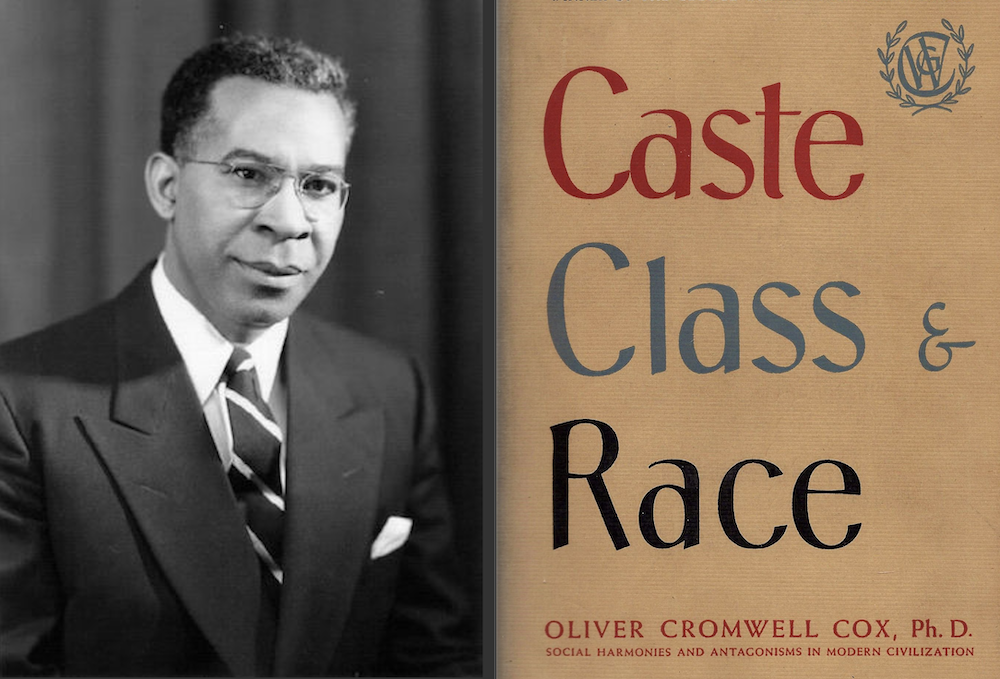
As Oliver Cromwell Cox saw it, the continuous effort to unbind race and class was a barely concealed attempt to divide workers, pitting poor blacks against poor whites.
What would it be like to merge the politics of race with the politics of class? In a time when politics has hardened along the lines of Team Race or Team Class, a rigorous sense of their interrelationship is more urgent than ever. And yet, despite constant pleas for the inseparability of class and race, the emphasis in political analysis still falls hard on one side or the other as the structuring force of history and current events.
Bertolt Brecht, writing in the 1930s, reflected on the class/race problem at length. He wondered why his liberal friends couldn’t see how racism was “essential to the conquest of markets and raw materials.” Capitalism, they thought, could “dispense” with racism and still do its job of exploiting the masses.
For Brecht, however, this missed the point. Racism was not optional, not “just another form” of politics, but the direct “consequence of class conflicts.” The “Fascist principle” demanded that “class conflicts be converted into race conflicts.”