“Black Capitalism” From Richard Nixon to Joe Biden
Joe Biden has been touting black capitalism as part of the path to racial equality. The strategy remains as futile today as when Richard Nixon pushed it fifty years ago.
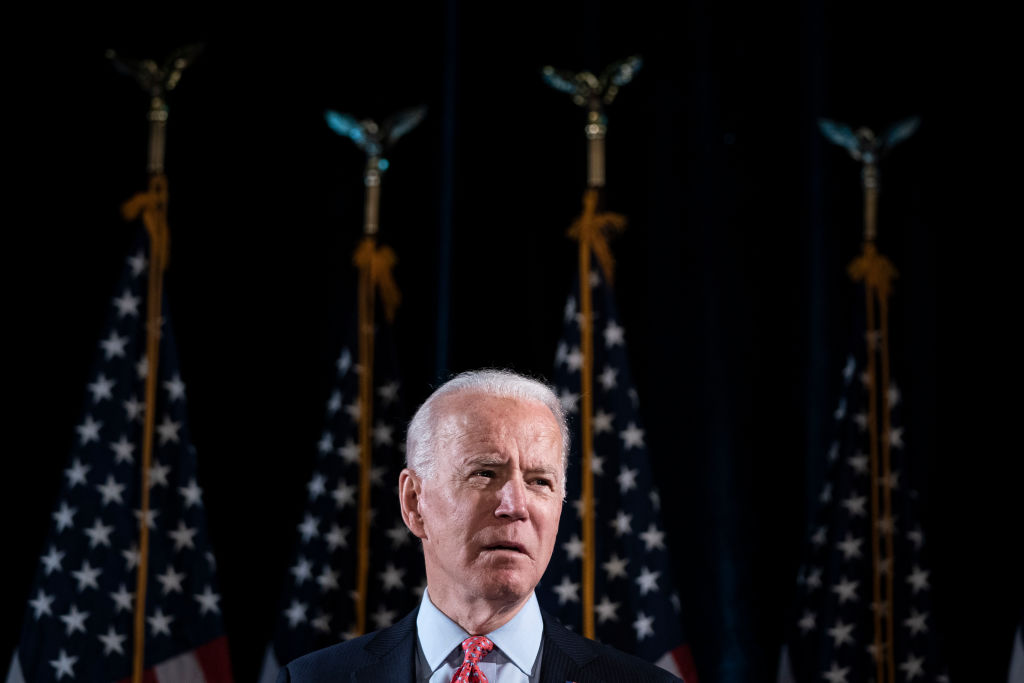
Joe Biden on March 12 in Wilmington, Delaware. (Drew Angerer / Getty Images)
Last week Joe Biden unveiled his “Lift Every Voice” plan for black America. Given his often-touted success with black voters in the primary, this plan should be of interest to all those paying attention to the presidential race. What is most striking is not the plan as a whole, but the policies that are especially emphasized and can be assumed as priorities. What follows, then, is not a comprehensive overview of the plan, but a critical assessment of what Biden (and most other centrist Democrats) deems the most effective way to improve the lot of black Americans in this country: supporting black-owned small businesses.
On paper at least, the plan includes some decent-sounding policies, like expanding federal employment and supporting unions. However, Biden’s political career casts serious doubt on whether he would even be supportive of these initiatives at all, let alone actively work to make them a reality.
But all politicians have priorities, whether they’re explicitly stated or not. Bernie Sanders’s website had a section on gun violence, but we all know his campaign was primarily about health care, education and fighting inequality. Most American voters have a pragmatic understanding that presidents won’t be able to enact much of their notional agenda, and will need to focus on a few core initiatives to leave their mark.