Australian Labor and the “Color Line”
At the turn of the twentieth century, the Australian labor movement was considered the most successful in the world, but notions of “White Australia” have always haunted and undermined its internationalism.
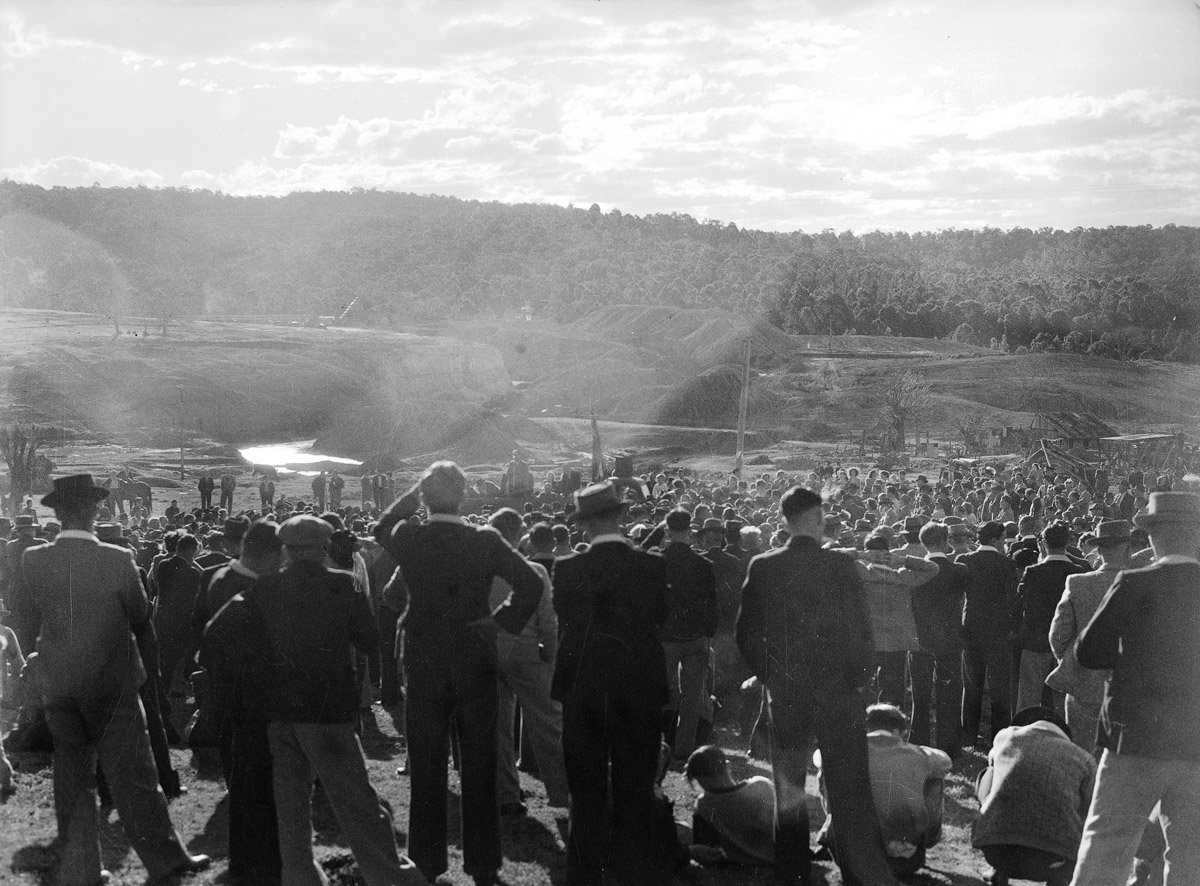
Demonstration by striking miners at Minmi Open Cut Mine on July 31, 1949 in the Hunter Valley, New South Wales, Australia. (F. Burke / Fairfax Media via Getty Images)
In 2017, the Australian Labor Party (ALP) released a short video. Then–opposition leader Bill Shorten appeared alongside an overwhelmingly white cast of workers, with “Employ Australians First” emblazoned across the screen. The ad called for a cut to skilled migration. Following a backlash, Shorten claimed it was nothing more than a “bad oversight.” Given Labor’s long history of racial exclusion, his excuse was difficult to swallow.
After all, from its inception, the ALP and the mainstream union movement championed the “White Australia policy,” which excluded Asians and other nonwhite migrants from the national community. The Gough Whitlam Labor government finally repealed the policy in 1973.
Despite this, friendship and solidarity have often blossomed between white Australian workers and those subjected to (neo)colonialism across Asia, sympathies which in turn forced a reconsideration of their own position in an imperial world order. This history of internationalism stands in stark contrast to the long shadow that the White Australia policy still casts over the ALP and the mainstream labor movement.