The Case Against Business Schools
Business schools claim they’re training noble civic leaders, not money-grubbing managers. But beneath the ethics classes and talk of social responsibility, they’re still just finishing schools for capitalism’s managerial aristocracy.
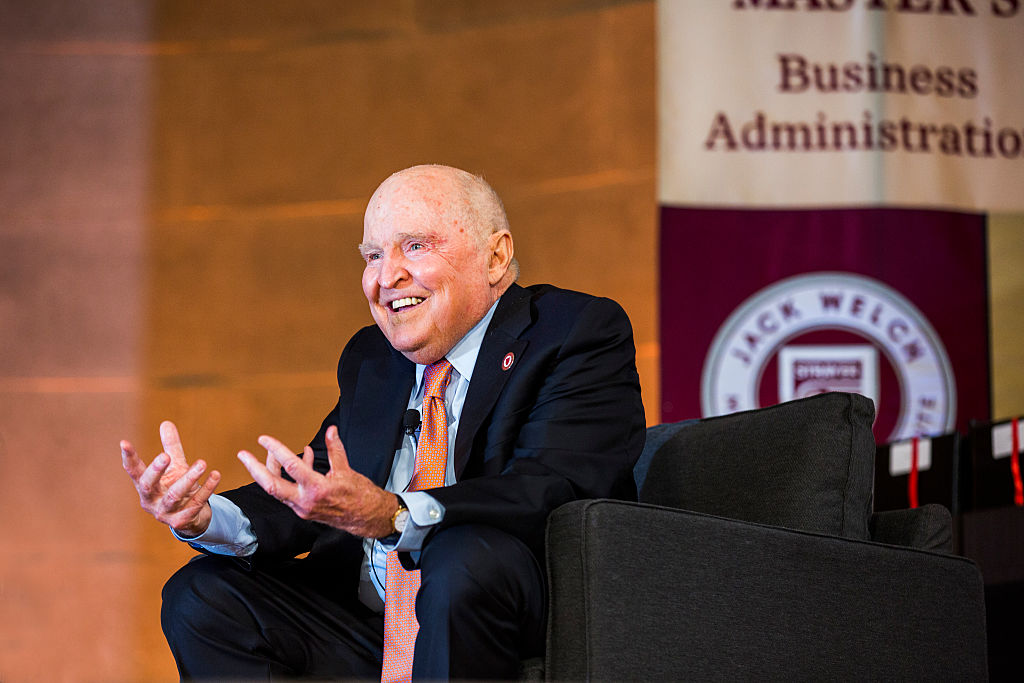
Business schools extol capitalists like former General Electric CEO Jack Welch. (Brooks Kraft / Getty Images)
When Harvard University established its graduate business school in 1908, one college alumnus registered his disapproval in the form of a cheeky little poem:
Fair Harvard! I hear that you’ve been such a fool
As to start a ridiculous business school
Where ‘Grocery 2’ and ‘Butchery 4’
Take the place of the classics of yore.
Harvard Business School (HBS) was an early specimen of its kind: an academic training ground for those who would manage the American capitalist economy in its age of conquest. An MBA graduate is more likely to work at the limited liability company that owns the supermarket that controls the butcher’s wages than to personally dissect any meat, but that was hardly the complainer’s point. The stink of a butcher’s shop, once the model of sordid prosperity among the medieval artisan class, served as a convenient, if quaintly classist, metaphor for the stink of corporate moneymaking in the First Gilded Age. Since emerging in the late nineteenth century, American business schools have fought to scrub off any unsightly residue, which often means persuading everyone that they’re agents for a higher purpose rather than simply parvenu hoarders. “Managers” is now passé; business schools want you to know that they’re training leaders.