What Marx Understood About Slavery
Marx, like generations of socialists, saw the particularly capitalist character of the New World’s slavery — and the inextricable link between the emancipation of the enslaved and the liberation of the entire working class.
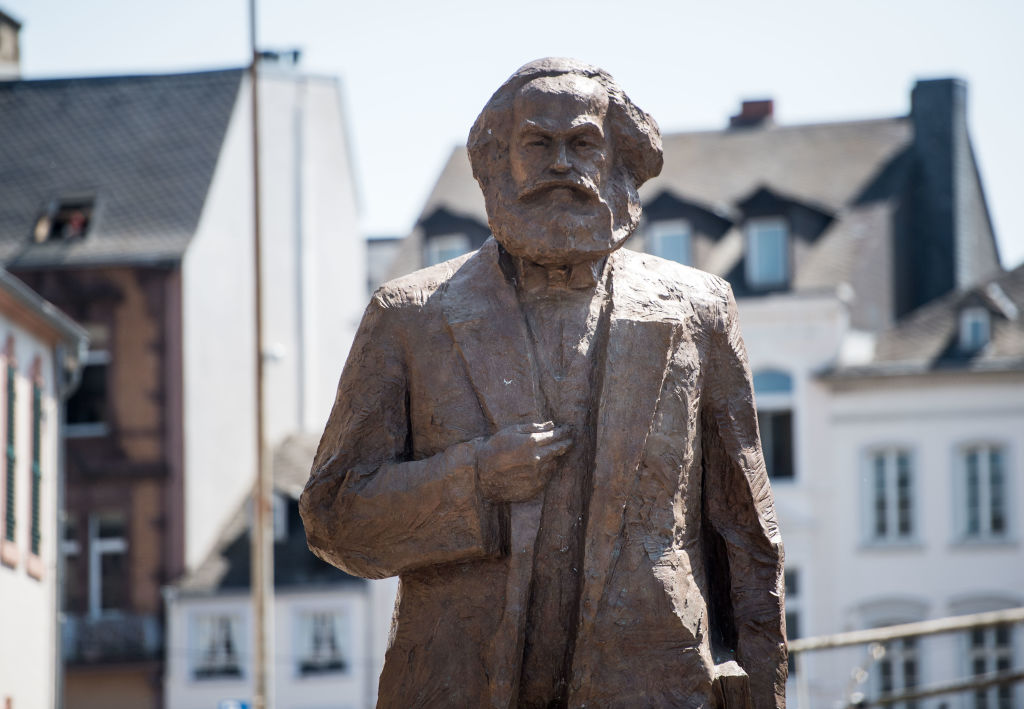
The sculpture of German philosopher and revolutionary Karl Marx is uncovered during its inauguration at the 200th anniversary of the birth of Karl Marx on May 5, 2018 in Trier, Germany.Thomas Lohnes / Getty
This year marks the 400th anniversary of the arrival of the first enslaved Africans in Virginia. Although this grim event is now being discussed in profound and penetrating ways, few in the mainstream media are noting the particularly capitalist character of the New World’s modern form of slavery — a theme that runs through Marx’s critique of capital and his extensive discussions of capitalism and slavery.
Marx did not view the large-scale enslavement of Africans by Europeans, which began in the early sixteenth century in the Caribbean, as a repeat of Roman or Arab slavery, but as something new. It combined ancient forms of brutality with the quintessentially modern social form of value production. Slavery, he wrote in a draft for Capital, reaches “its most hateful form . . . in a situation of capitalist production,” where “exchange value becomes the determining element of production.” This leads to the extension of the workday beyond all limit, literally working enslaved people to death.
Whether in South America, the Caribbean, or the plantations of the southern United States, slavery was not a peripheral but a central part of modern capitalism. As the young Marx theorized this relationship in 1846 in The Poverty of Philosophy, two years before the Communist Manifesto: