Marx’s America
Marx is thought of as a purely European phenomenon. But his radical politics were indelibly shaped by his encounters with American life.
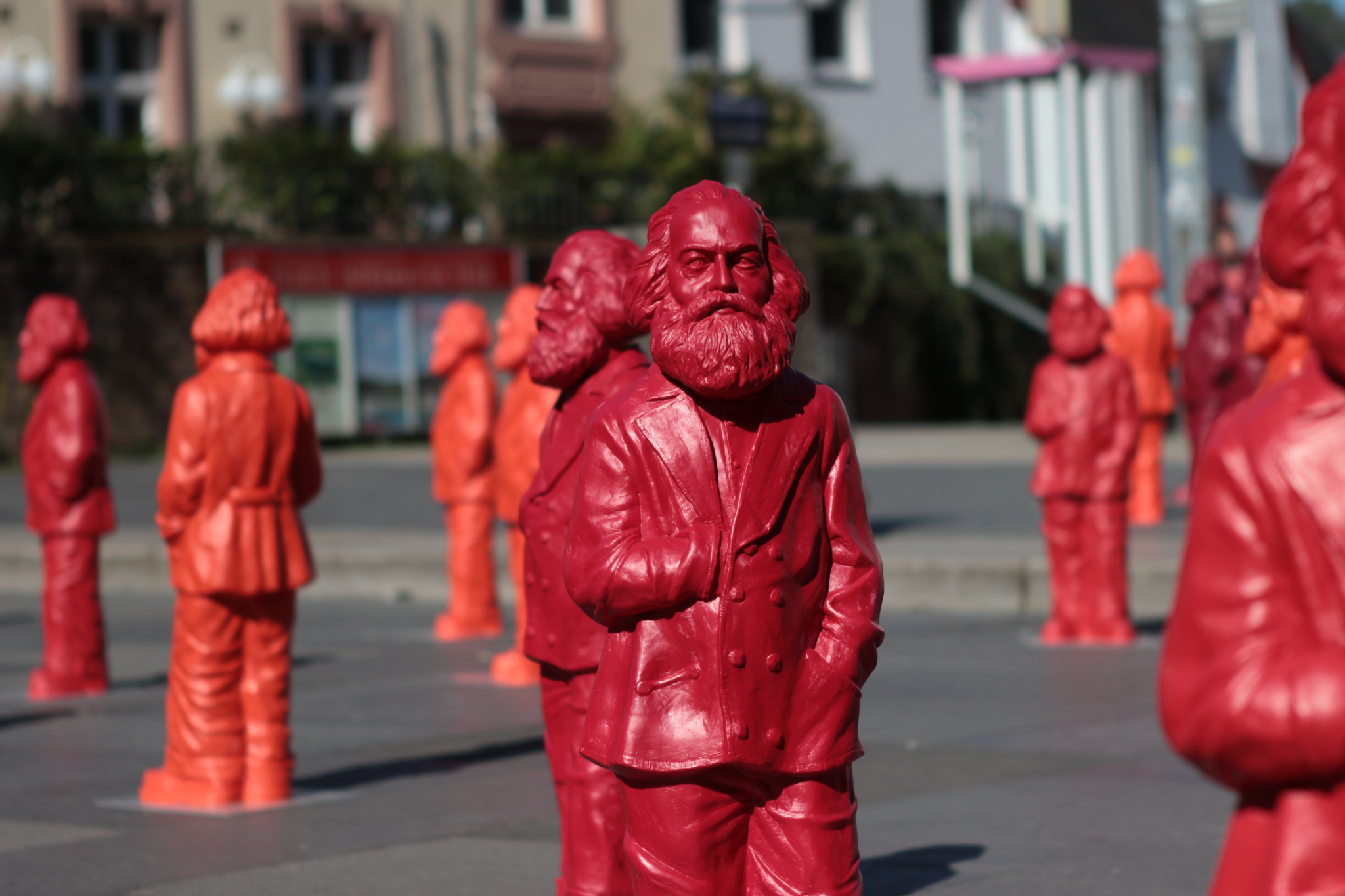
A Marx art installation in Trier, Germany. Cordylus / Flickr
In the early years of radio, the BBC aired a series about famous exiles in London. One episode included an interview with an elderly man long retired from his job in the British Museum’s reading room. The man was asked if he remembered a patron by the name of Karl Marx, who for many years toiled at the museum on what would become his masterpiece, Das Kapital.
At first the retiree drew a blank, but after he was given several clues — Marx sat in the same seat every day, wore a thick graying beard, endured painful boils, and endlessly requested materials about political economy — the man’s memory came alive. “Oh Mr Marx, yes, to be sure. Gave us a lot of work ’e did, with all ’is calls for books and papers. And then one day ’e just stopped coming. And you know what’s a funny thing, sir? Nobody’s ever ’eard of ’im since!”
Marx himself half expected Capital to tumble into oblivion. As he was preparing to send it to press in 1867, he suggested that his friend Friedrich Engels read Balzac’s The Unknown Masterpiece. It was a sardonic recommendation. The Unknown Masterpiece tells the story of a painter who spends decades laboring on a single painting in an effort to render a perfectly accurate representation of reality. When a fellow artist scorns the piece as unintelligible, the painter hastily destroys it in a blaze of fire, and dies soon after.