Karl Marx Supported Arab Liberation
Late in life, Karl Marx had a brief encounter with the Arab world. Though he was never able to study the region in detail, Marx’s writings confirm his support for Arab struggles against their colonial oppressors.
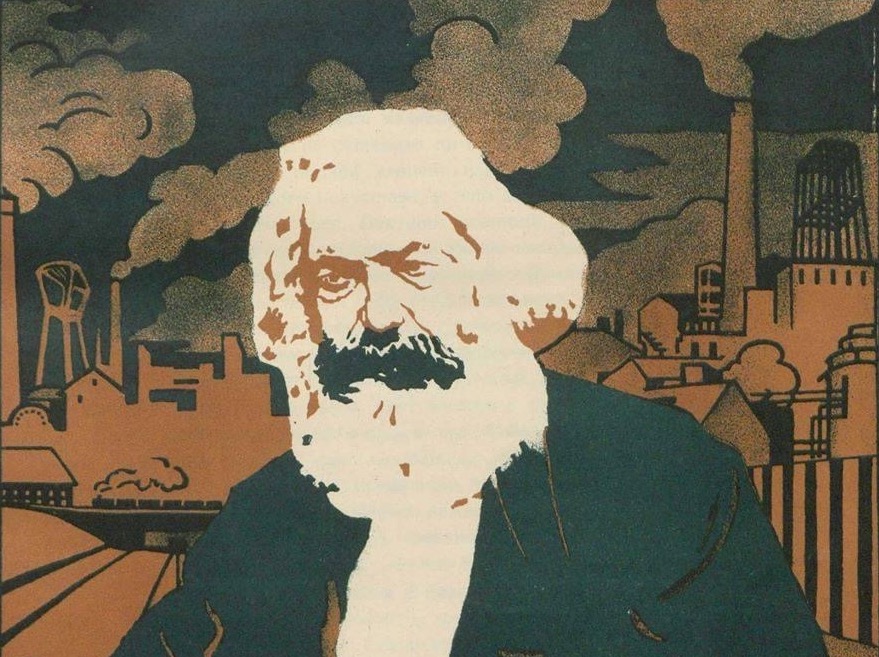
A poster of Karl Marx from 1920. (Wikimedia Commons)
In the winter of 1882, during the last year of his life, Karl Marx had severe bronchitis, and his doctor recommended a period of rest in a warm place. Gibraltar was ruled out because Marx needed a passport to enter the territory, and as a stateless person, he was not in possession of one. The German Empire of Otto Von Bismarck was covered in snow and forbidden to him in any case. Italy was out of the question since, as Friedrich Engels put it, “the first proviso where convalescents are concerned is that there should be no harassment by the police.”
Engels and Paul Lafargue, Marx’s son-in-law, convinced the patient to head for Algiers. At the time, the capital of French Algeria enjoyed a reputation as a good destination to escape the rigors of the European winter. As Marx’s daughter Eleanor Marx later recalled, what really pushed Marx into making this unusual trip was his number one goal: to complete Capital.
Marx crossed England and France by train and then the Mediterranean by boat. He lived in Algiers for seventy-two days, the only time in his life that he spent outside Europe. As the days passed, Marx’s health did not improve, but his suffering was not only bodily. He was very lonely after the death of his wife and wrote to Engels that he was feeling “deep attacks of profound melancholy, like the great Don Quixote.” Because of his deteriorating health, Marx also missed engaging in serious intellectual activity.