How Slavery Shaped American Capitalism
The New York Times is right that slavery made a major contribution to capitalist development in the United States — just not in the way they imagine.
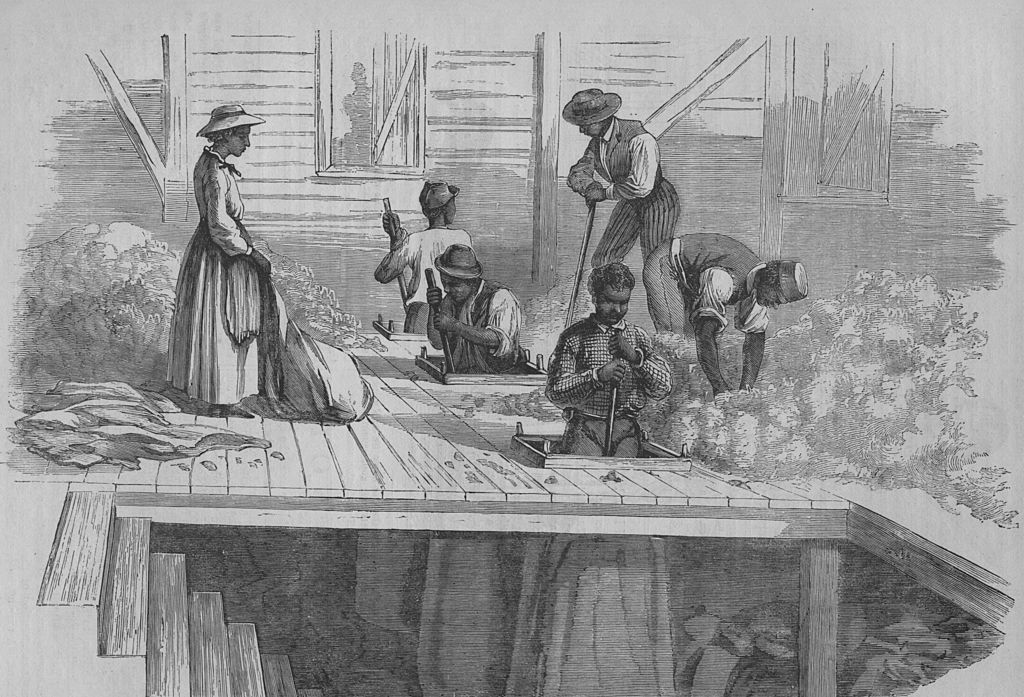
Illustration of African-American slaves working on a cotton plantation circa 1840. Kean Collection / Getty
In a New York Times Magazine article this month, Matthew Desmond provided an overview of recent work by historians of capitalism who argue that slavery was foundational to American growth and economic development in the nineteenth century. In Desmond’s words, slavery “helped turn a poor fledgling nation into a financial colossus.”
The article provoked predictable wails of disapproval among conservatives seeking to defend the moral integrity of capitalism, and the Times should be commended for exposing its readers to the brutal history of slavery, which is indeed central to the story of American capitalism. But the vision that Desmond presents is wrong on the details, and obscures the way in which slavery actually shaped the wealth and power of American capitalists.
Desmond begins his article by drawing on the Harvard historian Sven Beckert who argues that “it was on the back of cotton, and thus on the backs of slaves, that the U.S. economy ascended in the world.” Yet Desmond neglects to mention that this claim has been widely rejected by specialists in the economic history of slavery.