Hollywood and the Pentagon
Some of your favorite movies were probably made with help from the Department of Defense. Now we know which ones.
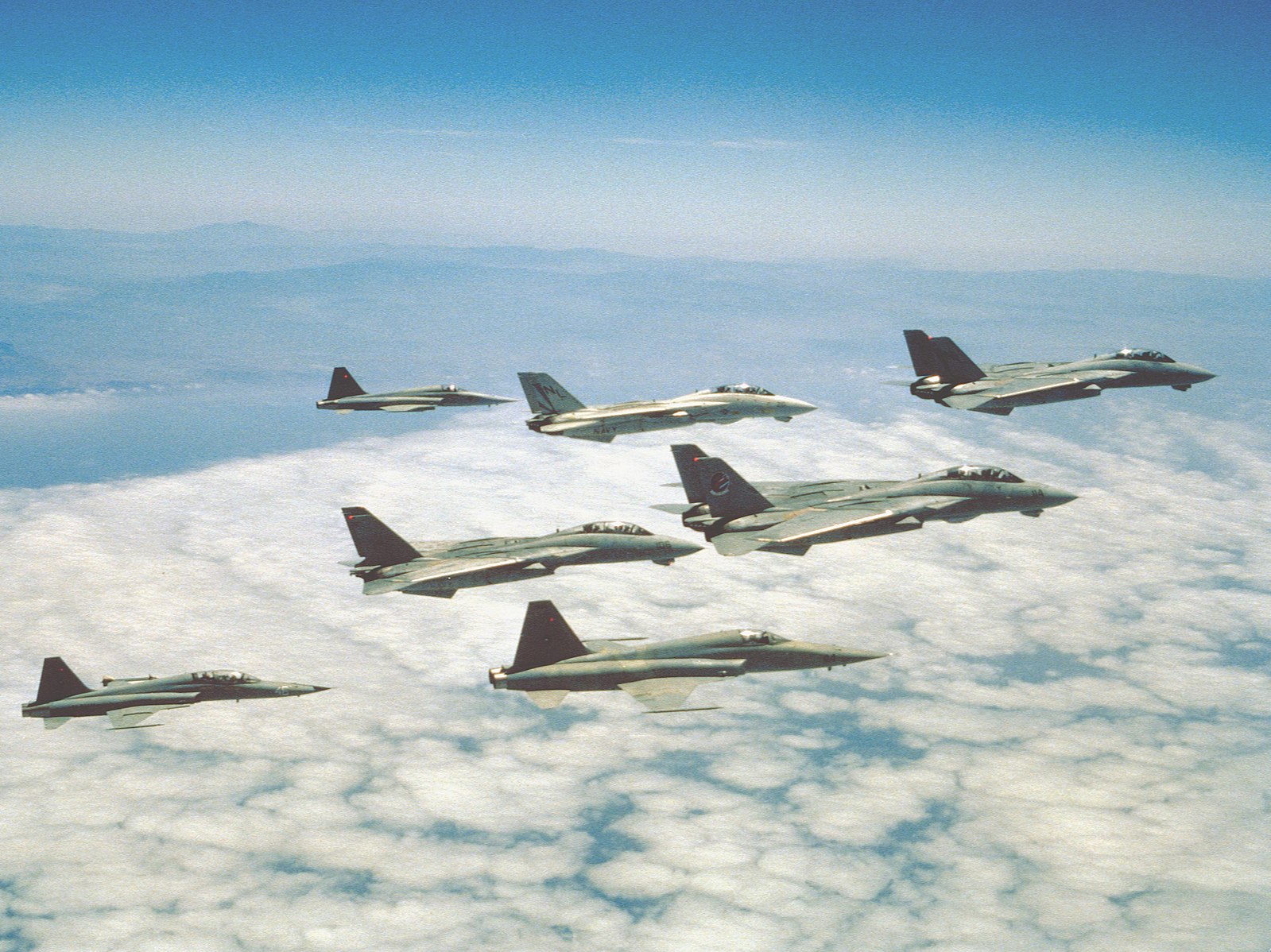
A formation of U.S. Navy Grumman F-14A Tomcats of Fighter Squadron 51 (VF-51) “Screaming Eagles” and VF-111 “Sundowners”, and Northrop F-5E/F Tiger IIs of the Navy Fighter Weapons School. These units represented a vital part of the U.S. Navy’s participation in the 1986 feature-film “Top Gun”, providing the aerial dogfighting sequences that were a defining trademark of this movie. Note the fictitious markings on the tail of at least one of the F-14s. (LCdr. David Baranak, U.S. Navy / National Archives and Records Administration)
Phil Strub was no ordinary pencil pusher at the Department of Defense. A graduate of both the Navy’s Officer Candidate School and University of Southern California’s legendary film program, Strub had one job from 1988 until his retirement in 2018: Hollywood’s helping hand at the Pentagon.
As Strub once put it: “The relationship between Hollywood and the Pentagon has been described as a mutual exploitation. We’re after military portrayal, and they’re after our equipment.”
Need a shot of F-22s landing on aircraft? Send Phil your script for approval — but he might have some notes. Need a bunch of extras, but want to get around Screen Actors Guild daily rates ($153 for eight hours), overtime, and residuals? Strub can put actual enlisted men and women into costume! This translates into enormous savings for Hollywood productions. And some films, like Top Gun or Transformers, almost certainly couldn’t have been made without that Department of Defense green light.