How Rome’s Rulers Tried to Stamp Out the Right to Protest
Present-day attacks on the right to free assembly have a long history behind them. For centuries, the rulers of ancient Rome tried to stop its people from organizing to defend their interests, but protest kept resurfacing despite their best efforts.
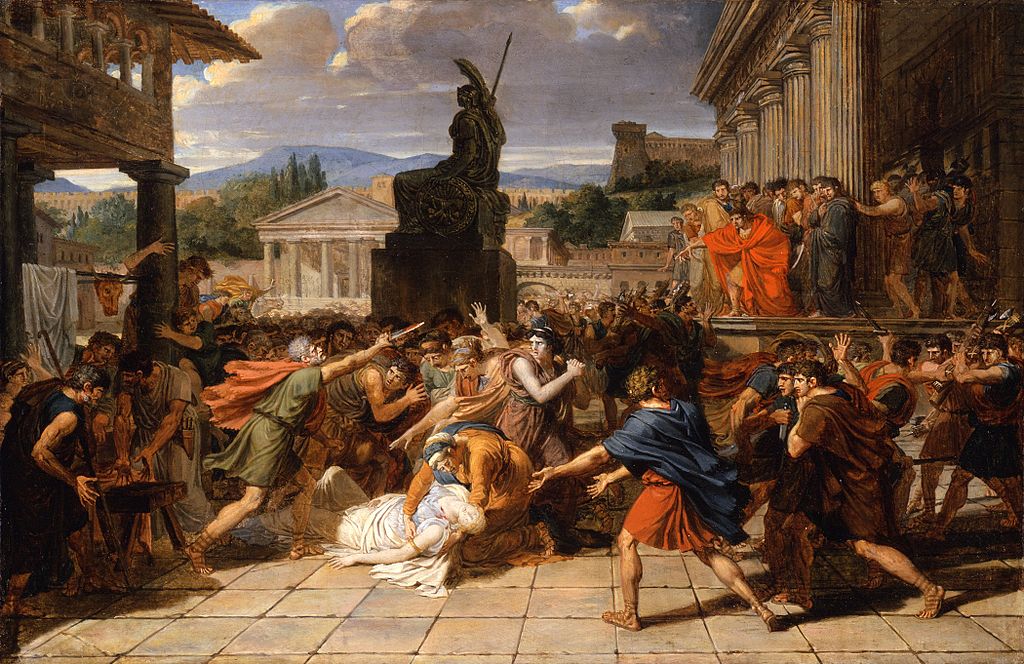
Guillaume-Guillon Lethière’s “The Death of Virginia,” now at the LACMA, Los Angeles, CA. Virginia was a plebeian killed by her father to allegedly save her virtue during the Struggle of the Orders after she was unjustly ruled to be a slave. (Wikimedia Commons)
Protesters have taken to the streets to make their voices heard in huge numbers across the globe this year. According to data published by the Armed Conflict Location and Event Data (ACLED) project, June 2025 had the second-highest number of demonstrations in a single month within the United States, topped only by June 2020, at the peak of the Black Lives Matter movement.
The United States is not the only country where protesters have mobilized on a massive scale. The Global Protest Tracker notes that in a range of countries, from the United Kingdom to Turkey to Bangladesh, there have been 150 significant antigovernment protests in the last year.
The rising tide of protesters has increasingly run up against new restrictions and crackdowns on the ability to assemble in peace. From Donald Trump threatening universities that permit what he calls “illegal protests,” to mass arrests of those demonstrating in support of Palestine Action in London, governments are making it progressively more difficult for protesters to exercise their civil liberties.