Brutalism Is Back
- Oscar Davies
Not everyone is excited about the resurgence of brutalism. But the rise of neobrutalist projects shows how the polarizing architectural style can also be a pragmatic use of scarce resources.
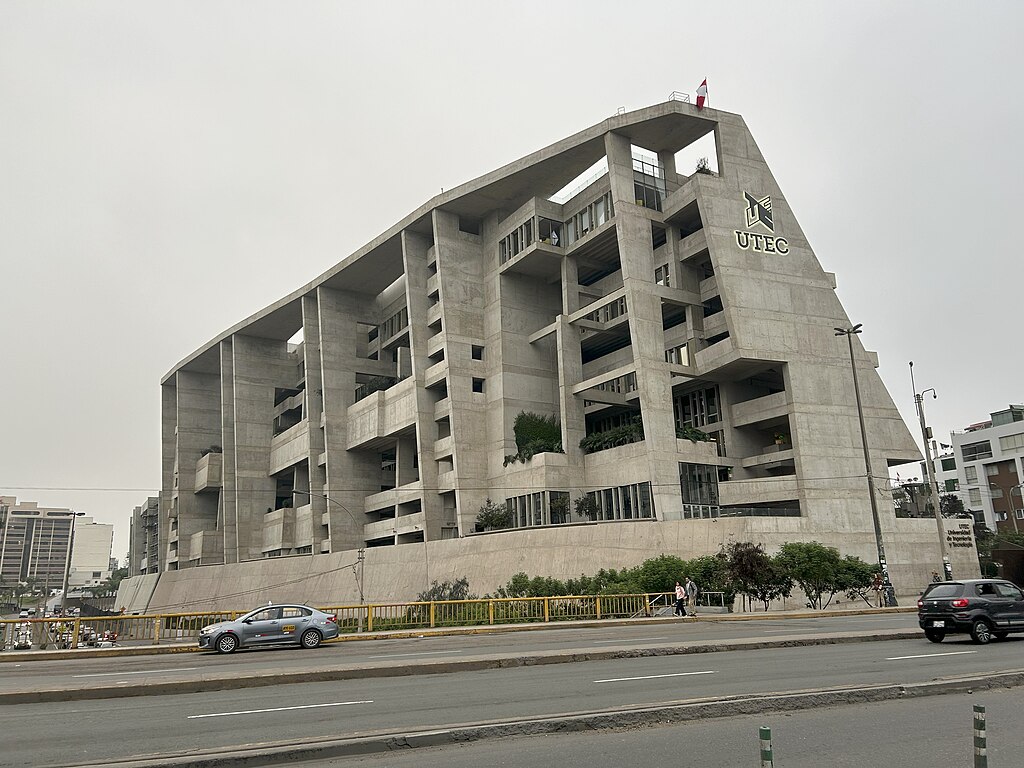
An architectural style is always a mirror of its time. In a digital and virtualized world, neobrutalism reflects the yearning for the tangible and the material. (The Universidad de Ingeniería y Tecnología in Lima, Peru) (Gatodemichi / Wikimedia Commons)
A new generation of architects around the world is adapting brutalism to modern times. Neobrutalism is not just a resurgence, but leading toward an ecological development of the polarizing architectural style.
For several years now, brutalist architecture has been undergoing a revival. But not everyone is excited about it, yet. When the infamous Mäusebunker building in Berlin was saved from demolition in 2023 through a petition with ten thousand signatures, the local right-wing tabloid B.Z. ran the headline: “Berlin’s Ugliest Building Now Heritage Protected.” In tandem with the aesthetic arguments over the brutalism of yesteryear, amazing things are happening in the contemporary world of architecture.
New projects around the world seem to once again follow brutalist approaches of the 1950s–1970s. Raw materials, exposed structures, legible arrangements, and a new appreciation of sculptural forms cast doubt on whether brutalism really disappeared into oblivion after 1980. If you look at buildings like the Universidad de Ingeniería y Tecnología (UTEC) in Lima, completed in 2015, you’re immediately struck by the similarity to the bold designs of half a century ago. What we are witnessing is nothing less than a global resurgence that could be called neobrutalism.