Big Money Is Still Warping US Politics
Though the issue has been put on the back burner in recent years, the influence of big money is still wreaking havoc on US politics. Zohran Mamdani’s grassroots-powered, publicly funded campaign for New York City mayor suggests a way out of this morass.
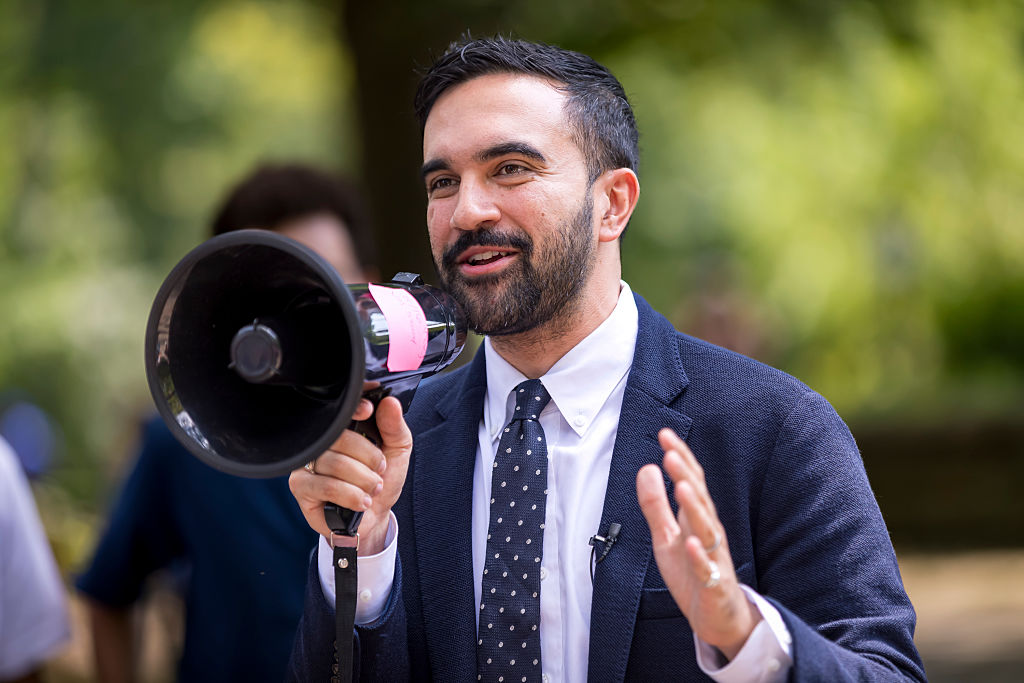
Zohran Mamdani’s campaign paired grassroots outreach with a savvy social media campaign that proved more effective than spending on advertisements. (Michael Nigro / Pacific Press / LightRocket via Getty Images)
Earlier this summer, Bernie Sanders did what Kamala Harris was famously unwilling to do and appeared as a guest on The Joe Rogan Experience. Throughout the almost two-hour interview, Sanders repeatedly returned to the corrupting power that money from Super PACs and large donors has had on the political system. Rogan asked him what he would have done first if he had been elected in 2016, and Sanders answered that “number one,” he “would have dealt with this campaign finance reform issue.”
It was perhaps an unexpected response, given that over the last decade campaign finance reform has moved to the back burner, viewed by many as a quixotic cause since Citizens United. Yet elsewhere, Sanders has clarified that, nevertheless, addressing the issue was the key to addressing a whole host of other problems including unaffordable health care, extreme economic inequality, and the weakening of American democracy.
A great deal of attention has been paid to the ways dark money has played a defining role in the success of the modern Republican Party, with numerous stories on the Koch brothers and other figures — and more recently to Elon Musk’s brazen, massive contributions in the 2024 presidential elections. Yet the Democrats are hardly blameless, something that Sanders has been quick to point out. The flood of money has not only shaped the Democrats’ policy agenda — Gaza is perhaps the most obvious example — but has hamstrung their political strategy over the last four decades as well.