Camera in One Hand, Gun in the Other
With its celebration of mercs rampaging through Africa, no healthy society could produce a magazine like Soldier of Fortune.
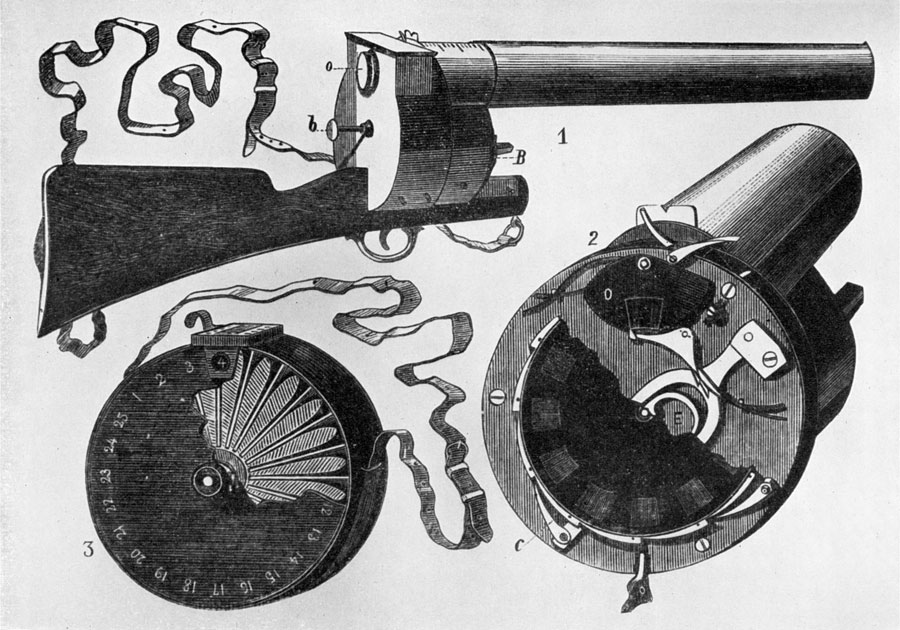
Photographic gun designed by Etienne Jules Marey, 1882 (1956). (The Print Collector/Print Collector/Getty Images)
Soldier of Fortune, a digest for gun enthusiasts and mercenaries, was headquartered for years at a mansion in the Rocky Mountain foothills, just outside what publisher Robert K. Brown dubbed “the Flaming Liberal People’s Republic of Boulder.”
The Brown Hotel, as the mansion was known, was infamous among locals for its raucous parties. Groups of men on motorcycles and in vans streamed up the switchbacks toward the property, where they drank and fired guns all night. In his autobiography, Brown does his best to cast the site as a hybrid of a Hells Angels clubhouse and the Playboy mansion — a libertarian hideout, full of testosterone and sex, where real men could shoot guns, get laid, and recuperate after boisterous excursions to faraway war zones.
Such mythology masks a sadder truth: the Brown Hotel was an ugly place full of lonely and hateful men, because those are the kind of men Robert K. Brown likes. RKB, as he calls himself in the magazine, embodies the most revanchist strain of American nationalism; his life’s work has been to surround himself with the kinds of people who are called to travel the world, pointing weapons at anything that moves. (This hasn’t always worked out great for RKB: at one of those Brown Hotel ragers, a drunken Vietnam vet showing off a new pistol managed to blow a hole through his own palm, lodging the bullet in the publisher’s thigh.)