Turning the War in Our Favor
The UK university lecturers' strike is over, but their struggle isn't.
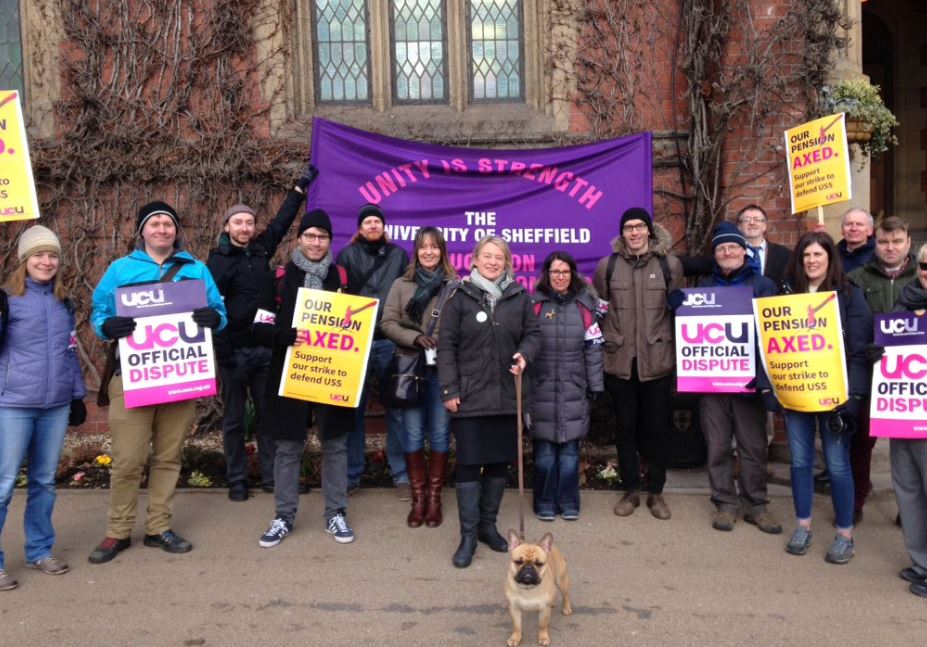
University College Union picketers on February 22, 2018. Daniel Edmiston / Twitter
The UK university strike is over, for now. Members of the University and College Union (UCU) voted to accept the second proposal from Universities UK, the representatives of British university managers, by 64 percent to 36 percent. All eyes now turn to the joint panel, half each from the union and the employers, which will investigate the future of the University Superannuation Scheme (USS), the pension fund at the heart of the dispute. If the findings of the panel come out against university workers enrolled in the USS, fresh strikes may well break out in the next academic year.
The strike might be over, but it has changed British higher education for good. University workers have come together on picket lines and found that they need not face their many problems alone. Thanks to the inspirational struggles (and tweets) of teachers in West Virginia they have discovered the practical virtues of international solidarity. They have built networks of rank-and-file activists in person, and online, that can reshape their union. They have amassed a literature of protest that they can draw on in the struggles ahead.
The goodwill that university managers once took for granted, which meant long uncontracted hours by permanent staff and oodles of unpaid labor by an army of casual workers — that goodwill no longer exists. UCU members end their strike with a changed understanding of their place in the university. They and their managers now sit squarely in opposing camps. The myth of a collegial community of scholars, a myth so obviously out of place in the age of the neoliberal university, has been shattered. A growing number of university workers find their allies in students, in other campus workers, and in workers in general. They have jettisoned the academics who have most successfully climbed the greasy pole of university management.