Labor and the Long Seventies
In the tumultuous 1970s, women and people of color streamed into unions, strikes swept the country — and employers launched a fierce counter-attack.
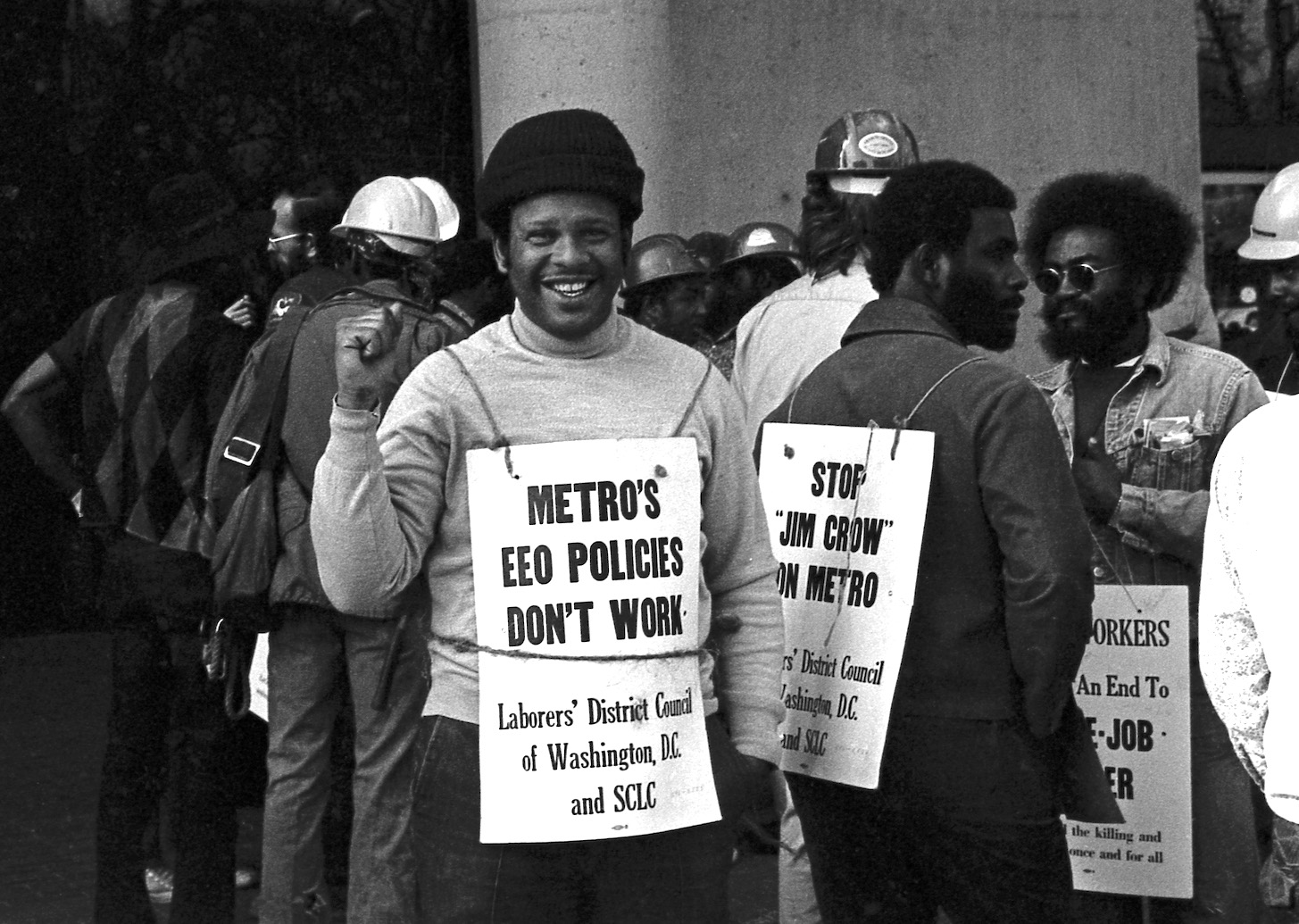
Construction workers protest at Washington, DC Metro headquarters in November 1974. Washington Area Spark / Flickr
Democracy is bad for business. Fearful of what employees would do if they had power in the workplace, corporations have used every strategy conceivable to keep them in line and democracy in check.
And yet there was a time, hard as it might be to imagine now, when labor was on the ascendency. Many have even claimed that there was a social compact between capital and labor following the end of the Second World War: employers dumped the Pinkertons for productivity gains and workers agreed to swap picket signs for picket fences and the promise of an ever-increasing quality of life. Then, somewhere between the Tet Offensive and the Reagan Revolution, it all started to come crashing down for the labor movement — and has yet to recover.
What happened and why? Lane Windham, associate director of Georgetown University’s Kalmanovitz Initiative for Labor and the Working Poor, offers some intriguing answers in her new book, Knocking on Labor’s Door: Union Organizing in the 1970s and the Roots of a New Economic Divide.