The Story of the Tet Offensive
Fifty years ago today, the Tet Offensive exposed the US military and the global economic order it oversaw.
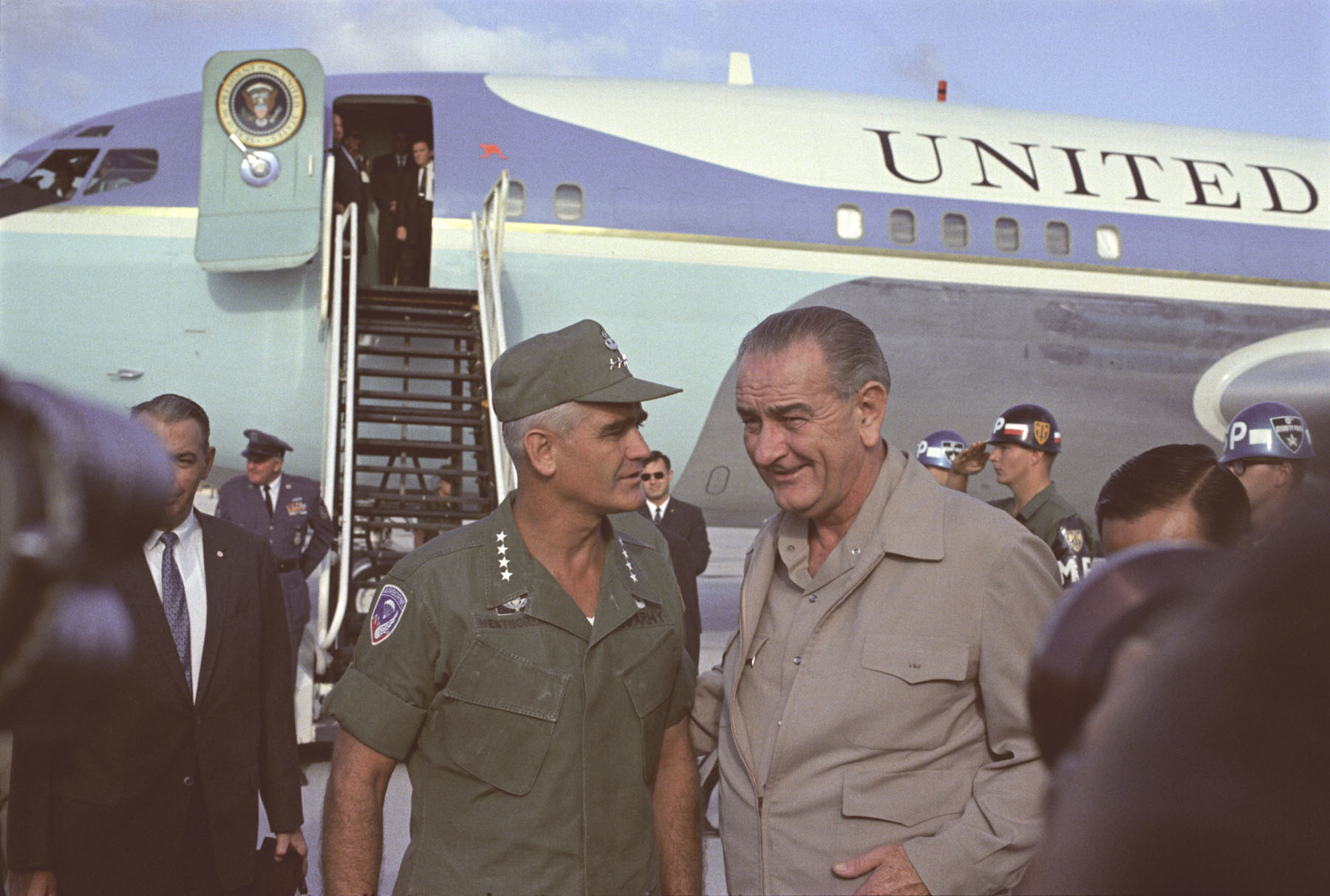
President Johnson visits Gen William Westmoreland in South Vietnam a month before Tet.
At the end of January, the media will commemorate the fifty-year anniversary of one of the Vietnam War’s most pivotal moments: the Tet Offensive.
On January 30, 1968, the combined forces of the Viet Cong, the People’s Liberation Armed Forces in the South, and the People’s Army of Vietnam from the North attacked virtually every important military and political center in the Republic of Vietnam, even invading the US embassy. Within sixty days, President Lyndon Johnson would reject the military’s request for a troop surge, begin de-escalating the war, and withdraw from the 1968 presidential campaign. Even then, observers saw Tet as a turning point in the Vietnam era, and it has maintained near-mythic status ever since.
The consensus view still holds that Tet was a significant American military victory, derailed by political factors at home — especially in the media. Walter Cronkite came to symbolize this domestic opposition after he famously implored Johnson to negotiate a way out of the war during a February 27 Special Report.