Podemos Under Pressure
With the Catalan standoff emboldening the Spanish right, can Podemos revive its populist alternative to the status quo?
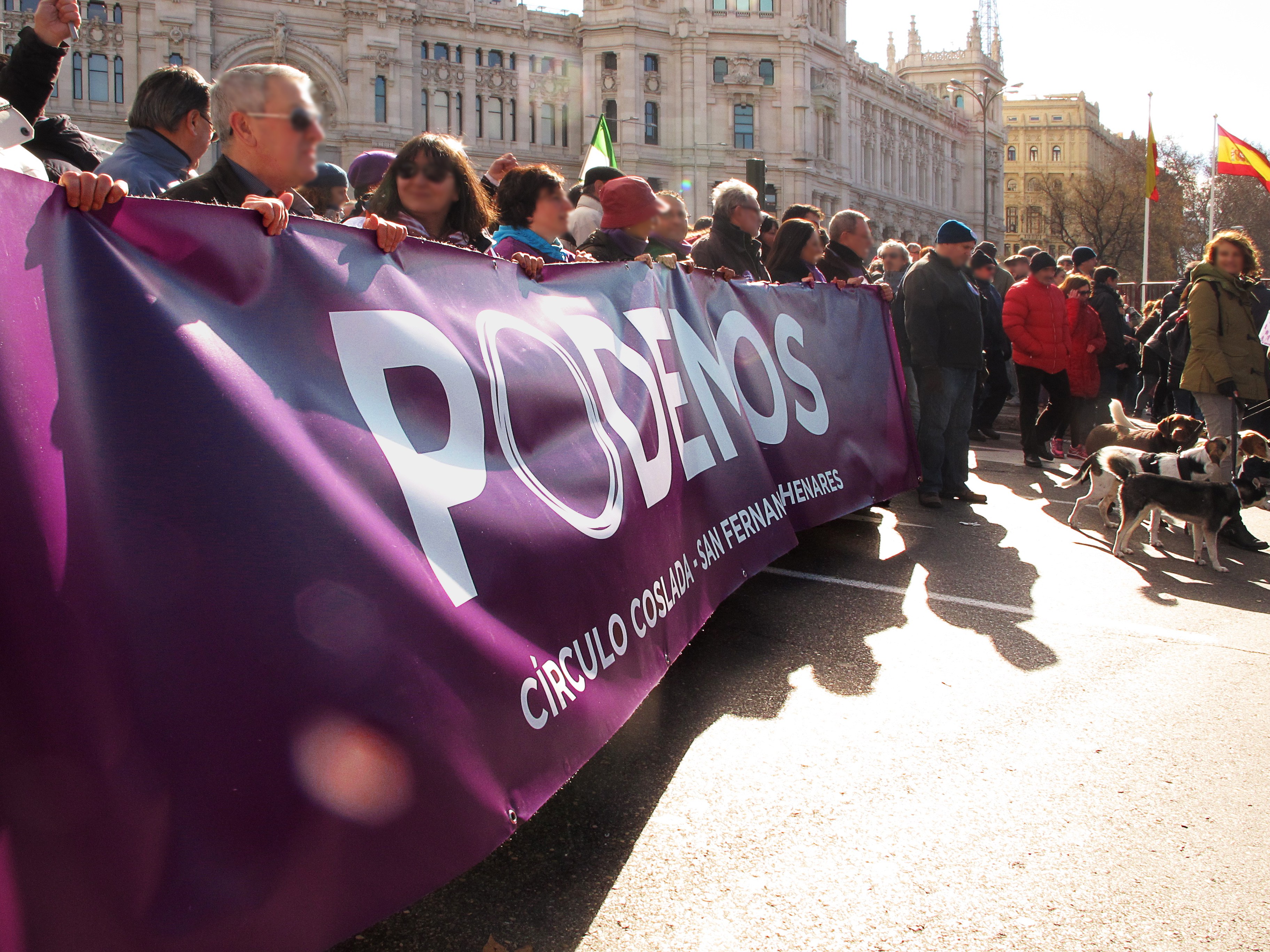
2016 Podemos demonstration in Plaza de Cibeles, Madrid. (Credit: Jacinta Lluch)
Since the proclamation of a Catalan republic on October 27, the independence movement in Catalonia has been on the retreat. Hours after the parliamentary vote on independence, the right-wing Spanish government of the Partido Popular (PP) moved to impose direct rule and took control of Catalan institutions in the days that followed.
This setback opened up a debate among pro-independence forces over how to proceed. Given the evident force majeure of the Spanish state, Catalan Premier Carles Puigdemont’s center-right Partit Demòcrata Català and its center-left coalition partner Esquerra Republicana have both distanced themselves from the unilateral approach to independence. Instead, they will participate in fresh elections this month aiming for “bilateral negotiations with the [Spanish] State and the EU”.
In the rest of Spain a wave of nationalist sentiment has seen a clear shift to the right, with some polls showing the PP and Ciudadanos, the two main right-wing parties, winning an absolute majority if general elections were held today. Podemos, the only major Spanish party to vote against suspending Catalan autonomy, has found it difficult to operate in a climate dominated by the national question. Defending an alternative federal model for the country that would recognize the right to decide, they have repeatedly been painted as “traitors” and close allies of the independence movement by much of the Spanish media.