The Lesser Evil
After years of corruption scandals and austerity, Spain finally ousted its conservative president Mariano Rajoy. But will the center-left PSOE do much better?
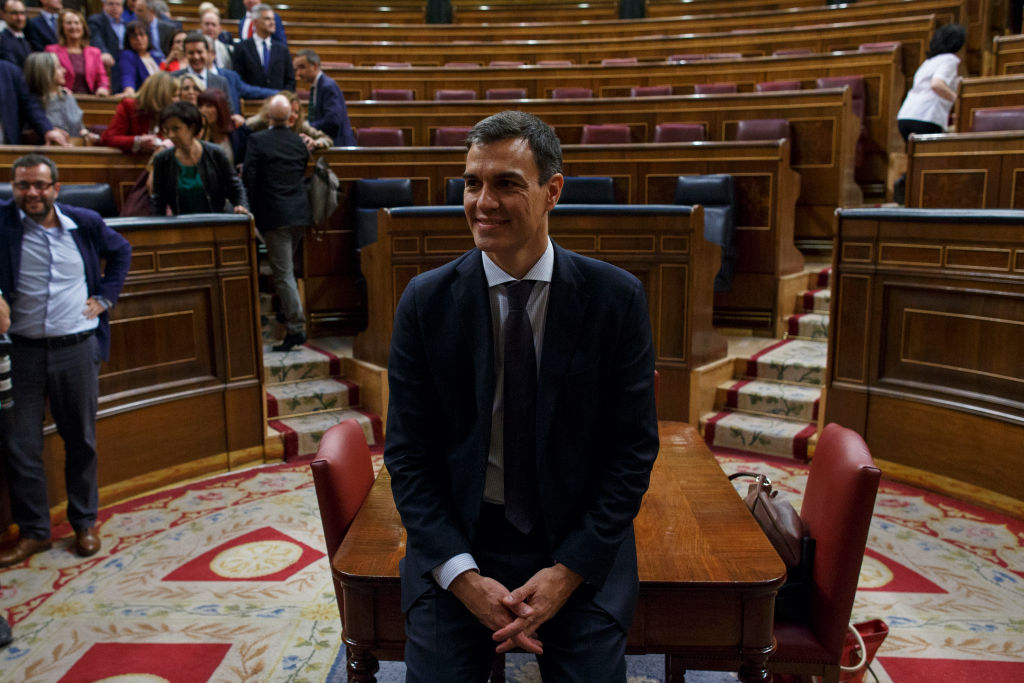
Spanish Socialist Workers’ Party (PSOE) leader Pedro Sanchez in the Spanish Parliament on June 1, 2018 in Madrid, Spain. Pablo Blazquez Dominguez / Getty Images
Friday’s ousting of conservative prime minister Mariano Rajoy has opened up a new moment in Spanish politics. As the motion of no-confidence passed in the parliament, Pablo Iglesias’s message to the new Socialist PM Pedro Sánchez was “better late than never.” More than two years of aborted attempts at cooperation between left-wing Unidos Podemos, the center-left Socialist Party (PSOE), and regional nationalists had finally removed the scandal ridden Popular Party (PP) from office.
Sánchez will lead an interim government lasting at most eighteen months to two years which he promised will be “pro-European” and “socialist,” which means it will accept Brussels’ fiscal straightjacket and be made up entirely of members of his own party. Yet even still it was the Unidos Podemos deputies who seemed most enthused by the change in government, with their supporters in the gallery chanting “sí se puede” as the vote passed. With the Spanish right having been in the ascent since last October’s Catalan referendum, and emergent conservative party Ciudadanos topping the polls, Iglesias and co. are betting on their ability to regain the initiative.
Jacobin contributor Eoghan Gilmartin sat down with the Spanish journalist and documentary-maker Antonio Maestre to discuss these developments, and what this new minority administration means for Catalonia, Spain’s municipalist movement, and the potential for more radical politics in the future.