Catalonia’s Paradox
- International Viewpoint
October 1 shook Catalonia and the Spanish state. What happens now?
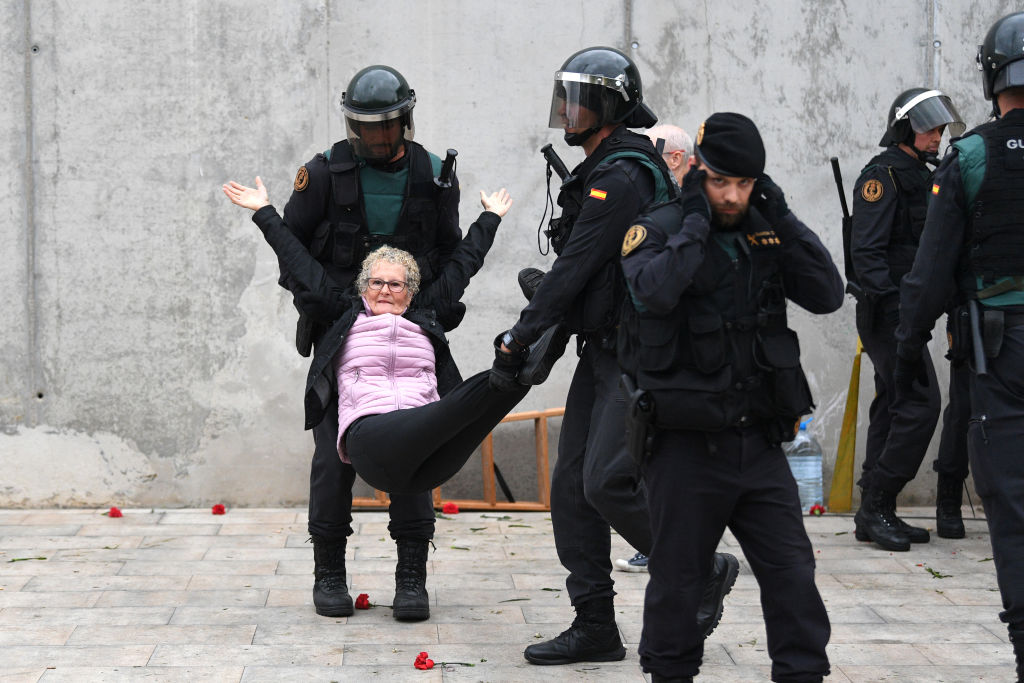
An elderly woman in Saint Julià de Ramis, Spain, is removed by force as police move in on the crowds as members of the public gather outside to prevent them from stopping the opening and intended voting in the October 1 referendum.David Ramos / Getty
October 1 has passed, closing a period of the shared history between Catalonia and the Spanish state and beginning an uncertain future. It was a day when all the tension building over the five-year independence process came to a head.
The numbers speak volumes. 2,262,424 votes cast. With an electoral roll of approximately 5.3 million people, that represents 42.5 percent turnout. We would have to include the votes seized by the police and from citizens who could not vote to calculate a final number. Of those votes counted, 2,020,144 (90 percent) were in favor of independence, 176,566 (7.8 percent) against, and 45,586 (2 percent) left their ballots blank.
Next to these tallies, we must list another figure: the 890 officially registered injuries. The images say even more than the numbers — unprecedented police violence met historic popular mobilization.