Debating Catalonia
- Eoghan Gilmartin
Izquierda Unida MP Alberto Garzón debates the Catalan independence referendum with the CUP’s Pau Llonch.
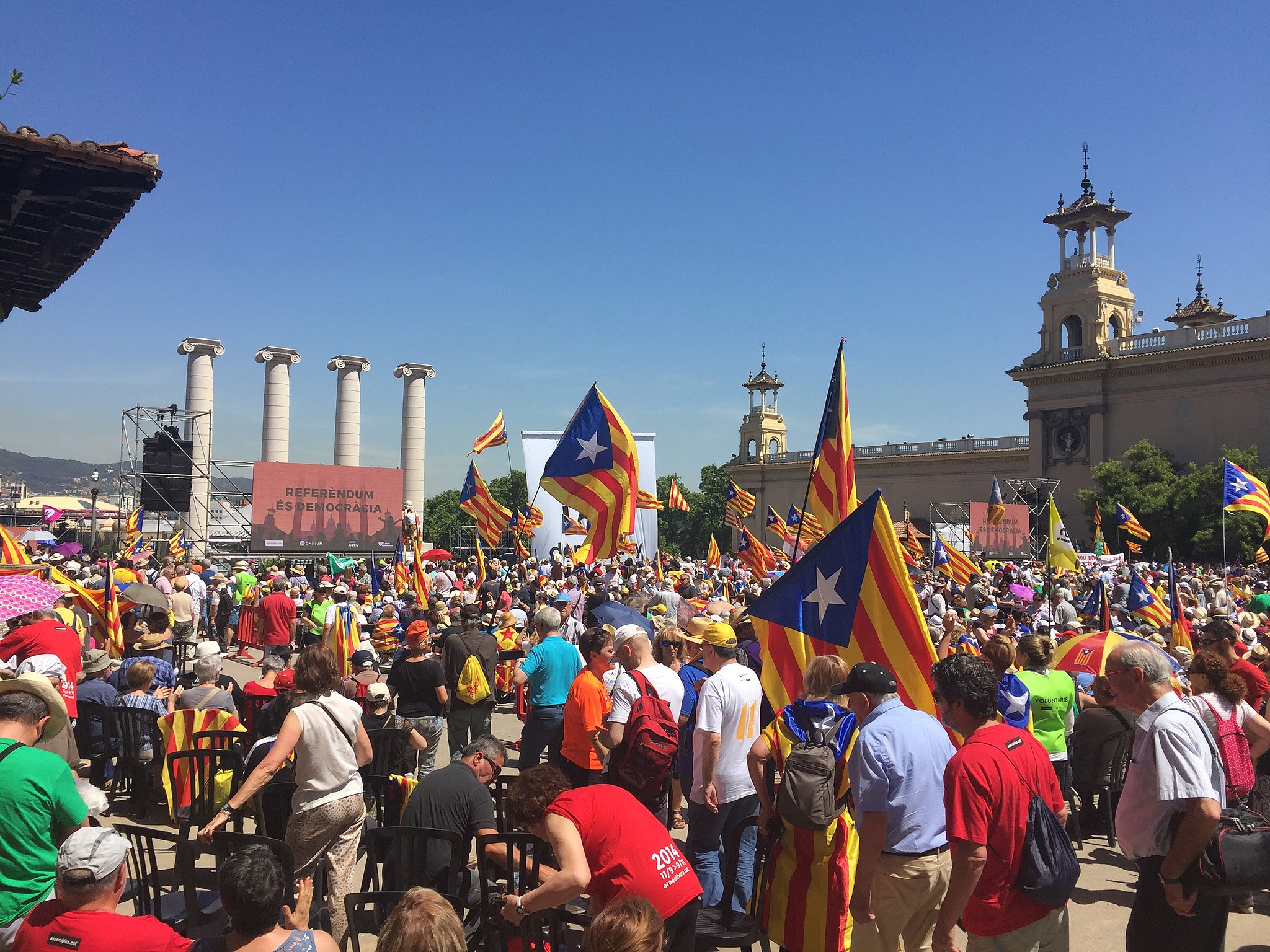
Celebrations on Montjuic on June 11, 2017, after the announcement of the date of the October 1 referendum on independence for Catalonia.Amadalvarez / Wikimedia
The October 1 independence referendum in Catalonia has prompted much discussion and debate on the Spanish left. Lacking international recognition and a legal basis under the constitution, the vote will be an act of mass civil disobedience against the conservative central government of Mariano Rajoy. But it will not be endorsed by the leading forces of the Spanish left, Podemos and Izquierda Unida, despite their defense of the Catalan people’s right to self-determination and opposition to the repression of the Spanish state.
Instead, these parties, and their joint Unidos-Podemos slate, have tried to carve out a middle road in the confrontation, recognizing the vote as a legitimate form of political mobilization, but one which is designed more as a show of strength by pro-independence forces than a genuine referendum.
In contrast to the October 1 vote, a recent article by Pablo Iglesias and Xavier Domènech, head of Podemos’s regional ally Catalunya en Comú, reaffirmed their commitment to a legally binding referendum as part of a wider constitutional process. This would aim at instituting a plurinational, federal Spain; an option they say is excluded by a simple in-out referendum.