Women and the Nation
In Turkey, nationalist dogma and women's subordination go hand in hand.
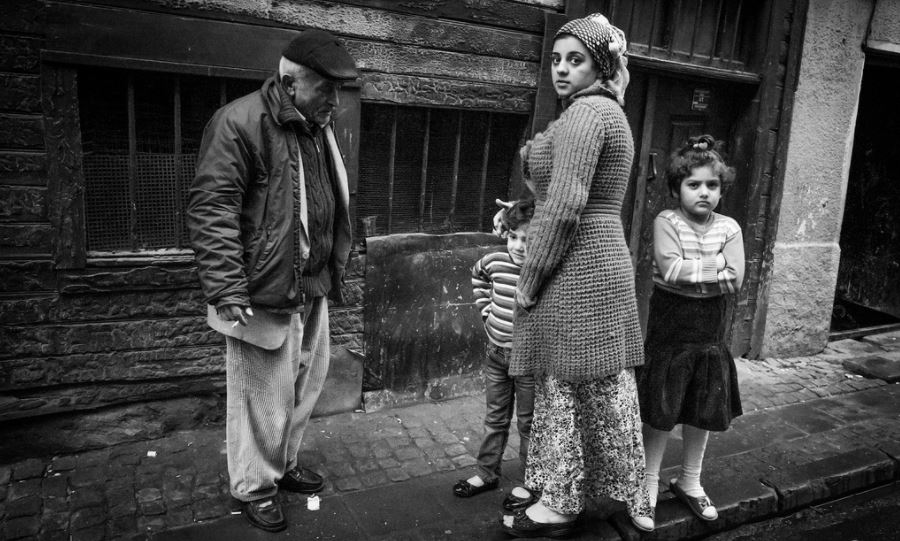
A family in Istanbul, Turkey. Giuseppe Milo / Flickr
In early August 2017, two women in the Turkish city of Izmir sought help from police after being harassed on the street by a motorcyclist. One officer responded to the women’s plea by informing them: “That’s what they deserved, considering the outfits they had on.” When the shocked and angered women said he no right to question their clothing, officers beat the victims.
It was hardly an isolated incident. Assaults on women in public spaces — often justified by conservative polemics about women’s appearance — have grown more common in recent years, even in relatively liberal cities like Izmir. More ominously, female homicides have increased fourteen-fold since 2002, while reports of domestic violence and archaic patriarchal practices like child brides and so-called honor killings (of gay men as well as women) have also grown dramatically. Turkey now ranks 130 out of 145 countries in terms of gender equality according to the World Economic Forum Gender Gap Report of 2016.
This dire situation comes at a contradictory political moment for Turkey. In May, a referendum granted vastly expanded powers to President Tayyip Recep Erdoğan, head of the Justice and Development Party (AKP). Held under a state of emergency and in an atmosphere of severe intimidation, the vote was likely fraudulent. Yet despite the coercive climate, it passed with only a slim majority — showing that there’s still room in Turkey for an opposition, despite Erdoğan’s tightening grip on the state. But any such opposition will have to champion a radical movement for women’s liberation if it wants to succeed, let alone achieve a broader social transformation.