Saudi Arabia, Turkey, and Pakistan Now Have Their Own NATO
The Mecca Agreement between Saudi Arabia, Turkey, and Pakistan is a response to insecurity and waning American power in the region. The question is whether the new security order will produce more violence rather than less.
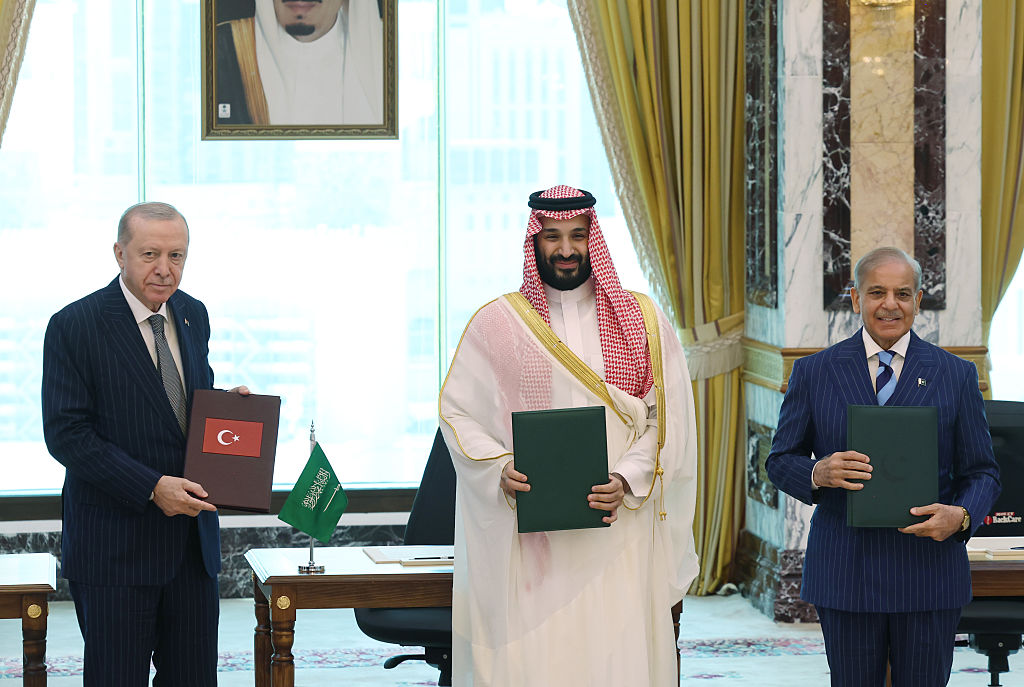
The new Mecca Joint Defence Agreement between Pakistan, Turkey, and Saudi Arabia reflects a growing realization that the United States and Israel are the most significant drivers of instability in the Middle East. (TUR Presidency / Murat Cetinmuhurdar / Handout / Anadolu via Getty Images)
On August 7, Pakistan, Saudi Arabia, and Turkey announced a mutual defense pact called the Mecca Joint Defence Agreement. Turkish Foreign Minister Hakan Fidan compared the arrangement to NATO, specifically citing Article 5’s collective defense clause.
President Donald Trump lauded the pact as a “BIG, BOLD, IMPORTANT FIRST STEP” toward ensuring countries in the Middle East “will finally be able to defend themselves.” On this point, he’s largely right. What he failed to mention is that this shift reflects the growing realization that the United States and Israel are the most significant drivers of instability in the Middle East.
Middle Eastern leaders were once able to ignore this, largely because they believed the US security umbrella would insulate them from the repercussions of American militarism. But Israel’s attack on Qatar last year, followed by the destruction of the ongoing war with Iran, finally punctured this fantasy.