6 Ways to Rebuild Unions at the State and Local Levels Now
The new crop of pro-worker legislators who have recently been elected at the state and local levels can pass laws that can rebuild the labor movement, even with Donald Trump as president. Here are six ways they can do it.
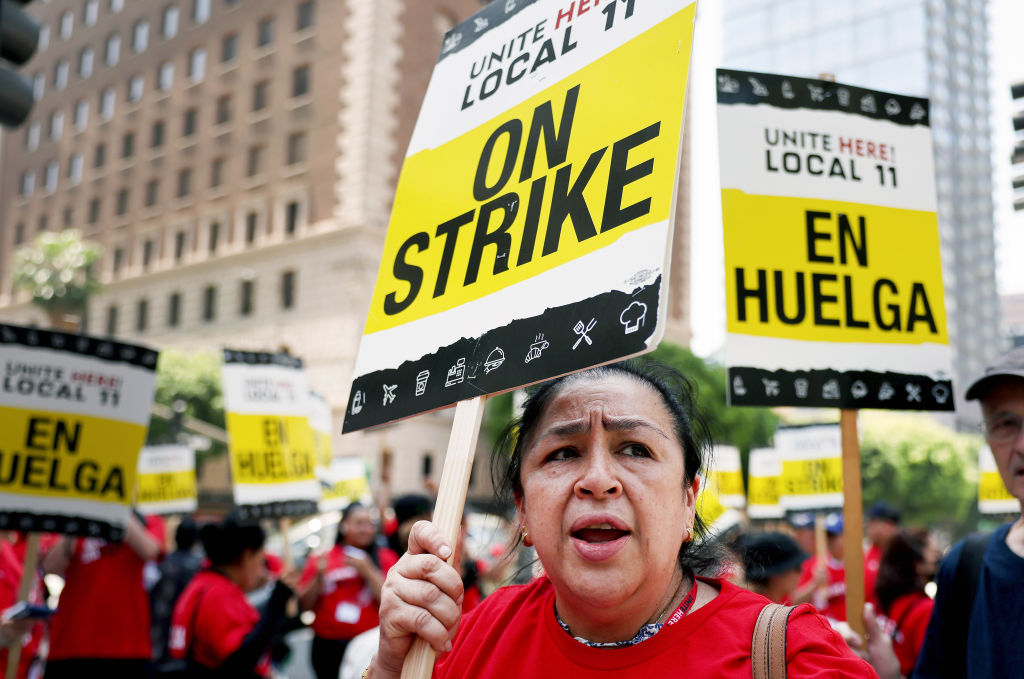
Despite Donald Trump’s deep hostility to organized labor at the federal level, states and localities still have ample opportunity to establish workplace protections and create more favorable conditions for organizing unions. (Mario Tama / Getty Images)
If unions are going to grow, they will need new state and local policy.
Over the summer, primary victories for pro-worker candidates running for US Congress like Abdul El-Sayed have stolen headlines. But the numerous candidates who won downballot, like Janeese Lewis George for mayor in Washington, DC, could have significant impacts on workplace organizing in the coming two years.
Whether we like it or not, laws — not just on the federal but also on the state and local level — shape the opportunities for and constrictions on union organizing. For unions to grow at the scale the moment demands, workers and policymakers must reshape those laws so that organizing can expand. Workers need to use every strategic option available. That includes using state and local policy and government action.