The British Right Is Weaponizing Henry Nowak’s Killing

Daniel Trilling

After white 18-year-old university student Henry Nowak was stabbed and then arrested as he lay dying, the UK’s far right seized on the case. Jacobin spoke to chronicler of the British right Daniel Trilling about what it reveals.
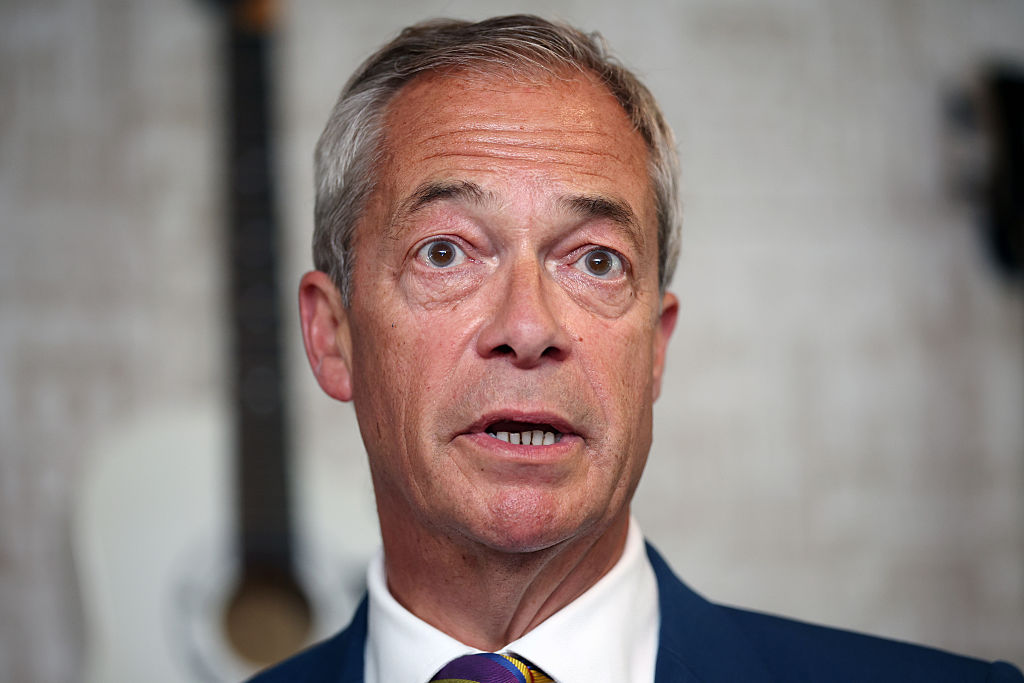
Reform UK leader Nigel Farage speaks to the media at The Dam Bar And Grill on May 8, 2026, in St Helens, England.

The British right is in the midst of a civil war between those who want to win elections and those who think the moderation required to do so amounts to betrayal. News of the killing of Henry Nowak has brought that tension to a head and empowered the radical right. (Ryan Jenkinson / Getty Images)


Interview by
John-Baptiste Oduor

On Monday, British police released body camera footage of their arrest of eighteen-year-old Henry Nowak. Video of Nowak’s last moments after he was stabbed by Vickrum Digwa in Southampton, England, on December 3 show the university student lying on the floor telling officers that he has been stabbed. As Mark Nowak, Henry’s father, said on the steps outside of Southampton’s Crown Court, “Instead of being treated as a dying victim, [the] police formally arrested Henry for assault and read him his rights. That was the last thing he heard. Henry did not die with dignity. He did not die with the care he deserved. He lost consciousness before anyone believed him.”

The images provoked shock and outrage across the UK, but that sentiment soon spread. Conservative Party leader Kemi Badenoch described the incident as a Stephen Lawrence moment, referring to the racially motivated murder of an eighteen-year-old black British man that went unsolved for decades. Nowak’s killer has been convicted and will be serving a life sentence in prison. This has not stopped the global far right from rallying around the murder. The incident is part of a long history of unlawful action on the part of Britain’s police. In recent memory, these go back to the death of ninety-seven Liverpool FC fans in a stadium crush in 1989 for which police and the media blamed fans; the fatal shooting of unarmed man Mark Duggan in London, which sparked a wave of riots in 2011; and the kidnapping, murder, and rape of Sarah Everard by Wayne Couzens, a police officer who was known affectionately as “the rapist” by colleagues, in 2021.

Despite this long history, the British media as well as publications in the United States that have picked up this story have chosen to focus on the race and the religion of the killer, Digwa, who was a British-born Sikh. Jacobin spoke to Daniel Trilling, one of the UK’s leading experts on the politics of the Right and the author of Bloody Nasty People: The Rise of Britain’s Far RightLights in the Distance: Exile and Refuge at the Borders of Europe, and If We Tolerate This: How the British Establishment Made the Far Right Respectable, which came out this April.

Mainstreaming the Right

John-Baptiste Oduor

On Monday, courts released footage of Henry Nowak’s last moments at the request of his family. The video showed him lying on the floor telling police nine times that he could not breathe and that he had been stabbed while an officer handcuffed him. The British right has used the killing to bring attention to what it calls “two-tier policing.” while mainstream politicians have compared it to the murder of Stephen Lawrence, an eighteen-year-old black man killed by racists whose murder went unsolved for decades. Much of the media seems to have accepted this framing too. Could explain what it gets wrong?

Daniel Trilling

The first thing to note is that over the past few years, a collection of far-right activists has been repeatedly trying to incite racist pogroms across England but also Northern Ireland, usually in response to one or other shocking crimes committed, or allegedly committed, by non-white people. They had a lot of success in 2024 in response to the Southport murders committed by seventeen-year-old British-born Axel Rudakubana, which led to widespread racist rioting around parts of the UK. They were at it again last year with protests around hotels, housing, asylum seekers, and particularly in situations where hotel residents had committed crimes locally. And this year, again, there was an attempt to incite rioting after false claims emerged that members of the immigrant community had perpetrated a series of gang rapes in an area of South London.

This strategy is not new. You could go back decades and find similar attempts in Britain. What’s changed is that they’re becoming much more successful at generating outrage. And although there are only relatively small numbers of, say, committed fascist activists in the UK, their inflammatory behavior is drawing in a far wider range of people who’ve got a much broader range of political backgrounds and ideas into violent protest and into accepting racist ways of framing these incidents. With the Novak case, the Right has jumped on the killing as evidence of what it calls “two-tier policing”.

I think it’s important to stress that the idea of two-tier policing — which put crudely is the claim that white people in Britain are policed far more harshly than ethnic minorities, because of “woke ideology” — is a lie. It’s not true. Policing is the kind of job where mistakes and abuses of power have life or death consequences for people. Policing in the UK frequently harms the people that it is supposed to protect. Over the last few years, we’ve seen a string of policing scandals, [such as] over police forces harboring known rapists in their midst and not vetting police officers properly. Undercover investigations by journalists have revealed a litany of racist comments and discriminatory attitudes among serving police officers. There was the strip search of a black teenage girl who was wrongly suspected of smoking cannabis in school in London a few years ago.

These are just examples of the kind of failures in policing that are quite common in Britain, and the appalling failures in the death of Henry Nowak fit into this wider pattern. And obviously in the UK, most people that suffer from abuses of police power are white people. However, that narrative has been taken up in other parts of the right-wing press by parts of the mainstream right, as well as the far right.

Because for the past decade there has been this growing backlash to the gains made by social liberalism, whether that be anti-racist campaigning or LGBT rights. One of the effects of this backlash has been the mainstreaming of far-right ideas and rhetoric in British politics, and a worsening political environment, both on the level of political discourse, political debate, and on the streets where it is increasingly spilling out into violence.

Farage’s Weakness

John-Baptiste Oduor

In his response to the incident, Nigel Farage, the head of the right-wing Reform UK, used explicitly racial language, calling for Brits to recognize that white lives matter. Is this a break from his usual way of speaking?

Daniel Trilling

This week, Farage made an intervention through what he called an “emergency statement” on the murder of Henry Nowak, in which he called for people to respond with “pure cold rage” and also used the phrase “White Lives Matter,” which is obviously very charged, coming as it does from the racist backlash to the Black Lives Matter protests in the United States.

Farage has probably done more than any other politician in the UK to bring ideas that were once confined to the right-wing fringes of society into the mainstream. And he’s done that because he’s very good at successfully walking the fine line between mainstream respectability and radicalism. He knows, broadly speaking, how far you can push things in British political discourse and maintains a careful distance from fascists and other extremists on the far right. But this was a more openly antagonistic intervention than any he’s made in the past. He usually likes to do these things with a wink and a nudge. Farage has been very successful to date as leader of Reform UK; his party is leading in the polls and made significant gains in local elections, both this year and last year. If things continue on their current trajectory, he is well-positioned to form a future government.

But despite this success, I don’t think things are going as well for Farage at the moment as he would like. Since the start of 2026, he’s been faced with a barrage of negative media stories and setbacks that have started to dent his support and to weaken Reform’s momentum. At the beginning of the year, there was a string of allegations from former classmates claiming that he had made extremely racist comments to people repeatedly throughout his school days. Farage has denied this, of course. But there were quite a few of his former classmates who made these claims. After years of doing his best to associate himself with Donald Trump and bask in Trump’s reflected glory, Farage has started to find the Trump connection has become a disadvantage. The fact that Trump 2.0 has been a more aggressive, more ostentatiously threatening and intimidating presidency than Donald Trump’s first term has scared voters in Britain.

Farage got into terrible trouble at the beginning of Trump’s attack on Iran, where, like a lot of the rest of the British right, he enthusiastically supported the military action in its first couple of days and tried to attack the prime minister, Keir Starmer, for not enthusiastically backing the military action and refusing to commit British forces to Trump’s war effort. But as soon as it became apparent that the main result of Trump’s misadventure was going to be that it would send global fuel prices skyrocketing, Farage suddenly found himself on the wrong side of the public and had to make this about-face and start campaigning on fuel prices instead.

The way he handled the war was especially politically inept. His own voters will have seen that he made this U-turn. Another issue is that since the spring, there have been persistent questions over a £5 million donation that Farage received before he became an MP from the Thailand-based crypto billionaire, Christopher Harborne, who has also been a big financial backer of Reform UK. Farage has tried to dodge these questions, and until this week this was all over the British news.

He was actually avoiding publicity and had been for a few weeks. On top of that, Reform didn’t do as well as the hype had suggested it would in the May 2026 local elections. It came out as the largest party, and for a right-wing populist party in the UK, it was a significant advance. I don’t want to underplay that. But at the same time, the real challenge in these elections was to make inroads into the center-right Conservative Party’s core support base by winning over more moderate right-wing voters who have either not been interested in voting for Reform or have been put off by them because they find the party too extreme.

Although Reform had a bit of success there, it didn’t make the gains that it would need to build a winning electoral coalition at the general election in 2029. The other factor that’s caused problems for Farage is that there has been a split on the Right. This has given rise to a new far right party, Restore Britain, founded by Rupert Lowe, an MP who was formerly part of Reform.

Restore is campaigning to the right of Farage and Reform UK, accusing both of being too moderate and Farage of being a sellout. Restore have taken a much harder line on immigration, race, and identity by openly appealing to ethnonationalists, which is something that Reform UK and Farage have tried to avoid doing in quite such an open and brazen way. Restore’s rise has put Farage in a bind. He on the one hand needs to moderate his party’s image in order to broaden its electoral coalition — but on the other hand, faced with this pressure from further to his Right, has to signal to his base that he is the bearer of their radical right-wing nationalist hopes. And so, I think the intervention he made this week is actually a sign of weakness, his attempt to regain the initiative. Having said that, it’s also extremely dangerous to have him and other politicians and political activists making these kinds of interventions. If left unchallenged, they may stoke ethnic nationalism in the UK.

John-Baptiste Oduor

The British right has long been divided on the question of ethnicity. Even Enoch Powell, as you mention in your book, began as an advocate of immigration from the colonies. How have these ideas developed over the course of the postwar era?

Daniel Trilling

It’s important to recognize that over the past few decades, British public attitudes have moved markedly away from seeing British national identity in racial terms. If you look at opinion polls, as much as 90–95 percent of people will say that you do not have to be white to be British. That is the result partly of the successes of earlier generations of anti-racism and partly a recognition of what Britain actually is. The UK is a postimperial nation made up of a mix of cultures, nationalities, and ethnicities. It is an inherently diverse country, and by and large public attitudes have moved to reflect and accept that. At the same time, I think nationalism always has this fatal confusion at its heart between the idea of the nation as a civic community and one of an ethnic community. Even when ethnic nationalism is rejected by a majority of people, or where there are strong taboos against it, it’s still something that the far right can agitate around and revive in one or more ways.

Building a Broad Alliance

John-Baptiste Oduor

Does this civil war within the Right create opportunities for liberals and centrists to hang on to power? Do you think the Makerfield by-election could perhaps be a trial for this strategy?

Daniel Trilling

The problem we’re faced with in the UK, which is a similar problem in many countries where far-right populism has become a significant political player, is that the Left is not strong enough to defeat far-right populism by itself. As in other countries, the UK needs to create a broad alliance between liberals, centrists, and the Left to either block far-right populist from winning power electorally, or if it gets to that stage, to turf them out of positions of power that they’ve already won. This is what has happened in Poland in recent years. It’s happened in Hungary. It happened in the United States in 2020 as well. 

This is why the by-election in Makerfield is so important because Andy Burnham, the Labour candidate for that seat, is being tipped as a future potential leader of the Labour Party. Burnham is capable of convincingly pushing back against far-right populism, because he has been making noises to signal that he understands what was wrong with Labour’s embrace of neoliberalism in the 1990s and 2000. He recognizes that the party helped make Britain a more unequal country, and that this inequality has been especially stark between regions. Burnham has also shown a willingness to work with parties like the Greens who have won over a lot of Labour’s left flank; for a historically quite conservative party this is a big shift.

But Andy Burnham’s got to win that by-election, and if he does, that will force the question of how deep his commitment to these progressive ideas is. All I can say really at the moment is that it’s up in the air. He has made noises about these things, but equally, as the election campaigning has become more intense, he has triangulated on a series of positions. It is unclear whether he has been motivated by some short-term tactical thinking to keep socially conservative voters onside in this by election, or whether it’s a sign of how he would behave were he to win the election and then succeed in challenging Starmer for the leadership of the Labour Party.

John-Baptiste Oduor

And Restore Britain, which is currently polling at 10 percent in Makerfield — how do they fit into this?

Daniel Trilling

Restore Britain has already exacerbated the tension that Reform is currently struggling to deal with and that Nigel Farage is currently struggling to deal with, which is that tension between radicalism and respectability. It’s a very tricky thing to negotiate for a party that positions itself as an anti-system challenger when it is trying to build a broader electoral coalition that could give it a chance of winning power. The more a party like Reform attempts to make expedient decisions to seem moderate and more palatable to the voters it wants to win over, the more disgruntled parts of its base are likely to get at what they would perceive as a sellout.

Already over the past year, you have seen Reform UK being dragged further rightward by the emergence of Restore and pressure from the extraparliamentary far right as well. A good example of that is how a couple of years ago Nigel Farage was saying in interviews that he didn’t see any need for his party to propose mass deportations of unauthorized migrants in the UK. But last year, after Rupert Lowe quit and set up Restore Britain and was demanding mass deportations, suddenly Reform’s own stance changed. It was promising to deport up to 600,000 people within their first five years of government. And then, earlier this year, they pushed themselves to an even more threatening position Just before the local elections, Farage and his colleagues were promising not only to carry out this program of mass deportations if they were to win power, but also that the immigration detention centers that would have to be built to make the deportations possible would be deliberately sited in parts of the country that had voted for the left-wing Greens.

Not only was this a sign that Reform, under pressure from its right, were taking a much harder line on immigration policy itself, but that the party was adopting a Trump-like attitude — actually, an attitude common to far-right populists the world over. This is the idea that power should be used not just to enact policy but to humiliate and torment your political opponents as well.

Share this article

Contributors

Daniel Trilling is one of the UK’s leading experts on the politics of the Right. He is the author of Bloody Nasty People: The Rise of Britain’s Far RightLights in the Distance: Exile and Refuge at the Borders of Europe, and If We Tolerate This: How the British Establishment Made the Far Right Respectable.

John-Baptiste Oduor is an editor at Jacobin.

Filed Under