The US House Is Trying to Stop Donald Trump’s War on Iran
Congress is now attempting to end the Iran war without President Donald Trump’s approval. The House of Representatives is invoking the War Powers Resolution, potentially setting the stage for a legal showdown over the limits of executive power.
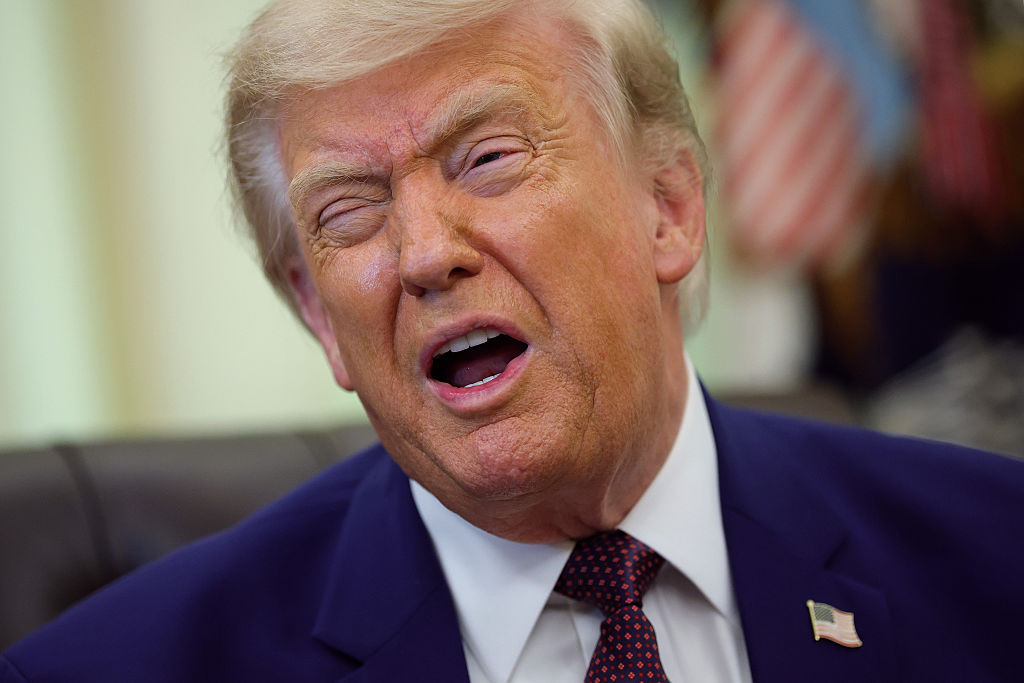
President Donald Trump reacts during an event in the Oval Office of the White House on June 3, 2026, in Washington, DC. (Kevin Dietsch / Getty Images)
For the first time since the start of the Iran war, Congress has attempted to circumvent President Donald Trump and end the conflict without his approval. In the process, lawmakers took a step toward creating conditions for a first-of-its-kind legal showdown clarifying the legislative branch’s constitutional authorities under the long-standing War Powers Resolution.
On Wednesday, the Republican-controlled US House passed a measure ordering the president to “remove United States Armed Forces from hostilities against the Islamic Republic of Iran.” Notably, the legislation was a “concurrent resolution,” which is only required to pass both the House and Senate — and is not subject to presidential veto. Under the text of the 1973 War Powers Resolution, only a concurrent resolution is required to end a war — though the authority of that text remains in dispute.
As recounted in a new episode of the Lever’s podcast Master Plan, this particular power has never been tested at the Supreme Court. In the past, Congress has passed joint resolutions that required a president’s signature — and that were subsequently vetoed.