The Era of Central Bank Independence Is Coming to an End
Central bank independence has been a sacred cow for the last generation in the major capitalist economies. Donald Trump’s appointment of Kevin Warsh as Fed chair symbolizes the beginning of a new era based on overt politicization of monetary policy.
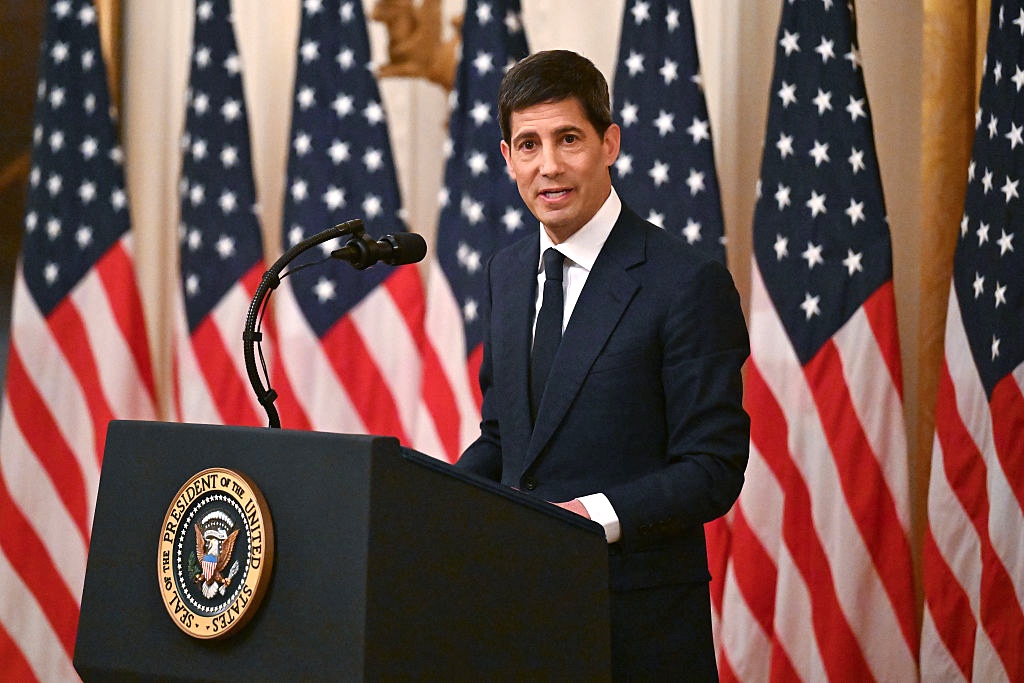
Central banks are under siege in many countries, especially the US, where MAGA partisans see control over the Fed as being critical to the future of their movement. Kevin Warsh’s confirmation as the new Fed chair is a significant step in that direction. (Roberto Schmidt / Getty Images)
Central banks are under siege in many countries but nowhere more prominently than in the United States, where MAGA partisans see control over the Federal Reserve as being critical to the future of their movement. The confirmation of Kevin Warsh as the new Fed chair is a significant step in that direction.
Warsh has no formula for delivering the low interest rates that Donald Trump demands without depriving the central bank of the main instrument it uses to combat inflation. As policy dilemmas intensify, pressure will soon mount to further open the edifice of monetary policy to the forces of populist authoritarianism.
For about half a century, central banks were “independent,” with their operations and decisions placed in the hands of economic experts whose main task was to set interest rates at levels that would prevent inflation. In doing so, they were shielded from interference by politicians, special interests, and public opinion. That consensus is now clearly breaking down.
Keynesianism and After
The idea that money should be regulated to ensure its “neutrality” has a long history and legitimated the “sound finance” orthodoxy of the late nineteenth and early twentieth centuries. Keynesianism criticized the austerity ethos for the way it had sacrificed economic growth and employment and prepared the way for the Great Depression.
Under the postwar philosophy of Keynesian macroeconomic management, central banks became powerful, if still largely unseen, institutions. During the 1950s and ’60s, they supported credit creation and public debt management in line with the priorities — social protection and economic growth — of the postwar state.
However, that same state never learned to manage the inflationary pressures that its policies fostered. Indeed, the idea that there was a trade-off between levels of inflation and employment became a core tenet of mainstream Keynesian economics.
Neoliberals eventually stepped into that space and argued that the assumption of stable trade-offs was an illusion: the logic of expectations would cause inflation to feed on itself, an observation that appeared to explain the dynamics of the 1970s. During the next decade, most countries in the Organisation for Economic Co-operation and Development (OECD) moved to make their central banks independent, insulating them from political cycles and charging them with responsibility for controlling inflation, even when the price was high unemployment.
Myth and Reality
Central bank independence was always more myth than reality, an ideology that allowed central banks to reshape the world rather than an accurate description of how they did so. As much as the post-1980 economic policy consensus objected to central banks engaging in “monetary financing,” the separation between monetary and fiscal policy was never watertight. Even during the heyday of technocratic inflation targeting, central banks considered maintaining a stable market for government debt one of their key tasks.
US Treasury debt is the cornerstone of not just the American but also the global financial system. The Federal Reserve’s responsibility for macroeconomic stability naturally translates into a practical concern with maintaining an “orderly” market for government debt.
While hand-wringing about deficit spending has been a favorite pastime for Fed chairs, there are hard limits on their ability to look away when governments need help in managing debt. Those limits are not just political but also economic: government debt has been no less central to the business model of the banking sector during the neoliberal era than it was during the Keynesian one.
Independence never meant autonomy from dominant financial interests. The Federal Reserve certainly did come to be seen as less of a “bankers’ bank” and more as a public institution pursuing well-defined policy goals. But the very implementation of those objectives relied heavily on intensive collaboration with the nation’s largest banks.
Such mutual interdependence often sat in conflict with the Federal Reserve’s ability to regulate banks in a truly impartial way. This was still the case even if central bankers themselves thought of these connections as merely constituting indispensable infrastructure for effective policy transmission.
After the Crash
Nevertheless, during its heyday — the period that is now known as the Great Moderation, from the mid-’90s until the global financial crisis of 2007–8 — the ideology of central bank independence enjoyed a great deal of legitimacy. Alan Greenspan wielded interest rate announcements to control inflation and drive growth, with any major conflict between those objectives apparently resolved.
The bonhomie prevailing among central bankers, the political establishment, and the financial sector simply appeared to reflect the fact that an independent central bank served the general interest in a stable and vibrant economy. The European Central Bank was established in 1998 at the high point of faith in central bank independence, and it was widely welcomed as a project of cosmopolitan liberalism. Concerns that it could prove to be a powerful agent of austerity were confined to the radical left.
Major cracks in the facade appeared with the financial crisis, when central banks were enlisted in organizing the historic bailouts of the financial system. Things didn’t end there. The Obama administration sought to replicate the economic success of the Clinton administration by committing to the federal deficit reduction that New Keynesian economists argued had been responsible for it.
But instead of giving rise to an economic boom like that of the roaring ’90s, those policies entrenched recessionary forces. Under those circumstances, the Federal Reserve saw no opportunity to unwind its support for the markets without letting the economy slide into a second Great Depression.
With interest rates already near zero, the Federal Reserve adopted so-called “quantitative easing” policies, which consisted in buying up massive amounts of assets and so essentially made the bailouts permanent. Although these policies kept the bottom from falling out of the economic system, they did so by pushing up asset values — that is, not by renovating a fraying social safety net but by dramatically expanding the welfare state for asset owners.
The result was the rapid growth of economic inequality. To some extent, backstopping financial markets became the business model of most OECD central banks.
Pandemic Purchases
The visible role of the Federal Reserve in backstopping the financial system began chipping away at its image of technocratic, neutral independence. The Federal Reserve itself was acutely aware of this, and toward the end of the decade, it set about gradually winding down its asset portfolio. Despite the absence of strong inflationary pressures, it also started pushing up interest rates to give itself more room to lower those rates and provide economic stimulus when needed in the future.
However, before these efforts to clean up its act and image could have much effect, the Fed (like central banks in many other countries) found itself enlisted in the government effort to fight the economic recession triggered by the COVID-19 pandemic. It dramatically increased the level of support it offered to financial markets, opening lending facilities up to new institutions and widening the range of eligible collateral. It bought the government debt issued to finance the budget deficits created by the Biden administration’s relief measures.
The Federal Reserve’s corporate bond-purchasing program, codesigned with BlackRock and other asset managers, drove an extraordinary wave of stock buybacks. Fed chair Jerome Powell assured markets that his institution would keep lending until stability had returned.
The economic policy response to the public health emergency caused an extraordinary wealth explosion. Before the 2008 crash, financial expansion had still been able to drive generalized economic growth, rapidly growing inequality notwithstanding. After the financial crisis, the same mechanisms no longer worked, since wealth had become too concentrated. The extremely uneven effects of the stabilization policies during the pandemic drove home the reality that the trickle-down effect of asset backstops had come to a complete stop.
Even before the pandemic, growing talk of generalized “affordability” problems had registered the spread of acute precarity to the middle classes: the median family budget was under severe strain just from daily living expenses. When, in the second year of the pandemic, inflation made a comeback, the media declared an acute “cost-of-living” crisis.
Getting Wages Down
The economics establishment waged an aggressive media campaign blaming pandemic stimulus for overheating the economy and warning of the dangers of a wage-price spiral. But the Biden administration was unwilling to abandon its experiment with old-school Keynesianism, aware of how much Barack Obama’s austerity agenda had contributed to economic stagnation and political polarization.
The Federal Reserve was naturally more receptive to the inflation fears mongered by Larry Summers and associates than Joe Biden and his team. Orthodox economic logic dictated that interest rates be raised to push up unemployment levels.
Heterodox economists and other commentators pointed out that inflation was not in fact driven by wage increases or excess demand, but by supply chain interruptions and the energy shock caused by the Ukraine war. Far from setting in motion a self-reinforcing wage-price spiral, the effect of these factors was likely temporary. The analysis was accompanied by proposals to tackle inflation in other ways — for instance, with price controls.
But such arguments fell on deaf ears. The Federal Reserve considered that it had only one instrument to bring down inflation, and it was committed to using it. Within the framework of mainstream monetary policy, the only way to shield households from the pernicious cost-of-living increases was to lower their monthly income — “to get wages down,” in the words of Powell. Reasserting its independence from the Biden administration, the Federal Reserve started to push up interest rates.
Those macroeconomic policies supercharged the affordability crisis. But the Federal Reserve had, if not quite blown, severely damaged its cover. After years of transgressing official orthodoxies to subsidize the growth of asset wealth, blithely trying to reinstate them to rationalize policies that hurt the unpropertied masses was bound to appear sanctimonious at best, and more likely mendacious and cruel.
The Biden administration was keenly aware that aggressive monetary tightening would complicate its plans for “building back better” and driving a recovery “from the middle out.” It would have been hard to think of a more auspicious set of circumstances for the Biden administration to start attending to the political preconditions of its “supply-side progressivism” and to mobilize public opinion around the need for greater democratic control over the creation of money and credit.
But Biden had already stretched his sympathies for the left wing of the Democratic Party much further than anyone acquainted with his career history could have expected, and challenging the Federal Reserve was a bridge too far. When he subsequently also allowed many of the income support programs created during the pandemic to expire, any sense that Biden’s program might effect a break with the status quo evaporated.
Changing of the Guard
Trump has long considered Powell, the Republican investment banker he appointed as Fed Chair in 2017, a disappointment. Project 2025, the far-right program for an authoritarian future, formally identified greater executive control over central bank policy as a key objective.
Since the start of his second administration, Trump has escalated his attacks on Powell and built on them to intimidate the central bank into being more responsive to his demands. He installed MAGA loyalist Stephen Miran, sought to unseat Governor Lisa Cook on spurious grounds, and finally launched a criminal investigation into Powell.
Trump’s demands have focused on lower interest rates to promote growth and employment and to make federal borrowing cheaper. But interest rates are just a point of entry. The real prize is control over the full machinery of financial governance, including the Federal Reserve’s balance sheet operations and its regulatory authority. Both levers would permit highly discretionary interventions around which an aspiring authoritarian can build extensive networks of personal grace and favor.
The MAGA elite of course already has control over the government budget, which permits plenty of patronage-based rule. But even though the Treasury’s ability to borrow is always much greater than the earnest defenders of fiscal rectitude claim, it is by no means infinite. For the kinds of wars and bailouts that MAGA minds are no doubt contemplating, the institutional separation between control over the public purse and the governance of money and credit creation presents itself a very real constraint.
It will fall to new chair Warsh to open the Fed’s capabilities to executive decision while preserving the Federal Reserve’s traditional stabilization policies. Warsh’s philosophy of monetary policy is purposely incoherent. He has long criticized the Federal Reserve for having taken on too many responsibilities beyond its core task of ensuring monetary stability.
However, Warsh also plans to closely coordinate attempts to reduce the size of the Fed’s balance sheet with the Treasury as a de facto stakeholder. Such coordination, in his estimation, will over time naturally produce a noninflationary environment. This is like imagining that if you let a particularly hungry and rabid fox into the hen house, he will improve how it is managed.
MAGA Synergies
It is critical to acknowledge that the struggle over the Federal Reserve is unfolding on the terrain of the affordability crisis. It may be tempting to dismiss this as a superficial pretext for an authoritarian takeover attempt. There is, after all, something laughable about the notion that Trump or any member of his cabinet could be genuinely concerned with the budgetary struggles of the average household.
Centrists have questioned MAGA’s motives for attacking the Fed in that vein. But they have enjoyed little success in convincing the public that they themselves care enough about cost-of-living pressures to alleviate them when the opportunity arises. That lack of interest has allowed MAGA to benefit from the energy that the problem produces, charging the synergy between authoritarian and populist impulses.
It is telling that US Treasury Secretary Scott Bessent, writing in the Wall Street Journal, has managed to formulate the issue crisply, using words that would not be out of place in Jacobin:
Successive interventions during and after the financial crisis of 2008 created what amounted to a de facto backstop for asset owners. This harmful cycle concentrated national wealth among those who already owned assets . . . the Fed allowed class and generational disparities to widen. Its pursuit of a wealth effect to stimulate growth backfired.
Such clearheaded analysis of the structural sources of the affordability crisis is hard to find among Democrats.
The cost-of-living crisis and the political volatility that it engenders involve much more than just the role of central banks, of course. But the political establishment’s fateful decision to carve out monetary management and park it with an economics profession that resembles nothing so much as the cloistered world of medieval theology, dedicated to mystifying and sacralizing a core article of faith with an ornate pattern of theorems, is a key part of the puzzle.
Crucially, the affordability crisis is not simply a crisis of inequality or poverty. Both have been on the increase since the 1980s, but mainstream politicians have tended to ignore them as long as they still saw opportunities to build winning electoral coalitions on the basis of a middle-class politics.
This is what changed after the financial crisis, when possibilities for a middle-class politics built on asset price appreciation disintegrated and gave way to a volatile pattern of political polarization. The far right’s conquest of the Republican Party in the United States is just the most consequential manifestation of a pattern that is increasingly powerful and visible across the OECD and beyond.
Australian Backlash
In some other countries, the role of central bankers in shaping the cost-of-living crisis is more direct. Whereas US mortgages are typically fixed-rate over the long term, the Australian property market is dominated by variable-rate mortgages. As a result, decisions by the Reserve Bank of Australia (RBA) to increase interest rates are fed through to mortgage holders without much delay — a more notable effect than the more indirect impact on growth and employment.
At the start of the pandemic, the RBA lowered rates to prevent households from selling and sparking a generalized debt-deflation cycle. To reassure the Australian public and the markets, RBA Governor Philip Lowe indicated that he would keep rates low for some time to come. But then inflation returned, and the RBA did the opposite of what Lowe had promised.
The outcry was enormous. Tabloid papers depicted Lowe, an understated technocrat whose lifestyle shows few signs of extravagance, as a twenty-first-century robber baron who financed his own lavish lifestyle at the expense of ordinary Australian families.
In the mainstream press, the severity of the shock was apparent in the fact that newspapers increasingly reported rate changes in terms of how many hundreds of dollars they would suck out of the weekly budget of the median family. It reflected the degree to which monetary policy decisions had come to be viewed as similar to the way politicians decide on budget priorities — a “fiscalization” of monetary policy right at the time the RBA was working hard to restore its independence.
The new RBA governor, Michele Bullock, has worked hard to reinstate inflation-targeting. Returning to an old line of defense, she has insisted that the RBA does not target conditions in the property or mortgage markets, and that it sets interest rates only to manage inflation and ensure macroeconomic stability.
However, such technocratic rationalization of unpopular policies has lost its power, and Bullock has had to defend herself from accusations by right-wing politicians that she is “gaslighting” the Australian public. Pauline Hanson, leader of the far-right One Nation party, is waiting in the wings to take the fight to the next level.
The strong showings of One Nation in polls and state elections have so far mainly been understood as splitting the Right and fortifying the prospects for Labor. But the writing is on the wall.
Labor Prime Minister Anthony Albanese may well view this development in the same way that Obama viewed the rise of the Tea Party movement during his first term — with some level of concern but above all hoping to benefit from the chaos on the Right, taking it as an opportunity to secure another term without addressing the sources of the affordability crisis. This is of course precisely the kind of self-satisfied inaction that serves as ideal recruitment ground for the far right.
The Wealthfare State
The complexities of national financial systems mean that similar central bank actions will hit differently in different contexts. But common to all of them is the fact that central banks have become structurally incapable of doing anything other than fuel inequality and cost-of-living pressures. Macroeconomic stabilization has become synonymous with expanding support for asset values while managing inflation by suppressing the wages of ordinary families. “Wealthfare” has become a structural necessity; welfare a structural impossibility.
Central bank technocrats are now prisoners as much as guardians of the wealthfare state, locked into maintaining an enormous edifice of bailouts and backstops. The only way out of that situation is structural change. The far right understands this, and not just in the United States or Australia.
In the UK, Reform leader Nigel Farage has challenged the independence of the Bank of England and promised to appoint a pro-Brexit economist to lead the institution if and when he is in a position to do so. The European Central Bank was purposely designed to insulate it from such political and public pressure, but it has not escaped the ire of the far right in core EU countries such as Germany and France.
Pleas of innocence from central bankers themselves are not entirely without merit: by and large, it is true that the expansion of their balance sheet has been driven not primarily by corruption and collusion but by a concern with system-level stabilization. Yet while they may want to stay out of politics, they simply have no moves left that do not contradict the neutrality they profess. Changes in their policy settings have major distributional consequences and will therefore be felt as political in nature, inevitably undermining the image of technocratic impartiality.
The Iran war has caused an energy supply shock that will ripple through the world economy over the next months. That is in itself a major source of new affordability problems, but if central banks take the same approach as during the pandemic — that is, formally recognizing that inflation is not caused by excess demand or wage pressure, while nonetheless managing it by wielding the only instrument they think they have — the solution will be as harmful as the problem it is meant to address.
The Contradictions of Central Banking
At the same time, central banks will also be called upon to finance some massive bailouts in the near future. Many eyes are currently on the private credit industry, which is heavily invested in software companies whose value is under pressure from the artificial intelligence threat. Meanwhile, reports on the productivity gains from AI itself are highly disappointing and a growing number of commentators wonder if the massive investments in AI data centers will ever pay off.
These sources of economic stress may be superseded by others, and the capriciousness of Trump’s economic and foreign policy impulses means that there is even less point than normal in trying to predict the source and timing of the next crisis. But there will be crises, and it will fall to the Federal Reserve to manage them and restore market stability.
As MAGA control over the Federal Reserve’s policy machinery takes shape, the definition of “too big to fail” will expand, becoming less strictly financial or economic and more political. We can look forward to an accelerated proliferation of bailouts and backstops.
Although the far right is more willing to acknowledge the contradictions of central banking, an authoritarian takeover of monetary policy will not solve any actual problems. Meanwhile, central bank independence has become a major rallying point for centrists and progressives. Styled as a commitment to protecting nonpartisan institutions and apolitical expertise from the authoritarian demand for unthinking loyalty, in reality it only facilitates MAGA’s ability to build fascism on the foundations of precarity.
What remains of the ambitions of Bidenomics is a desperate yearning for the rational neoliberalism of the Clinton years and the superficial bipartisanship that characterized it, articulated most prominently by the “abundance” movement. The willingness to turn Powell, a figure who enjoyed a long career in the notoriously predatory private equity industry, into a martyr for liberal-democratic values is a telling indictment of the political center’s moral and practical commitments.
There is a long way to go before central banks are a plaything of the far right: before authoritarianism has deactivated democratic institutions, there will still be many opportunities to turn the ship around. But whether one’s objective is merely to restore the limited freedoms offered by liberal democracy or to address its contradictions at a deeper level, there is no way out of the current crisis that does not involve the democratization of central banks.