The War on Drugs: A Pretext for Regime Change in Venezuela
For years, US leaders struggled with botched efforts to bring the opposition to power in Venezuela. Talk of the War on Drugs provided a justification for a more direct US assault, imposing regime change without the trappings of democratic transition.
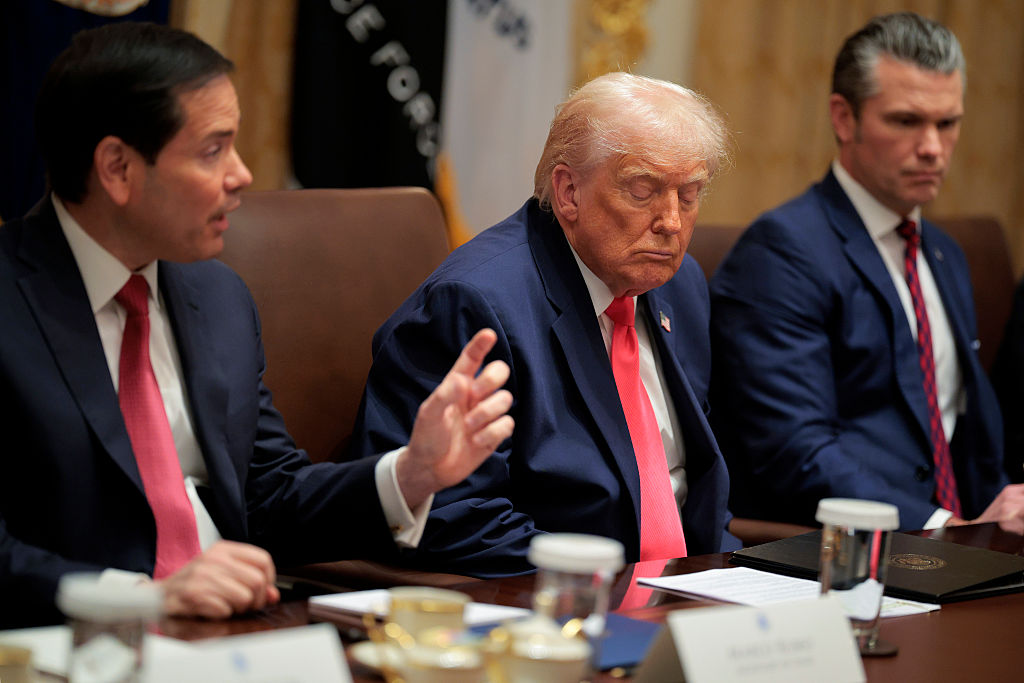
The Venezuelan government’s long refusal to bow to US pressure made it a uniquely high-value target for regime change. The coup against Nicolás Maduro was not aimed at one leader, but designed to serve as a warning to others around Latin America. (Chip Somodevilla / Getty Images)
The recent kidnapping of Venezuelan president Nicolás Maduro was not a “counter-narcotics” initiative: it was the culmination of a long-running hybrid warfare strategy aimed at regime change in Caracas.
US strategic planners are pursuing regime change while seeking to avoid the political costs of open war. Instead of relying on direct military occupation, they prefer to blend methods such as economic strangulation, lawfare, diplomatic isolation, covert action, and media management into what is known as hybrid warfare — a strategy designed to achieve regime change while preserving the appearance of legality and restraint.
The attempt to oust Venezuela’s government is not itself new. Ever since the Bolivarian Revolution came to power in 1999 with the election of Hugo Chávez, Venezuela has been subjected to hybrid forms of destabilization. The “War on Drugs” and casting of Maduro as a narco-terrorism chief has, however, gained a central role as a pretext for a long-yearned-for power-grab in Caracas.