Tariffs Are a Costly Nonsolution to the US’s Social Crisis
Donald Trump has touted his planned tariffs as a way of protecting American workers. They’ll do little to reverse industrial decline but will drive up costs for the average American.
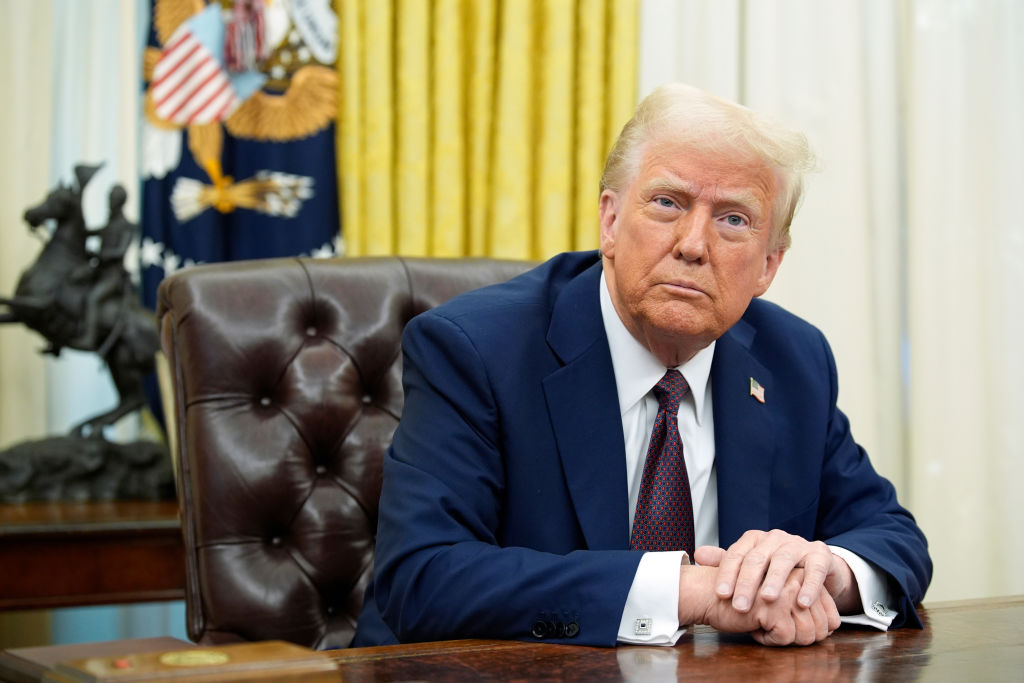
US president Donald Trump after signing executive orders in the Oval Office of the White House in Washington, DC, on January 23, 2025. (Yuri Gripas / Abaca / Bloomberg via Getty Images)
In his first spate of executive orders following his inauguration, President Donald Trump stopped short of levying tariffs on the United States’ key trading partners. While he has thus far only planned to impose tariffs on imported computer chips, pharmaceuticals, and steel, the threat of some form of trade barriers with other nations remains. Trump rose to his second term on a wave of economic distress, which, when not sublimated into cultural resentment, found inchoate expression in a support for trade barriers.
The decline of industrial employment is viewed as the root of the country’s malaise, and trade, specifically the US trade relationship with China, as the main driver of that decline. This theory of crisis is largely bipartisan. The consensus is evidenced by the Biden administration’s Trumpian marriage of national security politics and industrial policy in concert with trade restrictions imposed with the explicit aim of stunting China’s further technological development.
This approach, however, is macroeconomically confused and bears the real risk of worsening the problems it is intended to address.