Trump’s Foreign Policy Is About Pushing Back on China
Donald Trump’s recent blustery foreign policy proclamations have many pundits scratching their heads. They should be seen as part of a broader project of reasserting US hegemony in the Americas and pushing back on Chinese geopolitical influence.
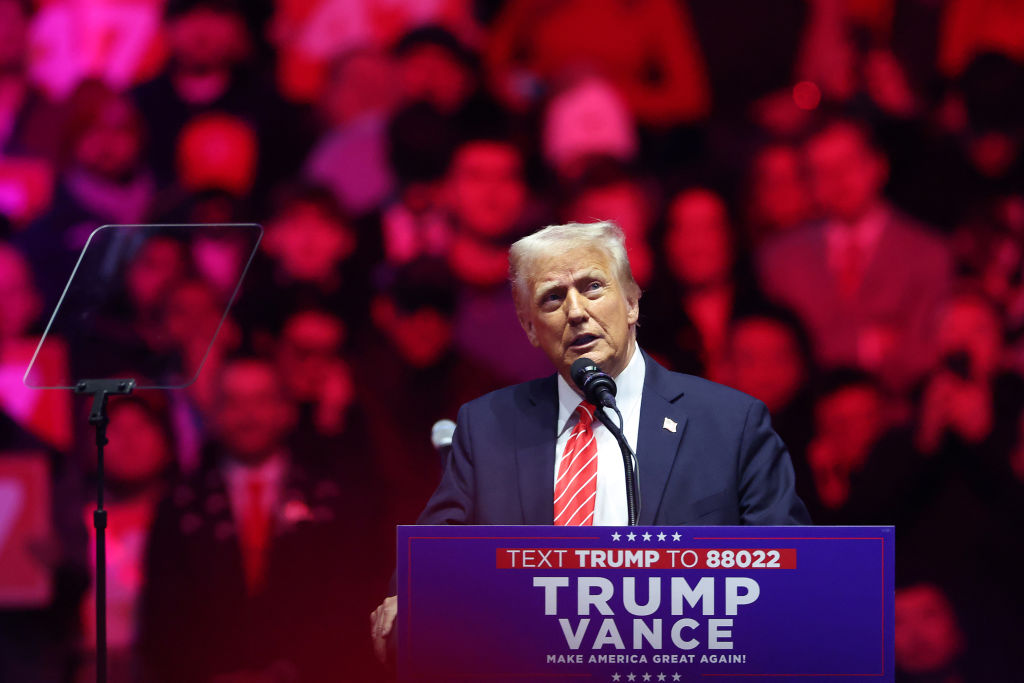
Donald Trump speaks at his victory rally at the Capital One Arena on January 19, 2025, in Washington, DC. (Scott Olson / Getty Images)
Donald Trump’s threats to take over the Panama Canal, convert Canada into the fifty-first state, and purchase Greenland may not be as ludicrous as they first seem. The proposals, albeit unachievable, lay the groundwork for a more “rational” strategy of targeting China (not so much Russia) and singling out real adversaries (as opposed to Canada and Panama), which include Cuba and Venezuela, with Bolivia not far behind. The strategy is what James Carafano of the Heritage Foundation calls the “rejuvenation of the Monroe Doctrine” — which, after all, in its day encompassed Canada and Greenland in addition to Latin America.
Trump’s choice of anti-Cuba zealot Marco Rubio as secretary of state reinforces the perception that the Trump administration’s foreign policy will pay special attention to Latin America, and that Latin American policy will prioritize two enemies: China and the continent’s leftist governments. Carafano calls the strategy “a pivot to Latin America.”
Political analyst Juan Gabriel Tokatlian, writing in Americas Quarterly, was more specific about the likely upshot of the administration’s policies. After citing Trump’s plans for military action against Mexico, Cuba, and Venezuela in his first administration, Tokatlian reasons that “a second Trump White House may well lack some of the more rational voices that averted more rash actions the first time around.”