Will Bidenomics Survive Donald Trump?
Last week, Trump signed executive orders targeting Biden-era green infrastructure spending. Republican politicians, whose states have benefitted from these policies, will now have to decide whether they care more about austerity or a manufacturing renewal.
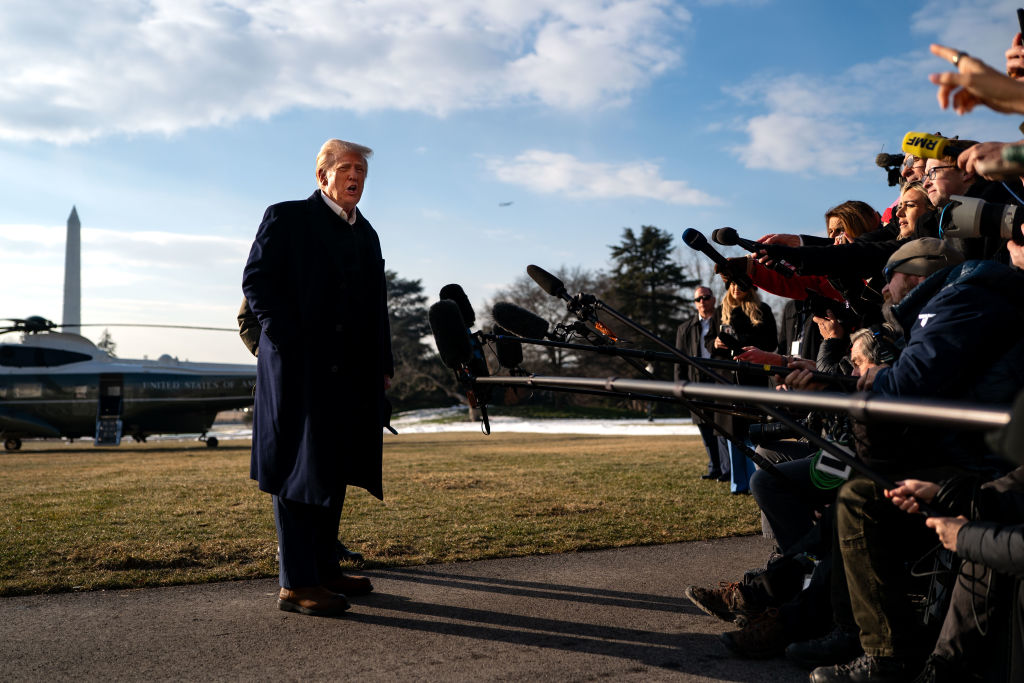
President Donald Trump speaks to members of the press on January 24, 2025, in Washington, DC. (Kent Nishimura / Getty Images)
The combination of policies that came to be known as Bidenomics — the Inflation Reduction Act (IRA), Infrastructure Investment and Jobs Act, and the CHIPS and Science Act — signaled a sea change in American domestic politics. Together, they marshaled billions of dollars toward infrastructure and manufacturing. While these policies fell short of the broader ambitions of the left wing of the Democratic Party that championed a massive expansion of public sector employment and policies to reverse the decline in unionization, they nevertheless met with sharp resistance.
When Donald Trump began his first week in office by repealing elements of this program, it came as little surprise to observers. However, the attitude of the Republican Party as a whole to the return of industrial policy has always been more complicated than generally acknowledged. One reason for this is that much of the federal funding for infrastructure and manufacturing has come in the form of tax credits, which is particularly attractive to a Republican Party who favors tax cuts over direct government spending funded by taxation. The second reason is that red states have often been the biggest beneficiaries of these funds.
Jacobin spoke to Ted Fertik, vice president of the industrial policy and green energy think tank BlueGreen Alliance about the new political landscape under Trump, and whether Bidenomics will survive.