Donald Trump’s Corrupt Tariff Quid Pro Quo
Donald Trump is granting tariff exemption deals to wealthy donors and politically connected businesses, echoing the corrupt tactics of his first term. But this time, he’s fired the government watchdog that raised the alarm about them.
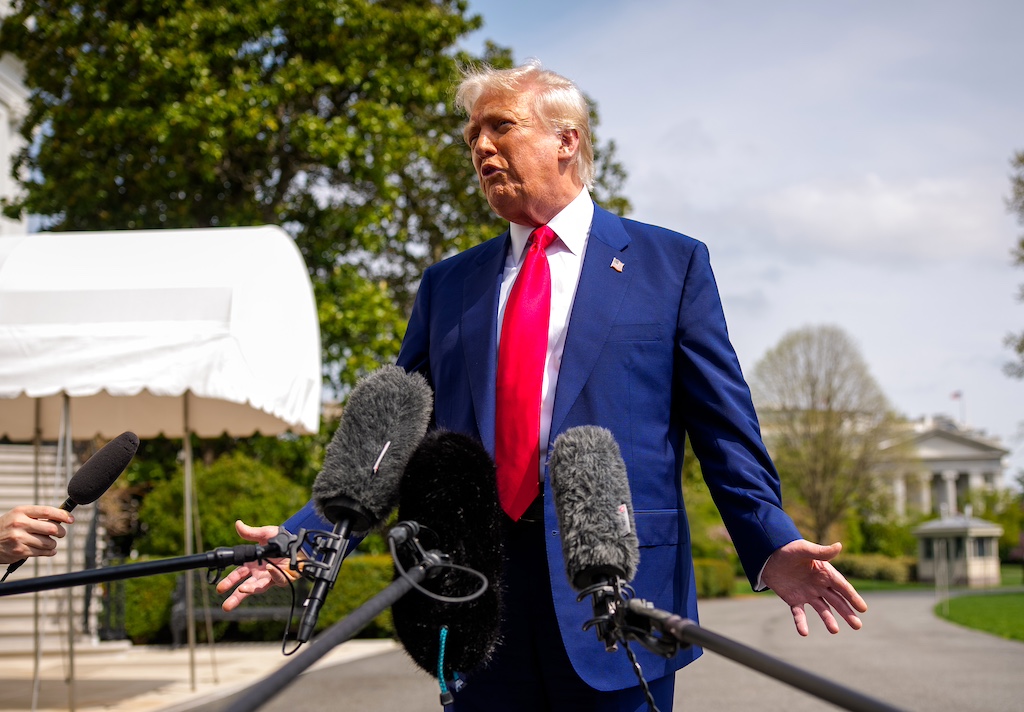
President Donald Trump speaks to members of the media on the South Lawn of the White House on April 3, 2025, in Washington, DC. (Andrew Harnik / Getty Images)
Donald Trump’s plan for blanket global tariffs isn’t just roiling the stock market and triggering international upheaval — it’s also opening the door for Trump to relaunch the tariff corruption game of his first term, in which the White House used the trade levies to punish opponents and reward donors. And this time around, Trump’s fired the government watchdog set to oversee such matters.
Already Trump has suspended the tariffs for electronics and is considering exempting cars as well — good news for Trump super PAC donor Elon Musk and Apple CEO Tim Cook, who personally delivered $1 million to Trump’s inauguration. During his first term, Trump offered key exemptions to major firms, including Apple, in a process that internal auditors had previously described as “neither transparent nor objective.”
While tariff exemptions were designed to aid products that aren’t available domestically, they’ve become a political tool benefiting large and politically connected businesses. A recent study of China tariffs during Trump’s first term found that companies donating to and lobbying Republicans were more likely to win exemptions, while firms supporting Democrats were less likely. Researchers found that granting companies tariff exemptions — which increased firms’ average market value by $51 million — was “a very effective spoils system allowing the administration of the day to reward its political friends and punish its enemies.”