Yes, Socialists Should Support Industrial Policy and a Green New Deal
The capitalist system may be turbulent, inequitable, and antisocial. But there is no “iron law” of capital standing in the way of a program of economic planning for sake of the climate.
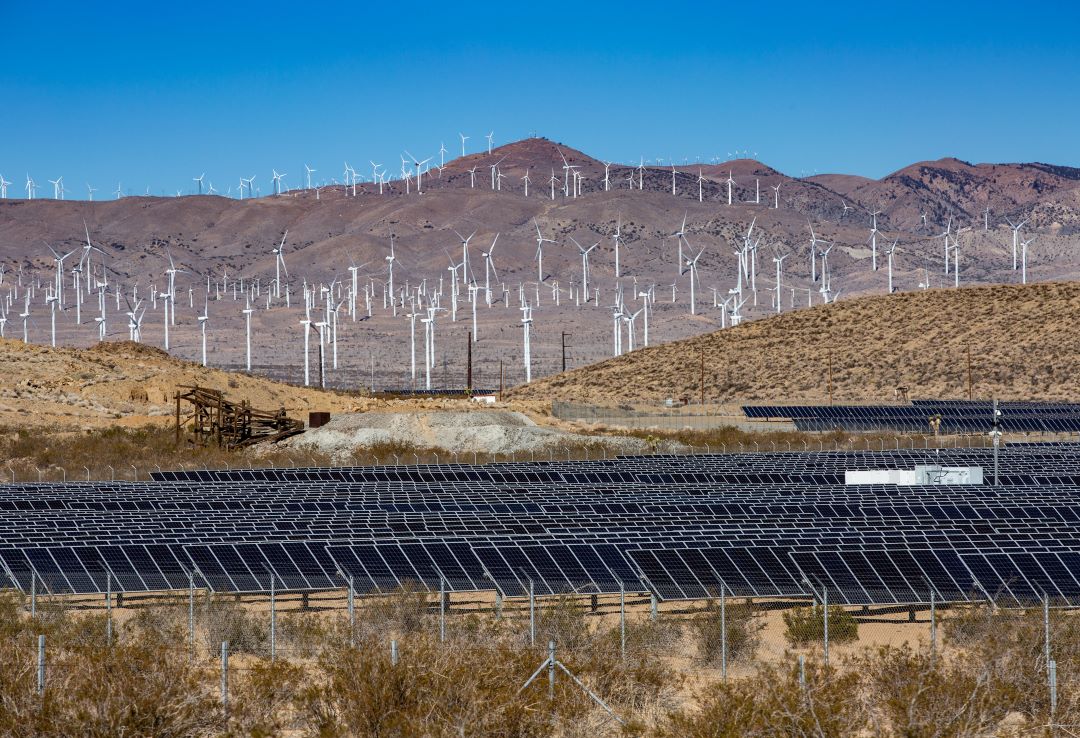
A large array of solar panels, located one hour north of Los Angeles in Kern County, is pictured on November 15, 2022, near Mojave, California. (George Rose / Getty Images)
A few days ago, Dylan Riley wrote a post on New Left Review’s Sidecar blog that provoked a furious response on left-economics twitter. I largely agree with the criticism made by Alex Williams, Nathan Tankus, Doug Henwood, and others. But I want to try to clarify the larger stakes in this debate.
Riley’s piece starts from the suggestion that the failure of Silicon Valley Bank reflects a larger crisis of overcapacity and lack of investment opportunities. SVB, he writes,
had parked a huge quantity of its deposits in low-yield — but supposedly safe — government-backed securities and low-interest bonds. . . . The bank was overwhelmed by the massive growth in deposits from its tech clients — and neither it nor they could find anything worthwhile to invest in. . . . The SVB collapse is a beautiful, almost paradigmatic, demonstration of the fundamental structural problem of contemporary capitalism: a hyper-competitive system, clogged with excess capacity and savings, with no obvious outlets to soak them up.