US Policy Toward Ethiopia Is a Story of Cynicism and Self-Interest
From the Cold War to the war on terror, Washington has backed a series of Ethiopian governments while turning a blind eye to their human rights abuses. The Biden administration’s appeasement of Abiy Ahmed’s government is the latest example of this shabby record.
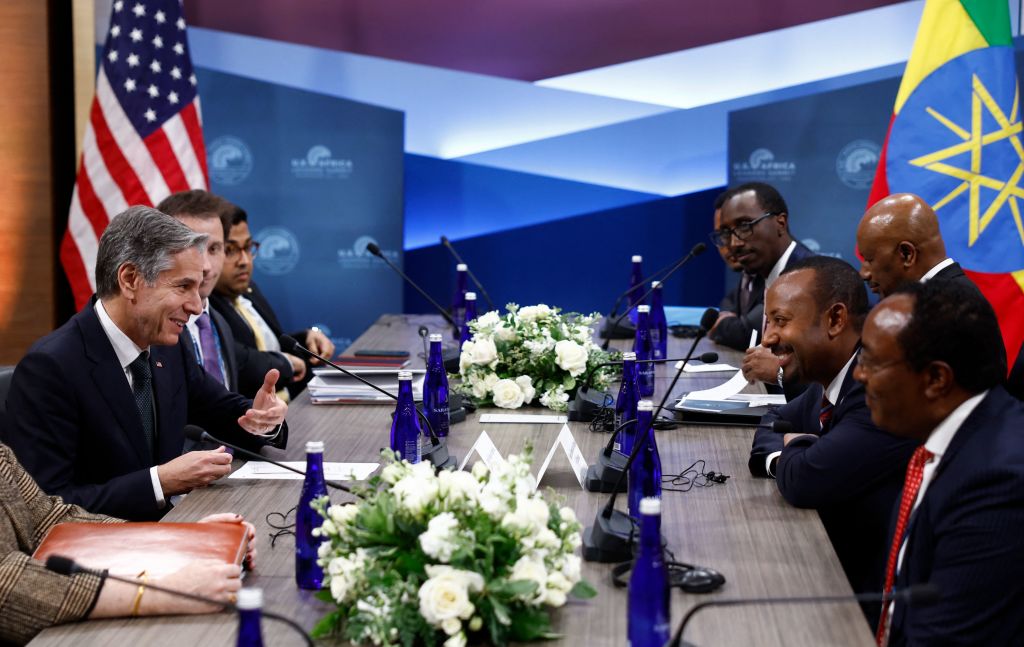
US secretary of state Antony Blinken meets with Ethiopian prime minister Abiy Ahmed during the US-Africa Leaders Summit at the Walter E. Washington Convention Center in Washington, DC on December 13, 2022. (Evelyn Hockstein / POOL / AFP via Getty Images)
The relationship between the United States and Ethiopia took shape during the waning years of European colonialism in the second half of the twentieth century. In the decades that followed, that relationship underwent several transformations, marked especially by alliances formed during the Cold War and the “war on terror.”
Despite the changes, a thread of continuity runs through the entire period. Washington has consistently elevated geopolitical interests above any concern for democracy and human rights. In so doing, it has contributed significantly to the problems afflicting Ethiopia and the wider region.
The Scramble for Africa and World War II
A large multiethnic empire established in the Horn of Africa in 1270 CE, Ethiopia was the only African territory to successfully resist Western conquest during the “Scramble for Africa” in the late nineteenth century. Armed with the latest European weapons that were purchased with proceeds from the East African slave trade, Emperor Menelik II and his armies defeated an Italian invasion force in 1896.